- icy@wzhgroup.com
- +86 15081877521


In recent years,interest in container homes has been steadily rising across Australia.From"granny flats"in Sydney and Melbourne to holiday cabins in Queensland and mining camp accommodation in Western Australia,an increasing number of projects are adopting container homes as solutions for residential or commercial buildings.
However,for many prospective home builders,a persistent question remains:Are container homes truly suitable for Australia's complex and varied climate?
After all,Australia encompasses a wide range of climate zones,including tropical,subtropical,temperate,and desert regions.The north experiences hot,humid summers;the south sees relatively cold winters;coastal areas must contend with salt-spray corrosion;and certain regions are prone to cyclones,torrential rains,or bushfires.Without proper design,these homes can easily suffer from issues such as stifling heat in summer,poor thermal retention in winter,or structural deterioration over time.
In reality,modern container homes differ significantly from standard shipping containers.With appropriate structural design,insulation,anti-corrosion treatment,and optimized ventilation,they are fully capable of meeting residential needs across most parts of Australia.This article analyzes the performance of container homes in the context of Australia's diverse climates and helps you understand how to select a product best suited to your local environment.
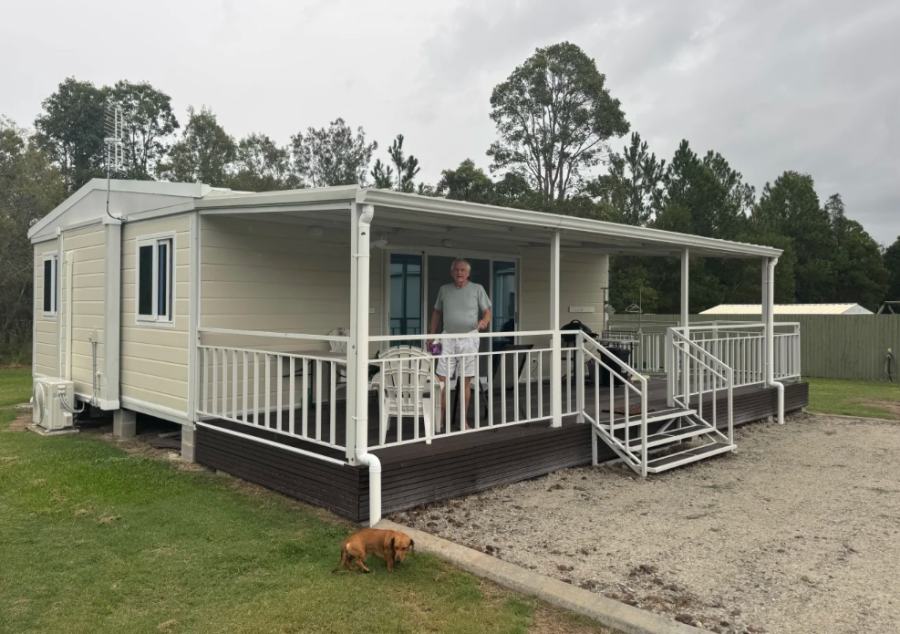
The answer is yes—provided the design aligns with local climatic conditions.There is no inherent reason why a container home would be"unsuitable"for Australia;the factors that truly determine the living experience are insulation,ventilation,corrosion resistance,and structural design.When these details are handled correctly,container homes can not only meet long-term residential needs but also adapt to the climatic environments of different Australian regions.
Australia is a vast country with significant variations in natural environments across different regions.
For instance,northern Queensland experiences hot,humid weather year-round,making thermal insulation and ventilation key priorities for buildings;conversely,in Victoria and Tasmania,where winter temperatures are lower,the focus shifts to superior thermal retention.The Australian outback experiences significant temperature fluctuations between day and night,placing higher demands on the thermal insulation of walls and roofs;meanwhile,coastal cities like Sydney and Perth require consideration of the long-term impact of salt spray on steel structures.
Consequently,a container home designed for Melbourne may not be suitable for Darwin or Cairns.The true determinant of a home's performance is whether it has been optimized for the local climate.
Many people still associate container homes with unmodified shipping containers,assuming the steel walls absorb heat and create a stifling,oven-like atmosphere in the summer.
In reality,container homes exported to Australia typically feature added insulation,waterproofing,and interior finishes.Walls often utilize insulation materials such as rock wool,polyurethane,or glass wool,while roofs are fitted with additional insulation layers or double-roof designs depending on project requirements.Some models even incorporate double-glazed windows and natural ventilation systems to further enhance living comfort.
These improvements stabilize indoor temperatures,reducing the reliance on air conditioning and heating while lowering long-term energy consumption.
Whether a structure is made of steel,timber,or concrete,it must be designed with the local environment in mind;the same applies to container homes.
For instance,in cyclone-prone areas,the main structure and connection points are typically reinforced;in regions with a high risk of bushfires,fire-resistant exterior cladding and window systems are selected.For projects intended as permanent residences,priority is given to thermal insulation,moisture protection,and soundproofing to ensure the living experience closely resembles that of a traditional home.
Climatic conditions vary significantly across Australian states,necessitating different design priorities for container homes.By selecting appropriate insulation,anti-corrosion measures,and structural designs tailored to the local environment,these homes can provide comfortable and reliable long-term living in most regions.
Queensland features tropical and subtropical climates;summer temperatures often exceed 30°C,and some coastal areas are susceptible to tropical cyclones.
Consequently,local projects typically incorporate thicker roof insulation,overhanging eaves for shade,and cross-ventilation designs to keep interiors cool.Additionally,steel structures in coastal regions require enhanced anti-corrosion treatments to extend their service life.
New South Wales is home to densely populated cities like Sydney,where container homes are widely used for"granny flats,"garden offices,and rural residences.
Due to high coastal humidity,buildings usually require corrosion-resistant coatings and high-performance,airtight door and window systems to minimize the impact of moist air on the interior environment.
Winters in Melbourne and Hobart are relatively cold,so architectural designs place greater emphasis on thermal insulation performance.
Measures such as increasing wall insulation thickness,using double-glazed windows,and minimizing thermal bridges effectively reduce heat loss in winter,enhancing indoor comfort while lowering heating energy consumption.
Cities like Perth and Darwin experience hot summers,with some areas seeing long hours of sunlight.
To mitigate the impact of solar radiation,many projects incorporate shading systems,roof insulation,and natural ventilation designs.Some high-end homes also integrate solar power systems to improve overall energy efficiency.
Unmodified shipping containers do tend to absorb heat in the summer.However,modern container homes are optimized using various technologies—such as thermal insulation and advanced ventilation systems.With the right configuration,the indoor environment can fully meet the requirements for long-term living.
Steel conducts heat rapidly,which is the primary reason many people worry about container homes overheating in the summer.However,modern container homes typically do not leave steel panels directly exposed to the interior;instead,an insulation layer is added between the steel structure and the interior wall surface.Combined with thermal insulation materials,this creates a complete building envelope system that significantly slows the rate at which external heat enters the living space.
The roof absorbs the most solar radiation during the summer,making it a critical focus for thermal insulation design.
Many container homes exported to Australia feature double-layer roofs,insulation batts,or ventilated roof structures to minimize heat buildup caused by direct sunlight.Optimizing roof design often yields more noticeable cooling effects than simply adding wall insulation.
In addition to thermal insulation,good airflow is equally important.
Strategically positioning doors and windows,facilitating cross-ventilation,and installing exhaust systems help rapidly expel hot indoor air,thereby enhancing overall comfort.In high-temperature regions like Queensland,these design strategies are often more effective than simply relying on air conditioning.
With the right insulation system,modern container homes can provide a comfortable living environment even during the Australian winter.For regions with colder winters—such as Victoria,Tasmania,and southern New South Wales—factors like insulation materials,window and door specifications,and construction details are more critical than the building's form itself.
Insulation materials determine the winter living experience.
Modern container homes typically incorporate insulation layers in the walls,roof,and floors;common materials include polyurethane(PU),rock wool,and glass wool.
Each material has unique characteristics.For instance,polyurethane offers excellent thermal performance,making it ideal for energy-efficient homes.Rock wool provides good fire resistance and sound insulation in addition to thermal protection,making it a popular choice for long-term residential projects.
In regions with colder winters,such as Melbourne and Hobart,increasing the thickness of the insulation layer not only reduces heat loss but also helps lower energy consumption for heating.
Doors and windows also influence indoor temperatures.
Many people focus on wall insulation while overlooking the role of doors and windows.If standard single-pane glass is used,indoor heat escapes easily.In contrast,double-glazed units paired with high-performance,airtight doors and windows effectively minimize the exchange of hot and cold air,maintaining a more stable indoor temperature.
For residential projects intended for long-term occupancy,such specifications—while increasing initial costs—lead to significant energy savings over the building's lifespan.
Smart design matters more than simply adding more material.
Beyond the insulation material itself,architectural details significantly influence overall performance.
For instance,minimizing thermal bridges,optimizing wall connections,and enhancing the airtightness of doors and windows can further boost a building's thermal efficiency.Experienced manufacturers typically optimize these details based on the project's local climate,rather than merely increasing insulation thickness.
With proper design and routine maintenance,modern container homes typically have a lifespan of 25 to 50 years,with some high-standard projects lasting even longer.The key factors determining longevity are not the building form itself,but rather material quality,anti-corrosion treatments,and ongoing maintenance.
Australia boasts a coastline exceeding 34,000 kilometers;airborne salt in coastal regions can accelerate steel corrosion.
Consequently,container homes exported to Australia often incorporate multiple protective measures—such as hot-dip galvanized steel,anti-corrosive primers,and weather-resistant coatings—to enhance the durability of the steel structure.
For projects located near the coast,regular inspections of exterior wall coatings and welded joints,combined with timely maintenance,can effectively extend the building's lifespan.
Like traditional homes,container homes require proper maintenance.
For example,inspecting the roof waterproofing,door and window sealants,and drainage systems every few years—and promptly addressing minor issues—can prevent costly repairs down the line.
Overall,maintaining modern container homes is relatively straightforward;following standard building maintenance practices ensures long-term,reliable performance.
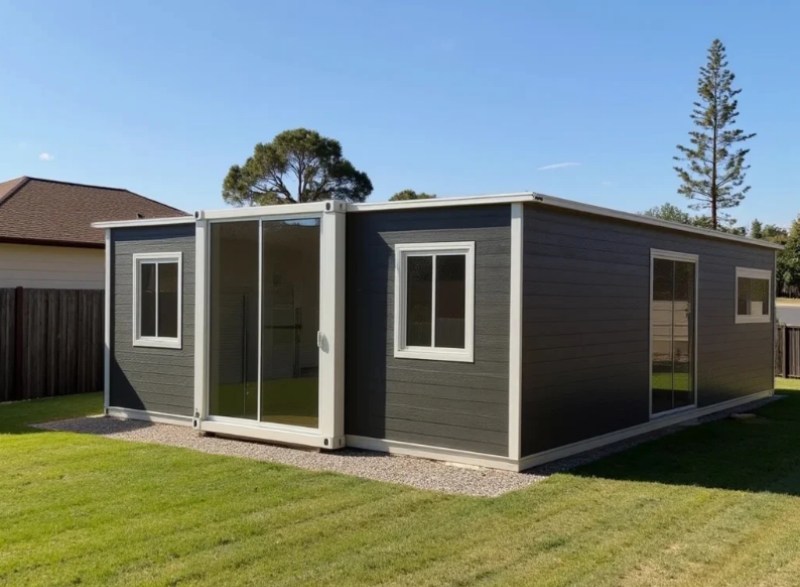
A container home suited for the Australian market should not focus solely on aesthetics;it must also prioritize thermal insulation,corrosion resistance,safety,and customization capabilities.Selecting the right specifications early on can reduce future maintenance costs and enhance the overall living experience.Before buying a container house in Australia,you should consider the following factors:
It is advisable to prioritize understanding the insulation materials used for walls,roofs,and floors,as well as the overall energy efficiency performance.
For long-term residential projects,high-quality insulation systems not only improve comfort but also reduce energy consumption for air conditioning and heating.
If the project is located in a coastal area—such as Queensland—special attention should be paid to whether the building meets local wind load requirements.
Sound steel structural design and reliable connection systems help the building better withstand severe weather conditions.
In areas with a high risk of bushfires,it is recommended to select building materials with higher fire-resistance ratings.
Additionally,a robust moisture-proof design minimizes moisture ingress into the walls,extending the building's lifespan and improving indoor living comfort.
In recent years,residential construction concepts in Australia have been shifting,with more people focusing on construction efficiency,energy utilization,and architectural flexibility.
Compared to traditional building methods,most of the work for container homes is completed in a factory;this reduces on-site construction time and minimizes the impact of weather on project schedules.Furthermore,modular production ensures more consistent build quality.
For backyard granny flats,rural holiday homes,farm residences,and tourist campsites,container homes offer rapid construction and flexible design options tailored to specific site conditions—making them increasingly popular among families and businesses alike.
As the concept of green building gains traction,more projects are incorporating energy-efficient windows and doors,solar power systems,and eco-friendly insulation materials,allowing modern container homes to demonstrate significant advantages in sustainability.
As a professional manufacturer of prefabricated container house,WZHhouse has long specialized in the R&D and export of container homes and modular structures.Our product range includes expandable container homes,foldable container homes,modular residences,and custom-built structures.
For the Australian market,we offer not only standardized products but also customized adjustments—tailored to the specific climatic conditions of different states—regarding insulation,corrosion resistance,door and window specifications,and exterior design.This ensures we better meet the needs of residential homes,holiday homes,mining camps,and commercial projects.
From conceptual design and manufacturing to international shipping and technical support,WZHhouse aims to provide clients with highly efficient,reliable,one-stop building solutions through a comprehensive service system.
The question of whether container homes are suitable for the Australian climate cannot be answered with a simple"yes"or"no";rather,it depends on whether they have been scientifically designed with the local environment in mind.
From the hot and humid climate of Queensland to the colder winters of Victoria and the hot,dry conditions of Western Australia,different regions impose varying requirements on building performance.Provided that factors such as insulation,ventilation,corrosion resistance,wind resistance,and fire safety are fully considered during the design phase,modern container homes are fully capable of meeting the long-term needs of Australian residential and commercial projects.
If you are planning a residential home,granny flat,holiday home,or commercial project in Australia,partnering with a manufacturer experienced in overseas projects will help ensure a solution that complies with local building standards and facilitates a smoother process from design to delivery.For projects seeking a balance of construction efficiency,build quality,and long-term value,modern container homes represent a building option well worth serious consideration.



Copyright © Hebei Weizhengheng Modular House Technology Co., Ltd. All Rights Reserved
Sitemap

 +8615081877521
 +8615081877521