- icy@wzhgroup.com
- +86 15081877521


The application of prefabricated homes is expanding rapidly across Australia—from densely populated cities like Sydney and Melbourne to resource-rich Western Australia and the booming tourism hubs of Queensland.Chinese-manufactured prefab homes are meeting increasingly diverse architectural needs,ranging from standalone houses and"granny flats"to mining camps,commercial offices,and holiday cabins.
If you are planning a residential or commercial project in Australia,this article will help you understand the advantages of Chinese prefab homes,the various product types,the export process,and the relevant building codes,enabling you to make informed decisions before your project begins.
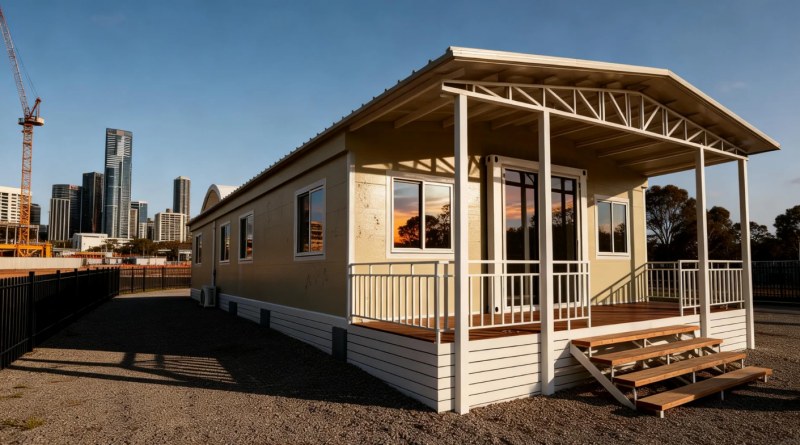
The growing popularity of Chinese prefab homes in the Australian market stems from more than just price advantages;it is largely due to their ability to strike an excellent balance between construction efficiency,product quality,supply chain stability,and customization capabilities.For residential and commercial projects aiming to shorten construction timelines and control budgets,prefabricated construction has become a mature and reliable solution.
In recent years,the Australian construction industry has experienced significant cost increases.Public industry data indicates that the overall cost of new residential construction has risen by 20%to 35%compared to pre-pandemic levels,with some regions seeing even higher increases.Simultaneously,a shortage of construction workers has forced many projects to extend their construction schedules.
For instance,in Sydney and Melbourne,traditional residential projects typically take 10 to 18 months from design and approval to final completion.In contrast,factory-based prefabrication allows most building components to be produced in advance,reducing on-site installation time by 30%to 50%—a crucial benefit for projects with tight deadlines.
In remote areas—such as mining sites in Western Australia or engineering projects in the Northern Territory—where on-site construction is heavily impacted by weather,transportation,and labor constraints,prefabricated buildings can effectively minimize on-site work and boost overall construction efficiency.
Not all prefabricated homes are suitable for every project.Selecting the right building type requires a comprehensive assessment of factors such as the intended lifespan,site conditions,local climate,and future use.Only by aligning the product with the project's specific requirements can the full advantages of prefabricated construction be realized.
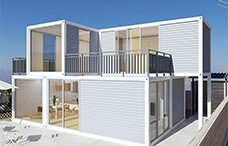
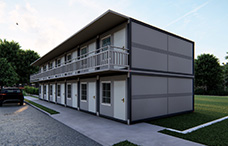
Modular homes are currently one of the most widely used forms of prefabricated architecture in the Australian market.The main building components are manufactured in a factory and then transported to the site for final assembly;this process effectively reduces on-site construction time while ensuring high structural precision.
For cities like Sydney,Melbourne,and Canberra,these products are ideal for permanent residences,schools,medical centers,and commercial office buildings.Since interior fit-outs can be completed in advance,the overall delivery efficiency is typically higher than that of traditional construction methods.
Furthermore,modular buildings offer advantages in energy efficiency,thermal insulation,soundproofing,and ease of maintenance,aligning well with modern residential trends.
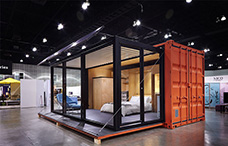
As Australian households increasingly seek backyard dwellings,expandable container homes have become a popular choice.
These homes remain folded during transport and expand into a complete living space upon arrival at the site,significantly lowering transport costs and shortening installation times.
Beyond granny flats,these units are suitable for farmhouses,tourist campsites,holiday cabins,and temporary office spaces.Notably,rural tourism projects in Queensland and New South Wales have already begun adopting expandable homes as accommodation units.
Mining operations,infrastructure developments,and large-scale engineering projects often take place in remote locations,placing a premium on transport efficiency.
The primary advantage of foldable container homes is their compact transport volume;a single 40-foot high-cube container can transport multiple units,thereby reducing international logistics costs.Once a project concludes,the units can be dismantled and relocated to a new site,maximizing reusability.
Consequently,these products are widely used in Western Australia's mining sector,remote engineering projects,and emergency housing.
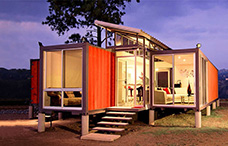
In recent years,an increasing number of real estate developers have turned their attention to prefabricated villas.
Compared to traditional construction methods,prefabricated villas not only shorten the overall construction timeline but also allow for customization of facades,roof styles,and interior layouts to meet specific project needs.Whether the style is modern minimalist or rustic,factory prefabrication ensures consistent production quality and elevates the overall standard of the project.For resorts,high-end homestays,and residential developments,this type of product is emerging as a new direction for growth.
When selecting prefabricated housing,one should not focus solely on price;instead,factors such as the project's intended use,local climate,transportation conditions,and future operational needs should be comprehensively considered.Only by identifying a building solution truly suited to the project can the full value of prefabricated construction be realized.
Yes,they can.China has become a major supplier of prefabricated housing to Australia.As long as the products comply with local building codes and undergo production,shipping,and customs clearance in accordance with international trade procedures,they can successfully enter the Australian market.
The general process for exporting Chinese prefabricated houses to Australia
A well-managed export project typically follows this workflow:
Requirement consultation
↓
Design proposal and quotation
↓
Factory production and manufacturing
↓
Quality inspection
↓
Container loading
↓
Sea freight to Australia
↓
Customs clearance
↓
On-site installation and acceptance
For experienced manufacturers,the period from design confirmation to the completion of production usually takes 30 to 45 days,followed by a shipping time of 15 to 30 days,depending on the destination port.Consequently,most projects take approximately two to three months from the initial order to the completion of on-site installation.
In addition to production,pre-export preparations require documentation such as commercial invoices,packing lists,bills of lading,and relevant technical specifications.It is also advisable to consult with local design firms or approval authorities early in the project to clarify requirements regarding building permits,foundation work,and installation,thereby avoiding delays caused by regulatory issues.
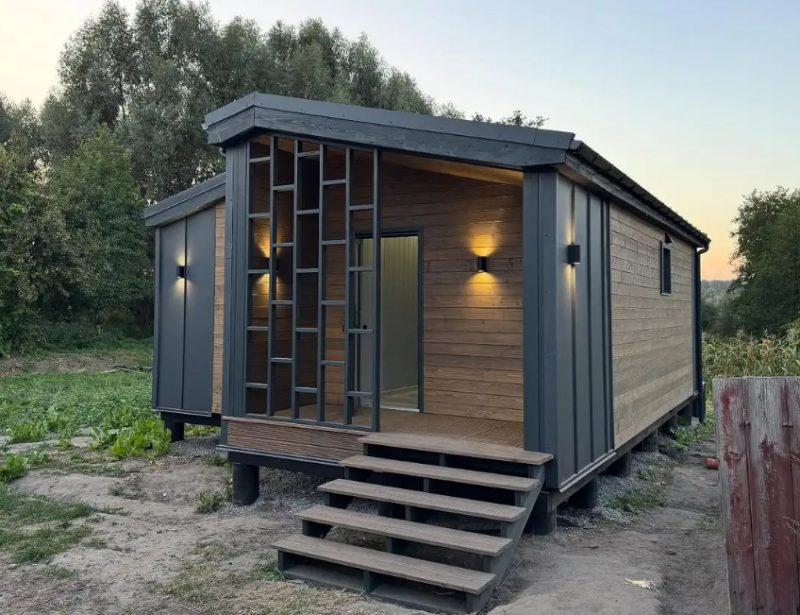
While Chinese prefabricated houses can be exported to Australia,their successful deployment depends on compliance with local building codes.Different states and building types have specific requirements regarding structural safety,thermal insulation,fire resistance,and wind resistance.Therefore,before commencing a project,it is recommended to verify local regulations and partner with a manufacturer experienced in Australian projects.
The National Construction Code(NCC)of Australia serves as a crucial standard for building design and construction.Whether for residential,commercial,or public facilities,projects must meet the relevant technical requirements outlined in the code.
For prefabricated housing,the design phase typically involves considerations such as structural integrity,safety performance,energy efficiency requirements,and accessibility standards.This is particularly important when the units are intended for use as permanent residences;the product must not only meet factory manufacturing standards but also comply with local council approval requirements.
If your project is located in major cities like Sydney or Melbourne—where local government residential approval processes are well-established—preparing comprehensive technical documentation and construction drawings in advance can effectively shorten the approval timeline.
Australia is a vast country with significant regional variations in the natural environment;therefore,a"one-size-fits-all"standard cannot be applied to architectural design.
For instance,coastal areas in Queensland are frequently affected by tropical storms,requiring buildings to have higher wind resistance ratings.In parts of Western Australia,where summers are extremely hot,roof and wall insulation performance is critical.Conversely,in Victoria and Tasmania,where winter temperatures are relatively low,the focus shifts to thermal insulation and energy efficiency.
Additionally,in areas with a high risk of bushfires,the selection of exterior wall materials,window and door systems,and roof designs must be adjusted to meet local regulations and enhance overall safety.
When purchasing prefabricated housing,many projects focus heavily on the product price while overlooking the importance of the initial design phase.
In reality,a design that complies with local regulations often reduces the cost of subsequent modifications and improves the overall efficiency of the project's progress.Therefore,before production begins,it is advisable to communicate thoroughly with your supplier regarding the building's intended use,the local environment,and future operational needs.This ensures that the product design accounts for the realities of the Australian market from the outset.
Compliance with building standards is not only crucial for project approval but also directly impacts the building's safety and lifespan.Choosing a manufacturer familiar with the Australian market generally ensures a smoother project execution.
Prefabricated houses from China generally offer excellent value for money,but the final budget depends on more than just the house itself.Factors such as floor area,specification standards,transportation distance,foundation work,and local installation costs all influence the total project cost.Consequently,when planning your budget,it is recommended to consider the project as a whole rather than simply comparing unit prices.
The table below outlines approximate price ranges for common industry products and is intended solely for project budgeting purposes.
| Housing Type | Reference Ex-Factory Price (FOB, China) | Estimated Project Budget (Australia*) |
|---|---|---|
| Expandable Container House | USD 8,000–20,000 | USD 15,000–35,000 |
| Modular House | USD 30,000–120,000 | USD 45,000–180,000 |
| Prefabricated Villa | From USD 80,000 | Custom Quotation Based on Project Scale |
Note:The prices above are for industry reference only;actual costs vary based on specifications,transport distance,foundation work,and local labor rates.
Floor area is usually the most direct factor influencing price,but it is not the only one.
For example,wall insulation ratings,door and window brands,kitchen and bathroom fittings,roofing materials,and smart home systems all impact the final quote.Additionally,the distance to the shipping port,international freight charges,and local Australian costs for hoisting and installation must be factored into the overall budget.
For projects in remote areas—such as mining sites in Western Australia or construction camps in the Northern Territory—logistics costs may be higher than in port cities like Sydney or Melbourne due to the longer transport distances.
When selecting suppliers,some projects focus solely on the quoted price while overlooking product quality,design capabilities,and after-sales service.
In reality,a high-quality prefabricated house that is efficient to install can often save money on long-term maintenance and construction costs.When considering the entire project lifecycle,overall value is usually more important than the initial purchase price.
A mature international logistics system currently exists between China and Australia.For most prefabricated housing projects,the timeline from factory production to on-site installation typically ranges from 8 to 12 weeks,depending on the product type,shipping method,and destination port.
A standard project typically involves several stages:design confirmation,factory production,quality inspection,container loading,international shipping,Australian customs clearance,and on-site installation.Products utilizing flat-pack or foldable designs can improve container utilization and reduce shipping costs,whereas modular buildings—often transported as complete units—are better suited for large-scale projects.
Transportation planning is crucial in international procurement.Confirming shipping schedules,ports of entry,and on-site lifting arrangements during the production phase allows many projects to minimize waiting times and ensure a seamless transition from arrival to installation.
For projects with tight construction schedules,it is advisable to coordinate production and shipping plans with the manufacturer to enhance overall delivery efficiency.
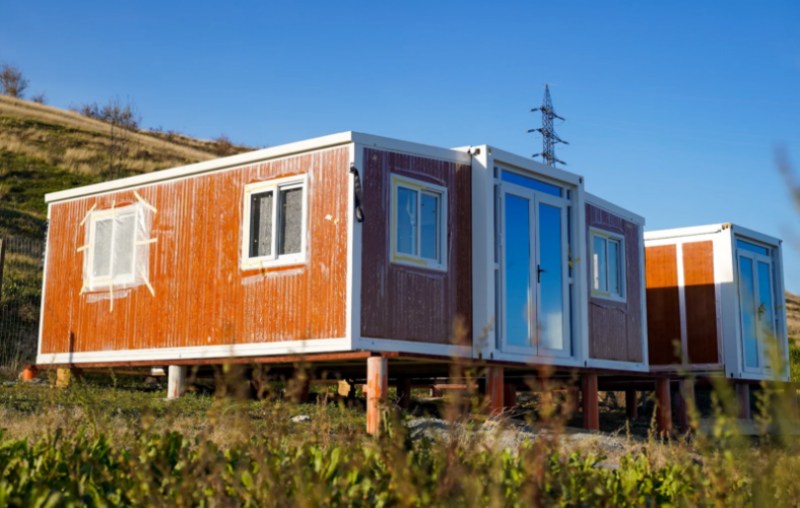
An excellent manufacturer should offer not just products,but comprehensive engineering solutions.Every stage—from design and production to export and technical support—impacts the project's final outcome.
Manufacturers with experience in overseas projects are generally more familiar with the building codes of various countries and can provide expert advice tailored to the Australian market.
Focus on factors such as factory scale,automation equipment,quality management processes,and production capacity,rather than just product images.
Stable production capacity ensures reliable delivery schedules and consistent product quality across different batches.
Different projects have unique requirements regarding floor area,architectural style,interior layout,and specifications.
Top-tier manufacturers typically provide customized solutions based on project needs,rather than simply selling standardized products.
Rather than seeking the lowest-priced supplier,choosing a partner with extensive experience,comprehensive services,and clear communication channels is more beneficial for the long-term success of your project.
As a manufacturer specializing in the export of prefabricated buildings,WZHhouse is dedicated to providing one-stop construction solutions to clients worldwide.
Our product range includes modular houses,expandable container homes,foldable container homes,and prefabricated villas.We offer personalized design,engineering support,and manufacturing services tailored to specific project requirements.
Leveraging our mature manufacturing systems and overseas export experience,WZHhouse assists clients with everything from design and manufacturing to quality control,international shipping,and technical support,delivering highly efficient solutions for residential,commercial,tourism,and workforce camp projects.Whether your project is located in Sydney,Brisbane,Perth,or elsewhere,we aim to facilitate smooth project execution through consistent product quality and professional service.
Can prefabricated houses from China be exported directly to Australia?
Yes.As long as the products comply with relevant Australian building codes and the export,shipping,and customs clearance processes are completed in accordance with standard international trade procedures,they can legally enter the Australian market.
Do Chinese prefabricated houses meet Australian building standards?
They can be designed and manufactured to meet the specific requirements of the project location.Since building codes vary by state,we recommend confirming the relevant requirements during the design phase.
How long does shipping from China to Australia usually take?
Generally,the production cycle is approximately 30 to 45 days,and ocean shipping takes about 15 to 30 days;including customs clearance and on-site installation,the entire project typically takes 2 to 3 months.
Can the floor plan and interior layout be customized?
Yes.Most prefabricated houses allow for customization regarding dimensions,floor plans,exterior aesthetics,insulation specifications,and interior finishes to meet the specific requirements of different projects.
How can I obtain an accurate quote?
We recommend providing the manufacturer with details such as the building area,intended use,project location,and configuration requirements.The more complete the information,the more accurate the quote will be,which also facilitates subsequent design and project planning.
As the Australian construction market increasingly moves toward efficiency,sustainability,and modularity,Chinese prefabricated houses have evolved beyond a mere cost-effective building option;they have become a vital solution for a growing number of residential,commercial,and engineering projects.
Ultimately,what matters most is not simply choosing the lowest-priced product,but finding a partner capable of meeting your project’s specific needs and local building codes while ensuring reliable delivery.The true advantages of prefabricated housing can only be fully realized through seamless collaboration across design,manufacturing,transportation,and technical support.
If you are seeking Chinese prefabricated housing solutions tailored to the Australian market,WZHhouse offers customized designs,product recommendations,and export support based on your project requirements,helping to ensure your project proceeds efficiently and smoothly.



Copyright © Hebei Weizhengheng Modular House Technology Co., Ltd. All Rights Reserved
Sitemap


 +8615081877521
 +8615081877521