- icy@wzhgroup.com
- +86 15081877521


If you have been following the Australian residential property market in recent years,you may have noticed a significant shift:the"granny flat"is no longer merely a simple"elderly relative's room"in the backyard;it is increasingly appearing in government housing policies,real estate news,and discussions regarding modular housing development.
Particularly over the last two or three years,a steady stream of news regarding"streamlined approvals,""60-square-metre secondary dwellings,"and"planning permit exemptions"has led many to believe that Australia has comprehensively relaxed regulations on granny flat construction.
In reality,this is only half the story.
While Australia is indeed gradually adjusting policies to alleviate housing shortages through the addition of small-scale dwellings,these reforms are primarily taking place at the state level rather than through a unified national rollout.Significant differences remain between states regarding floor area limits,approval processes,land requirements,and rental permissions.
Therefore,when exploring Australian granny flat policies,rather than focusing solely on"the latest national regulations,"it is more practical to first understand the general direction of reform and then consider the specific requirements of your state and local council.This approach yields information that more accurately reflects the actual situation.
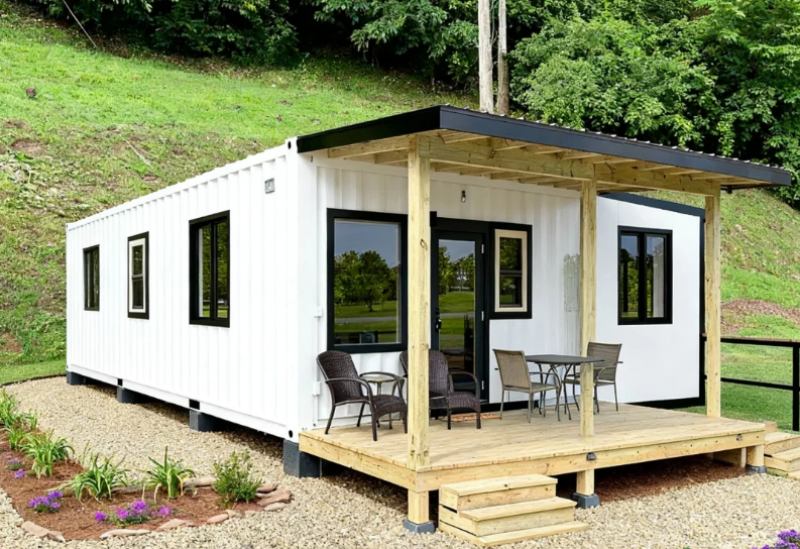
Australia is gradually relaxing policies regarding granny flat construction,yet there is currently no single set of regulations that applies nationwide.In recent years,New South Wales(NSW),Victoria(VIC),and Western Australia(WA)have all introduced varying degrees of reform,aiming to boost the supply of secondary dwellings,improve land-use efficiency,and alleviate ongoing housing pressures.
However,factors beyond just floor area limits determine whether a project can proceed smoothly.While state governments set planning policies,specific projects must also comply with local council planning requirements and the*National Construction Code*(NCC)standards regarding building safety,structural integrity,fire safety,and energy efficiency.
In short,while the policy trend in Australia is moving towards making construction easier,implementation varies by state.Understanding local planning requirements is often more important than grasping national trends.
Granny flats have become a hot topic in the Australian housing market in recent years.This is not merely due to policy changes;more importantly,people's needs regarding living spaces are evolving.
A decade ago,the term"granny flat"primarily conjured up images of independent yet adjacent accommodation for aging parents—hence the name.At that time,such structures were viewed more as extensions of the main family home rather than as standalone housing solutions.
Today,their uses have become far more diverse.
Increasing numbers of families are looking to utilize their backyards to create independent living spaces,offering flexible environments for adult children,long-term guests,or remote work.Some homeowners also use granny flats as long-term rental properties to maximize the overall utility and value of their land.
Meanwhile,the rise of modular construction has made this type of housing more accessible.Compared to traditional building methods,modern modular granny flats typically offer shorter construction times and more flexible layouts,attracting growing market interest.
However,market demand alone is not enough to drive the various states to adjust their planning systems.The real catalyst for policy change is the persistent housing supply pressure Australia has faced in recent years.
A glance at news headlines might suggest that Australian states are simply"relaxing granny flat regulations."In reality,the core objective of these policy adjustments is not merely to encourage the construction of more ancillary dwellings,but to improve the efficiency of housing supply by optimizing planning systems.
In recent years,housing shortages have become a major challenge across multiple Australian states.Continued population growth,shifting household structures,and a slowdown in the pace of residential construction have left an increasing number of cities facing housing crunches.
Compared to developing entirely new residential estates,adding a small secondary dwelling to existing residential land allows for faster occupancy and reduces the strain associated with new land development.Consequently,local governments increasingly view granny flats as a practical solution for improving housing supply.
At the same time,advancements in modular and prefabricated construction technologies have made this approach increasingly viable.Shorter construction timelines,reduced on-site work,and more consistent build quality have provided governments with a stronger policy foundation for promoting the construction of secondary dwellings.
However,the real story isn't whether the limit is set at 60 or 70 square meters;it is the fact that an increasing number of states have recently begun redesigning their existing approval systems.
When people focus on policy changes,they often notice adjustments to floor area limits first—such as the caps set at 60 or 70 square meters.
In reality,these figures represent only one aspect of planning policy.What has truly shifted in recent years—more so than the size itself—is the approval system and the way different states manage secondary dwellings.
In the past,most"granny flat"projects required a full planning approval process that could take months to complete.Today,some states have established more efficient approval mechanisms,allowing eligible projects to reach the construction phase much faster.
This does not mean that the approval process has been abolished;rather,the approval methods have become clearer and more targeted.
In practice,residential construction in Australia operates under a tiered management model.The federal government is responsible for building standards,state governments oversee planning policies,and local councils handle the implementation of specific land-use requirements.
Each of these bodies holds distinct responsibilities,and together they determine whether a granny flat project can successfully proceed.
Whether a structure is built using traditional methods or modular construction,it must comply with the National Construction Code(NCC)if it is intended for use as a permanent residence.
The NCC does not dictate whether a specific plot of land is eligible for a granny flat;instead,it focuses on the safety of the building itself,covering technical requirements such as structural integrity,fire safety,waterproofing,energy efficiency,and occupant comfort.
With the phased implementation of NCC 2022,the minimum energy efficiency standard for new homes has been raised to a 7-star NatHERS rating.This means that,increasingly,granny flat designs must account for thermal insulation,window and door specifications,and overall energy efficiency,rather than simply meeting basic functional needs.
If the NCC dictates*how*a house is built,the planning policies established by state governments determine*whether*it can be built on a specific piece of land.Each state establishes its own planning regulations based on local housing needs and land-use conditions,covering aspects such as permissible housing types,size limits,approval processes,and land-use criteria.
Consequently,while"granny flat"reforms are being discussed nationwide,the policies actually implemented vary from state to state.Some states focus on streamlining approval processes,others redefine what constitutes a secondary dwelling,and some relax land-use restrictions to make more properties eligible for such construction.
This explains why the application process for an identical 60-square-meter granny flat can differ significantly depending on the state.
While Australia as a whole is moving towards increasing the supply of secondary dwellings,the reform paths chosen by each state differ.Some states prioritize streamlining approval processes,others relax construction conditions,and some delegate more decision-making power to local councils.
If you want a quick overview of current"granny flat"policies across the states,the table below will help you form a general idea.
| State / Territory | Typical Maximum Floor Area* | Approval Process | Rental Permitted | Current Policy Direction |
|---|---|---|---|---|
| New South Wales (NSW) | Up to 60 m² | Mature CDC fast-track approval system for eligible projects | ✅ Yes | Australia's most established and investor-friendly granny flat market |
| Victoria (VIC) | Up to 60 m² | Most qualifying projects do not require a planning permit | ✅ Yes | Small Second Dwelling reforms continue to encourage backyard housing |
| Western Australia (WA) | Up to 70 m² | Simplified approval process with increasingly flexible construction requirements | ✅ Yes | Strong support for modular and prefabricated housing solutions |
| Queensland (QLD) | Varies by local council | Approval requirements differ significantly between councils | ✅ Yes | Regulations are becoming more flexible, although local policies still vary |
| South Australia (SA) | Approximately 60–70 m² | Assessed under local planning regulations | ✅ Yes | Secondary dwellings are gaining broader acceptance across the state |
| ACT & Tasmania (TAS) | Varies by region | Applications are generally assessed by local councils | ✅ Yes | Stable regulatory environment with no major policy reforms at present |
Note:The floor areas listed above are common policy references and do not apply to every project.Feasibility depends on a comprehensive assessment of land zoning,local council planning requirements,and the latest regulations.
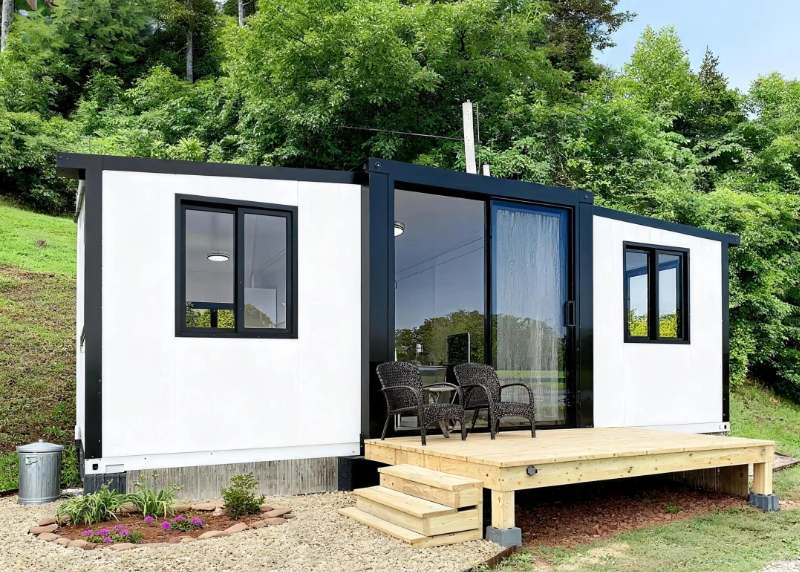
With more states relaxing granny flat policies,opportunities to build secondary dwellings are increasing.However,before you begin designing or consulting on building plans,there are a few key issues to verify.
Many projects require plan revisions not because of issues with the building itself,but because land conditions or local regulations were overlooked during the initial planning stage.Therefore,rather than comparing floor plans first,it is better to confirm whether the project complies with local planning requirements.
Although the media frequently discusses new state government policies,it is often the local council's planning regulations that ultimately determine project approval.
Factors such as land zoning,building setbacks,flood zones,bushfire risk areas,and heritage protection requirements can all influence the final construction plan.Consequently,understanding local planning requirements before investing in design work can save a significant amount of time.
Reforms regarding"granny flats"in Australia are ongoing,and states may further adjust relevant policies in the coming years based on housing supply conditions.
If you are planning to launch a project within the next year or two,it is advisable to monitor the latest planning information released by your local government,rather than relying solely on case studies from several years ago or anecdotal accounts found online.
Is Australia relaxing Granny Flat regulations?
Yes.Several Australian states have introduced more flexible planning policies to encourage the construction of Granny Flats and other small secondary dwellings.
However,these changes are implemented at the state level rather than nationally.The approval process,size limits and planning requirements still vary depending on where the property is located.
Is there a national Granny Flat law in Australia?
No.Australia does not have a single national law that governs Granny Flats.While all residential buildings must comply with the National Construction Code(NCC),planning rules,approval pathways and land-use requirements are managed by individual states and local councils.
Which Australian state has the most established Granny Flat policy?
New South Wales(NSW)currently has one of Australia's most developed Granny Flat approval systems.Other states,including Victoria and Western Australia,have also introduced significant reforms in recent years,but their planning frameworks are different from NSW.
Can a Granny Flat be rented out?
In most cases,yes.Granny Flats can generally be used as independent rental accommodation if they comply with local planning regulations.Specific requirements may differ between states and councils,so it is always worth checking the latest local rules before planning a project.
Does a modular Granny Flat follow different building regulations?
No.Modular Granny Flats are required to meet the same building standards as traditionally constructed homes.Although modular construction can reduce construction time,it does not replace planning approval or building compliance requirements.
Are Granny Flat regulations expected to change again?
Probably.Many Australian states continue to review their housing policies as they look for ways to increase housing supply.Because planning reforms are still evolving,checking the latest state and local regulations before starting a project is recommended.
Are Granny Flat rules the same across Australia?
No.Each state has its own planning framework,and local councils may apply additional requirements.As a result,two similar Granny Flat projects may follow different approval processes depending on their location.
Australia is gradually easing regulations regarding"granny flats,"yet significant differences remain across states regarding reform approaches and approval requirements.For any granny flat project,the key focus should not be on a single national policy,but rather on the latest requirements from the relevant state government,local council,and the National Construction Code(NCC).
As modular construction gains increasing acceptance in the Australian market,more projects are opting for solutions that offer shorter construction timelines and greater design flexibility.Selecting a building solution that complies with local regulations and meets specific project needs will facilitate a smoother project execution.
WZHhouse specializes in the design and manufacturing of modular homes and container houses,providing granny flat solutions for the Australian market that meet local building standards.Whether for a backyard dwelling,a standalone rental unit,or a custom modular home,we offer comprehensive support—from design and manufacturing to export—tailored to your project requirements.
If you are planning a granny flat project in Australia or are interested in modular housing solutions suited to the local market,please contact the WZHhouse team for professional advice and customized solutions.



Copyright © Hebei Weizhengheng Modular House Technology Co., Ltd. All Rights Reserved
Sitemap





 +8615081877521
 +8615081877521