- icy@wzhgroup.com
- +86 15081877521


If you are considering building a backyard shipping container office in 2026,the first question that usually comes to mind is:How much is it actually going to cost?
Simply put,the total investment for most people ranges from approximately$10,000 to upwards of$75,000,depending on the level of simplicity or customization you desire.Basic versions are relatively inexpensive,whereas high-end versions—featuring full interior finishes,air conditioning,insulation,and modern designs—can approach the cost of renovating a small residential home.
However,the key takeaway is this:there is no fixed price in this industry,as the final cost depends entirely on your specific design requirements,comfort preferences,and configuration standards.
Let's break it down step by step.
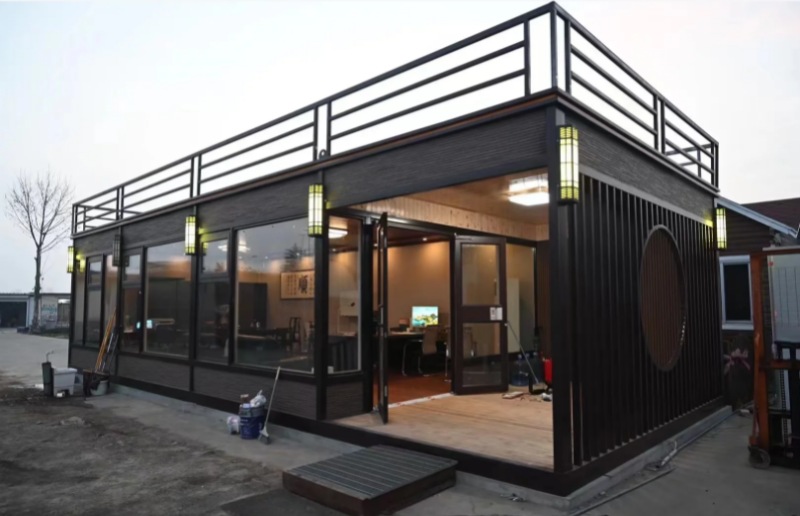
Many people assume that the bulk of the cost lies in the container itself,but this is not actually the case.The true expenses primarily stem from the process of"transforming a steel box into a functional office space suitable for long-term use."
Below,we provide a detailed breakdown of shipping container office costs to give you a clear understanding of exactly where your money is being allocated when purchasing one.
The container itself serves as the starting point for the entire project,yet it typically does not account for the largest portion of your budget.Generally,the cost of the container itself falls between$2,000 and$6,000.The price for a used 20-foot container is relatively low,while a"one-trip"container—which is nearly brand-new—will be somewhat more expensive.
Many people tend to opt for a one-trip container because its structural integrity is more intact,its exterior appearance is cleaner,and it requires fewer repairs during the subsequent conversion process.In the long run,this choice often proves to be a time-saver.
If you plan to use this office space in your backyard for the long term,the fundamental quality of the container will directly impact your future experience;therefore,it is generally not advisable to blindly chase the lowest possible price in this area.
A shipping container cannot be placed directly onto soft ground,as doing so risks issues such as subsidence or structural deformation.Consequently,installing a container office requires the construction of a proper foundation;the cost for this site preparation and foundation work typically ranges from$500 to$5,000.Generally speaking,most households opt for a gravel base or concrete block supports;both methods are relatively low-cost and sufficient for the needs of most backyard settings.
If your backyard terrain is uneven or requires extensive site preparation,the overall cost will rise significantly.However,provided the foundation is properly laid,future maintenance will be much easier.
This component essentially determines whether the shipping container truly transforms into a"functional office."Structural modification costs typically range from$2,000 to$15,000;the most basic modifications involve cutting openings for doors and windows to ensure the interior benefits from natural light and provides proper access.
However,once you begin incorporating specific design elements—such as large glass panes,floor-to-ceiling windows,or uniquely shaped structural openings—costs will escalate noticeably.Furthermore,every cut made to the container requires additional steel reinforcement,which is a major contributor to the increased expense.
Simple,practical designs tend to be more economical,whereas modern designs with a greater sense of openness typically entail higher construction complexity.
Without an effective insulation system,the interior of a shipping container can become stiflingly hot in the summer and cool down rapidly in the winter;therefore,investing in this area is almost a necessity.The cost for insulation and climate control systems generally falls between$2,500 and$10,000.
A common practice is to use spray foam insulation,which offers excellent sealing properties and thermal efficiency.For those on a limited budget,alternative options such as rock wool or rigid insulation panels can be chosen to help balance costs.
Typically,a split-system air conditioner and basic ventilation equipment are also installed to ensure the entire space maintains a comfortable temperature throughout the changing seasons.
The electrical system is the critical component that makes the space truly"office-ready";without a stable power supply,the overall functionality of the space would be severely compromised.Electrical system costs typically range from$1,500 to$8,000.
A basic setup usually includes wiring,outlet installation,and a lighting system—which is sufficient for simple office tasks.However,if you have greater equipment demands—such as dual monitors or printing devices—the electrical planning will require a more professional and specialized approach.
Some users also choose to install additional network cabling or smart office devices,which will further increase the overall project cost.
The interior fit-out directly determines how you feel while working inside the space.Even if the underlying structure—the shipping container itself—remains the same,different interior design styles can result in a completely different experience.The cost for interior fit-out typically ranges from$3,000 to$20,000+.
A basic fit-out usually includes only flooring,wall treatments,and simple lighting fixtures,which helps keep the budget in check.However,if you aim to create a more modern,design-forward workspace,the project will involve custom furniture,specialized lighting design,and even branded decorative elements.
Costs in this category vary significantly;some individuals opt for a highly frugal approach,while others choose to treat the space as a full-fledged,professionally designed studio.
Transport and installation may appear straightforward,but in practice,they are heavily influenced by various on-site conditions.Factors such as the width of the backyard access path,whether a vehicle can drive directly onto the site,and whether hoisting equipment is required all play a role.The cost for transport and installation ranges from$1,000 to$8,000.
If on-site conditions are ideal,the transport process will proceed smoothly,and costs will remain relatively low.However,if a crane or specialized equipment is needed to maneuver the container into the backyard,expenses will increase significantly.
Although this category does not constitute the bulk of the project's cost,it often introduces"unexpected fluctuations"to the budget during the final stages.
Requirements for backyard structures vary widely by region;in some areas,the approval process is quite simple,while others require navigating a comprehensive building permit procedure.Costs in this category range from$500 to$5,000+.
Typically,you will need to account for expenses related to building permit applications,Homeowners Association(HOA)approvals,and various safety inspections.
It is highly recommended that you verify local regulations before commencing the project;failure to do so could lead to delays and increased costs later on due to compliance issues.
Now that you have a better understanding of the various cost components,you may realize that the budget for a container office is not a single fixed figure,but rather the cumulative result of several distinct modules.
If you were to look solely at a broad"total price range,"the figures might seem somewhat vague.However,when you break the costs down item by item,each expense becomes much clearer—making it easier to adjust the budget to align with your specific needs.
The table below provides a visual breakdown to help you better understand exactly where your money is being spent,as well as which specific areas offer opportunities for optimization or cost reduction.
Container Office Cost Breakdown
Cost Item | Cost Range (USD) | Description |
Container Shell | $2,000 – $6,000 | Base cost for a 20ft or 40ft container |
Foundation Work | $500 – $5,000 | Gravel base, concrete blocks, or ground preparation |
Structural Modifications | $2,000 – $15,000 | Cutting windows and doors, steel reinforcement, etc. |
Insulation & HVAC | $2,500 – $10,000 | Insulation materials + HVAC climate control system |
Electrical System | $1,500 – $8,000 | Wiring, lighting, outlets, and networking systems |
Interior Fit-out | $3,000 – $20,000+ | Flooring, wall finishes, furniture, interior design |
Transport & Installation | $1,000 – $8,000 | Shipping, hoisting, and on-site assembly |
Permit Fees | $500 – $5,000+ | Building permits and local regulatory approval fees |
The total cost for a container office typically falls within the range of$10,000 to$75,000+.The reason for this wide cost variance is that the specific configurations for each project differ significantly.
Some individuals opt for a basic,functional workspace,while others choose to upgrade directly to a modern studio equipped with comprehensive comfort systems.
If you are currently planning your budget,there are actually numerous ways to effectively reduce your overall investment.The key isn't simply to"spend less,"but rather to allocate your funds to the areas that truly impact the user experience.
The methods outlined below are common optimization strategies frequently employed in real-world projects,and each offers a tangible opportunity for cost savings.
Choosing a standard 20-foot or 40-foot container is the most direct way to control costs.Standard dimensions not only result in lower procurement costs but also streamline the processes of transportation,structural modification,and construction;they rarely incur additional fees associated with custom fabrication.
Conversely,opting for non-standard dimensions or specialized structural designs typically increases the overall cost by 10%to 20%and extends the construction timeline.
Open-plan office layouts are typically more economical than multi-room structures.Every additional partition wall introduced translates to increased costs for materials,labor,and structural modifications.
If you opt for a simple,open-plan space,not only is construction faster,but the overall budget can often be reduced by 15%to 30%,while simultaneously improving space utilization efficiency.
While windows and doors may appear to be merely design elements,in the context of shipping container conversions,they actually represent a significant cost factor.
Every structural opening requires cutting through the steel framework and implementing additional reinforcement,which drives up both labor and material expenses.
By limiting the number of windows and avoiding extensive glass designs,you can typically reduce the overall project cost by 10%to 25%.
Insulation systems are an area prone to"over-engineering."Many people opt for high-specification materials;however,for a standard backyard office setup,the absolute highest-end configuration is rarely a necessity.
By choosing a more cost-effective solution—such as rock wool or basic spray foam—and pairing it with a standard air conditioning system,you can typically save 10%to 30%on costs while still ensuring a comfortable working environment.
This is arguably the most significant factor influencing your budget.Purchasing through intermediaries often results in compounded costs—including design fees,administrative overhead,and distribution markups—whereas sourcing directly from the factory allows you to bypass these additional expenses.
In practice,choosing a direct-from-manufacturer approach can typically lower the overall budget by 15%to 40%,while also offering greater flexibility for customization and more reliable delivery timelines.
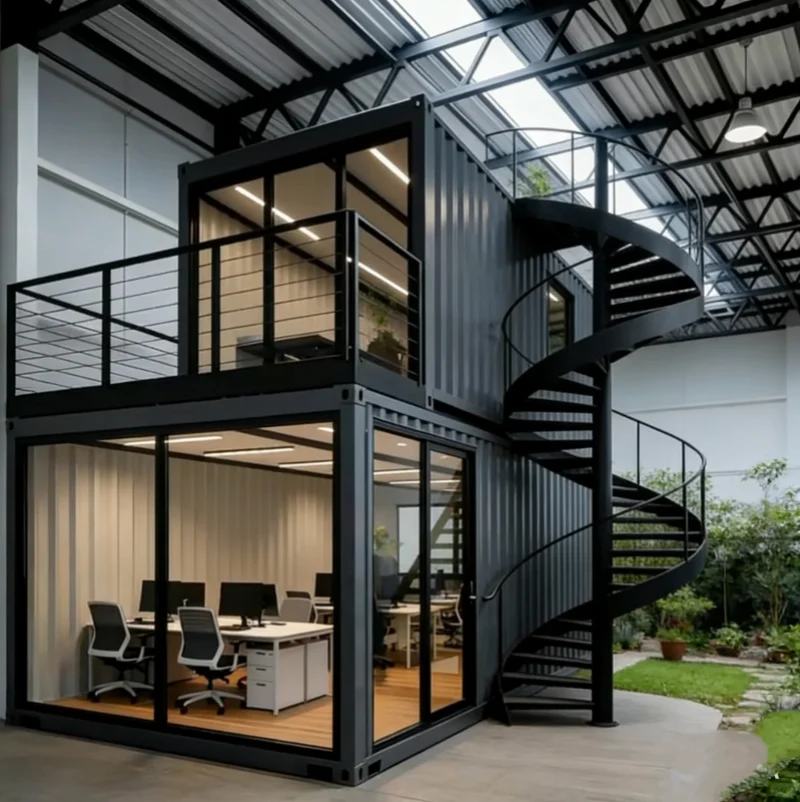
A backyard container office project offers significant potential for budget optimization.During the actual planning phase,many individuals find that by selecting standard container dimensions,simplifying the structural design,and moderating the complexity of interior finishes,they are able to bring the total cost in significantly lower than their initial estimates.
Broadly speaking,the cost savings achieved through these optimization strategies are generally consistent,typically allowing you to save approximately 20%to 40%on your total budget.In other words,by making more sensible configuration choices—without compromising the quality of your daily working experience—the overall financial investment becomes much more manageable.
To give a simple example:if your initial budget is$50,000,optimization could potentially lower the actual final cost to somewhere between$30,000 and$40,000.This discrepancy stems primarily from the elimination of non-essential features—rather than sacrificing core office functionality such as comfort,structural integrity,or operational stability.
If you are contemplating building a backyard container office,the best way to decide is to compare it directly against a traditional office setup,rather than evaluating its merits in isolation.
Many people ultimately choose this option not because it is inherently more"luxurious,"but because it aligns more closely with their practical needs across key dimensions:cost,speed,and flexibility.
Container Offices vs.Traditional Offices:A Comparison
Comparison Criteria | Container Office | Traditional Office |
Initial Cost | Relatively low ($10,000 – $75,000+; highly controllable) | Typically higher (renovation + rent or purchase costs) |
Construction Timeline | Fast (typically a few weeks to a few months) | Longer (extended design and construction phases) |
Space Acquisition | Can be set up on your own land; no relocation required | Requires leasing or purchasing commercial space |
Flexibility | High (customizable and adaptable) | Lower (fixed structure) |
Scalability | Modular expansion capabilities | Expansion is costly and restricted by building codes |
User Experience | Private, independent workspace; ideal for remote work | More formal office environment, but includes commuting |
Long-Term Costs | Mainly one-time capital investment | Ongoing rent and maintenance expenses |
If you are in need of a home office space,a remote work environment,a private studio,or even a lower-cost alternative to a long-term office lease,a container office is typically the more flexible choice.
Its true value lies not in whether its exterior appears"luxurious,"but in the ability to quickly acquire a completely independent workspace—while simultaneously avoiding the high rental pressures and long-term contractual obligations associated with traditional office spaces.For many people,having a"ready-to-use space of their very own"constitutes the greatest value of all.
If your priorities are cost control,operational flexibility,and rapid deployment,a container office is likely the better fit for you.However,if you require a more formal corporate image and a fixed commercial business address,a traditional office still retains its own irreplaceable advantages.
Overall,in 2026,the price of a backyard container office typically ranges from$10,000 to over$75,000,varying based on the complexity of your design,interior configurations,and comfort requirements.
If you engage in clear upfront planning—selecting reasonable dimensions and basic configurations—it is entirely possible to create a practical,standalone office space within a relatively manageable budget,perfectly suited for daily remote work or studio use.
However,if you have higher standards regarding comfort,aesthetics,and the overall experience,the space can be further upgraded to become a personalized work environment that approaches the standards of high-end residential living.
If you are considering building a backyard container office,feel free to send us your basic requirements.WZHhouse will review your specific situation and help you determine the most suitable approach.
Typically,we begin by gathering some basic information,such as:
•Approximate dimensions of your backyard
•Your budget range
•Primary intended use(office,studio,multi-purpose space,etc.)
With this information in hand,WZHhouse can develop a proposal that is closely tailored to your actual needs.Starting with a simple idea,we can work together to bring it to life—step by step—and transform it into a fully functional backyard office space.



Copyright © Hebei Weizhengheng Modular House Technology Co., Ltd. All Rights Reserved
Sitemap


 +8615081877521
 +8615081877521