- icy@wzhgroup.com
- +86 15081877521


As work becomes more flexible,more businesses are starting to rethink what an“office”really needs to be.
Container offices have gradually become a practical option.They’re quick to install,easy to relocate,and flexible enough to adapt as your team grows.
In real projects,we’ve seen everything from simple single-unit offices on construction sites to fully customized multi-container workspaces in business parks.From the outside,they can look clean and modern.Step inside,and you’ll often find a bright,well-organized workspace filled with natural light—something many people don’t expect at first.
So the real question isn’t whether container offices work.It’s how to configure one properly for your needs.
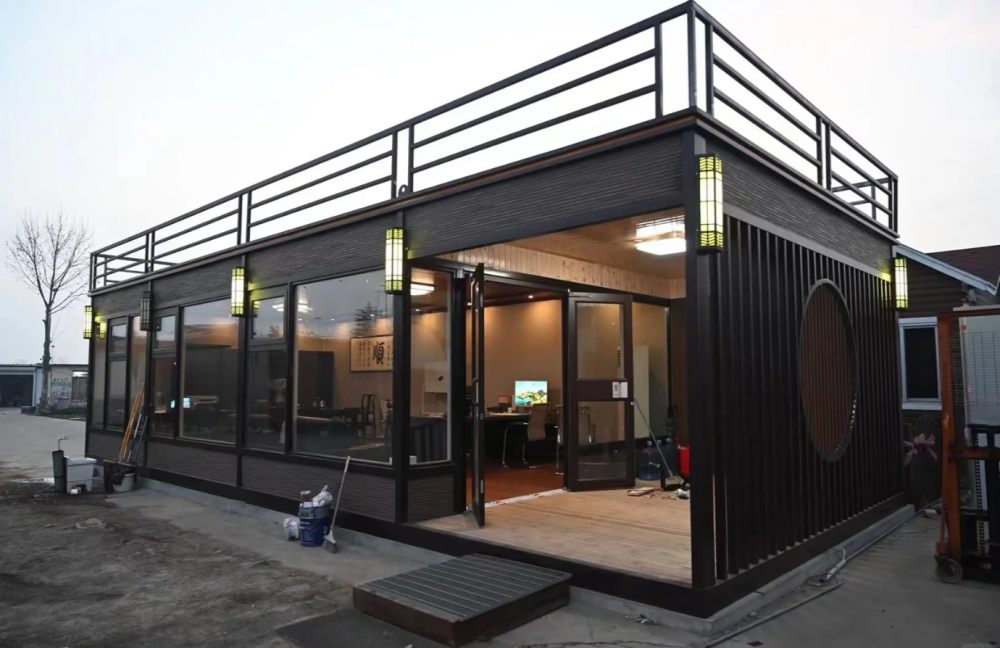
There isn’t just one reason.In most cases,it comes down to a combination of speed,cost,and flexibility.
For growing teams,speed matters.A traditional office building can take months to complete.With container offices,installation can often be finished within days or weeks.That makes a big difference for projects that need to start quickly.
Flexibility is another major advantage.If your team expands,you don’t need to relocate—you can simply add more units.If the project ends,the office can be moved or repurposed elsewhere.
Cost is also easier to control.Instead of committing to a large upfront investment,businesses can start small and upgrade gradually.This is especially helpful for startups or short-term projects.
Of course,container offices aren’t the perfect solution for every situation.But for temporary offices,fast-growing teams,or remote project sites,they offer a level of practicality that’s hard to ignore.
When planning a container office,many people focus only on size or price.
But in reality,what makes the biggest difference is how each part is designed and how the space actually feels in daily use.
Let’s walk through the key configurations from a more practical perspective.
Most container offices start with a 20ft or 40ft unit.
That sounds simple,but once you step into a real setup,it becomes much more flexible than expected.
A small team might begin with a single unit.It works—but after adding desks,chairs,and storage,the space can feel a bit tight.
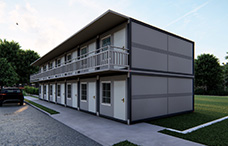
Now imagine combining two 40ft containers side by side.Suddenly,the space opens up.There’s room not just for desks,but also for movement,small discussions,and a more comfortable working environment.
In one project,a client initially planned for 10 people.A few months later,the team grew to nearly 20.Because the structure had been planned with expansion in mind,an additional unit was added without interrupting daily work.
That’s one of the biggest advantages:you’re not locked into a fixed layout.
From the outside,a container office may look industrial.
Inside,however,the experience can be completely different—if the details are done right.
Insulation is one of the most important factors.Without it,the space can quickly become too hot or too cold.With proper materials like rock wool or polyurethane panels,indoor temperature becomes much more stable.
Interior finishes also make a noticeable difference.
Simple options like PVC flooring and clean wall panels are practical and easy to maintain.Slight upgrades—such as wood-style flooring or a finished ceiling—can make the office feel much more comfortable and less“temporary.”
Some clients are genuinely surprised when they step inside for the first time.
It no longer feels like a container—it feels like a real office.
Lighting has a bigger impact than most people expect.
A container with small windows can feel enclosed,even if it has enough space.
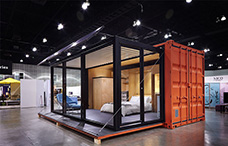
But once larger windows—or even full glass panels—are added,the atmosphere changes immediately.
Natural light enters the space,making it feel more open and inviting.
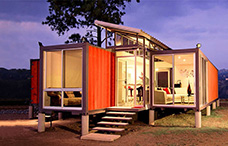
In one business park project,large glass windows were installed facing a green outdoor area.After moving in,employees naturally preferred working near the windows.Informal discussions started happening there without any planning.
Sometimes,a simple design choice can change how people actually use the space.
On paper,electrical systems seem straightforward:outlets,lighting,and a distribution box.
But in real use,this is where small issues often appear—if not planned carefully.
For example:
Not enough power outlets near desks
Cables running across the floor
Weak internet signals in certain areas
These are minor problems individually,but they affect daily efficiency.
A better approach is to plan based on actual usage:
Remote teams→stable network layout
Long work hours→softer,comfortable lighting
Meeting spaces→focused lighting and sufficient power
Good planning here makes the office feel much more functional.
This is often underestimated at the beginning.
Because containers are enclosed structures,airflow doesn’t happen naturally.Without proper ventilation,the space can feel uncomfortable after a few hours.
With the right setup—air conditioning,airflow design,and sometimes a fresh air system—the difference is clear.
One client described it simply:
“Before ventilation,it felt like a box.After that,it finally felt like an office.”
In warmer climates,adding shading elements can also help reduce heat and improve comfort.
A container office isn’t just about placing desks inside.
What really matters is how people interact with the space.
An open layout encourages collaboration,but too much openness can lead to noise.
Private offices provide focus,but too many can make the space feel closed.
The right balance depends on your team.
Even small adjustments—like adding a meeting room or a quiet corner—can significantly improve daily workflow.Break areas,even very simple ones,often become more important than expected over time.
This is where the space becomes more personalized.
Depending on your needs,you can add:
Pantry or kitchenette
Storage areas
Restrooms
Branding elements(colors,logos,exterior design)
For businesses that receive visitors,appearance matters.A clean exterior and consistent branding can leave a strong first impression—even with a modular structure.
Different container office configurations are suited to different scenarios and user groups.You can select the appropriate container unit based on the specific application context or the number of personnel it needs to accommodate.
Budget | Configuration Features | Use Case | Capacity |
$3,000–$8,000 | Single container unit; basic insulation; essential electrical wiring and lighting | Temporary office or small team use | 2–4 people |
$8,000–$20,000 | Joined container units; full insulation; air conditioning; office furniture; network cabling | Long-term office space for SMEs | 10–20 people |
$20,000+ | Multiple joined units; two-story structure; high-end interior finishes; conference/reception areas; customized exterior design | Premium office space or brand showcase | 30–50+ people |
The low-budget option is simple and practical,ideal for short-term projects;the mid-range option is comfortable,bright,and fully functional;while the high-end option is spacious and refined,offering an office experience comparable to a traditional office building.By selecting a configuration that aligns with your actual needs,you can achieve the optimal office experience within a limited budget.
Choosing the right container house manufacturer is just as important as choosing the design.
A professional team helps you avoid common issues such as:
Poor layout planning
Inadequate insulation
Electrical systems that don’t match real usage
More importantly,they help ensure that your office is not just built—but built correctly for long-term use.
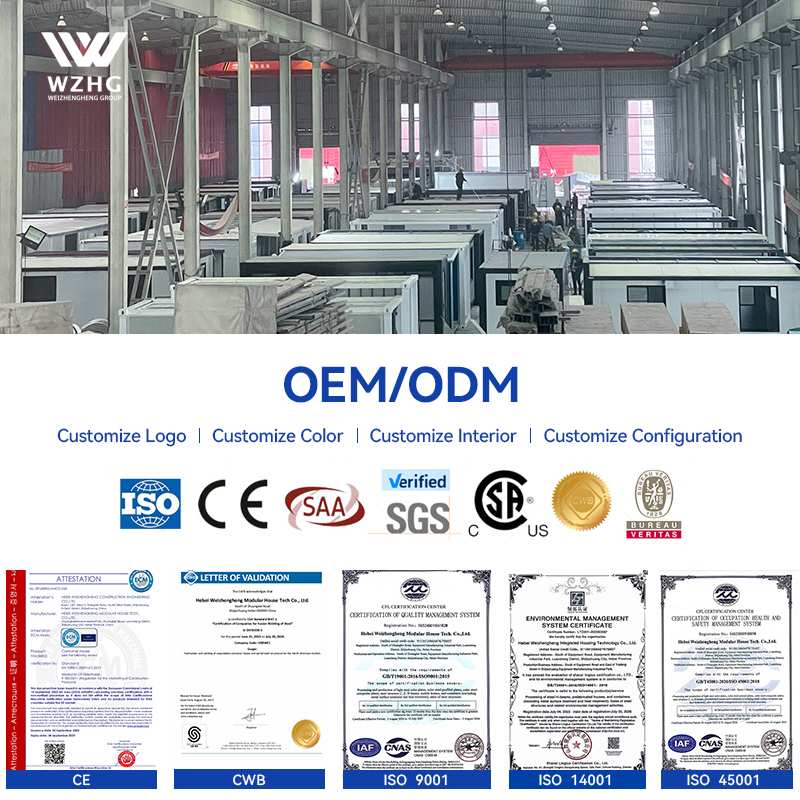
Simply put,we focus more on whether the solution will last and work smoothly over time,not just on delivering a finished product.
We support full customization—from structure to interior—including size,layout,internal configurations,and exterior design.We also offer OEM/ODM services,and many clients use our solutions for local projects or private branding.
In terms of production,most of the work is completed in the factory,with a prefabrication rate of around 80%.This makes on-site installation faster and more reliable.For standard projects,the lead time from production to delivery is typically 1–4 weeks,depending on the configuration.
Structurally,we use a steel frame combined with anti-corrosion treatment and insulation.Under normal conditions,the service life can reach 10+years.
We also consider future expansion during the design stage.Many clients start with a smaller setup and later add more units as their team grows—without needing to rebuild from scratch.
Overall,we focus on delivering solutions that are practical,durable,and easy to manage over time,rather than simply adding unnecessary features.
Container offices are no longer just a temporary solution.For many businesses,they’ve become a flexible and efficient alternative to traditional buildings.
The key is not choosing the most complex design,but choosing the right configuration for your specific needs.
With proper planning,even a simple container office can provide a comfortable,functional,and productive workspace—ready to support both short-term projects and long-term growth.



Copyright © Hebei Weizhengheng Modular House Technology Co., Ltd. All Rights Reserved
Sitemap

 +8615081877521
 +8615081877521