- icy@wzhgroup.com
- +86 15081877521


If you are considering purchasing a container house from China and shipping it to Australia for use,the first question that likely comes to mind is:Can a Chinese-made container house be used directly in Australia?
The answer is yes,but it cannot be simply assumed that you can move in immediately upon arrival.
Being"Made in China"does not automatically disqualify a container house from use in Australia.What truly matters is whether the house is suitable for your project's intended use,land conditions,and local building requirements,and whether sufficient technical documentation can be provided to support the necessary reviews and approvals.
The Australian Building Codes Board(ABCB)has issued specific guidance regarding prefabricated,modular,and off-site construction methods.For these types of buildings,the focus is not merely on where the house is manufactured,but on whether the materials,products,construction methods,and design are fit for the intended purpose and whether compliance can be demonstrated.
If you plan to source a container house from China,the real focus should not be on the"Made in China"label,but rather on:
Whether the house can be designed,manufactured,reviewed,and installed in accordance with the requirements of the Australian project.
This is why compliance issues for Australian projects should ideally be resolved before production begins at the Chinese factory,rather than waiting until the house has already been shipped or has arrived in Australia.
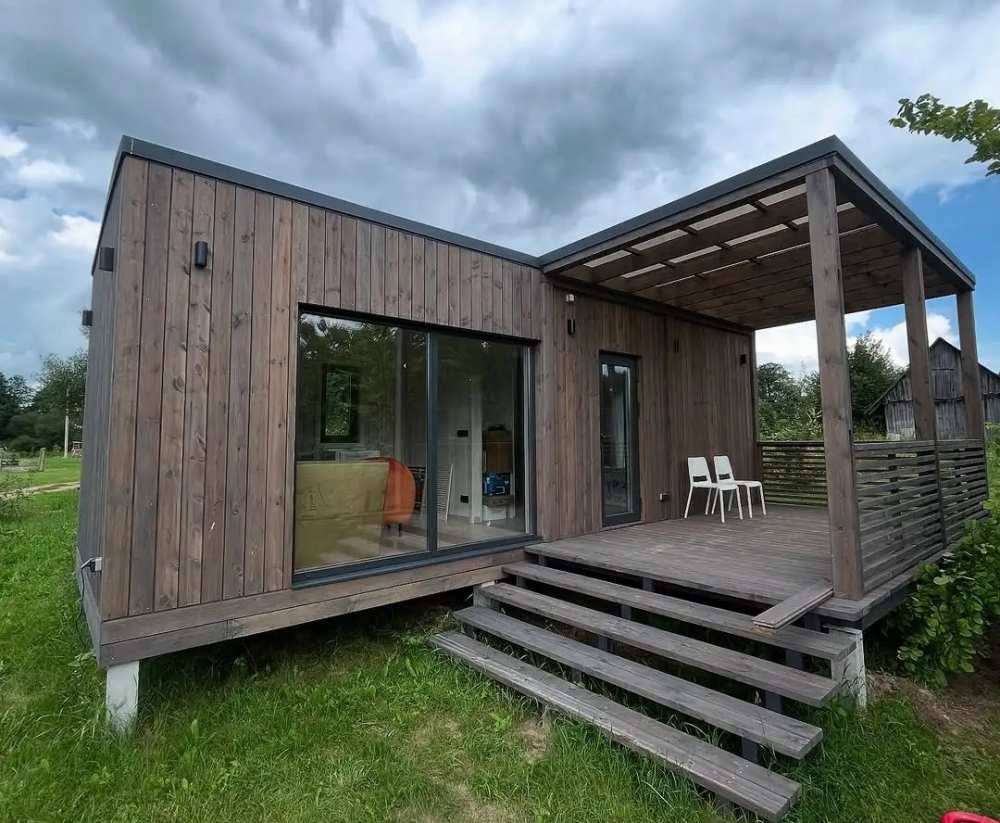
Many first-time buyers of overseas prefabricated homes conflate"product importation"with"building usage."In reality,these are two distinct stages.
The fact that a container house has successfully completed production,container loading,and ocean freight does not mean it is qualified for use as a residence or other structure on a specific plot of land in Australia.
You need to view this matter across three levels.
The first level is product manufacturing.Chinese manufacturers handle the production of the steel structure,walls,doors and windows,insulation,electrical systems,plumbing,and interior fittings.
The second level involves technical building requirements.The house must be designed to meet Australian project standards regarding structural safety,wind loads,thermal insulation,fire safety,electrical systems,and other performance criteria.
The third level is specific project approval.Factors such as the location of your land,its intended use,the zoning area,and local approval requirements will all influence the final outcome.In other words,the exact same container house might face different regulatory requirements depending on whether it is placed in a different region of Australia or even on a different plot of land within the same city.
This is why the claim that"our container houses meet international standards"does not automatically answer the question that matters most to you:"Can I legally use this on my land?"
If you intend to use a container house as a residence,granny flat,office,accommodation unit,or commercial space,you cannot focus solely on its appearance and price.
What truly matters is whether the entire building system is suitable for the Australian operating environment.
A critical factor here is the National Construction Code(NCC).For prefabricated,modular,and off-site manufactured buildings,the NCC scrutinizes whether materials,products,designs,and construction methods are fit for their intended purpose.Official guidelines on prefabricated and modular buildings place special emphasis on"evidence of suitability"—meaning appropriate documentation,test reports,or other evidence must be provided to prove that the materials and building plans meet the necessary requirements.
This means a manufacturer shouldn't simply tell you,"This product can be exported to Australia."Instead,they should be able to explain the materials used and the structural design,and demonstrate that the technical data can support the subsequent approval process.
Although container houses may appear compact,they are still classified as building structures.
Factors such as steel columns and beams,roofing,wall connections,welds,bolts,lifting points,and foundation connections must all be considered in light of actual usage conditions.
Wind conditions,soil types,and natural environments vary across different regions of Australia.You cannot simply use a generic set of structural drawings and assume they are suitable for every project.
For instance,a coastal project might require a greater focus on high winds and corrosion resistance,while a project in a hot climate would prioritize thermal insulation and indoor thermal comfort.If the site is in an area prone to flooding or bushfires,local conditions must be taken into account as well.
That is why it is best to inform the manufacturer of the project location and intended use before production begins.
If you simply say,"I need a 20-foot container house,"the manufacturer can only provide a quote based on a standard product.However,if you provide details regarding the project location,intended use,floor area,room layout,and local requirements,the design can be tailored to meet your specific needs.
When purchasing container homes,many people focus primarily on the steel structure;however,the long-term user experience depends on more than just the frame.
You need to understand steel specifications,component dimensions,welding techniques,anti-corrosion treatments,and connection methods.
If local engineers need to review the structure,comprehensive structural drawings,material specifications,and relevant calculations are far more valuable than a simple promotional image.
For modular construction,the ABCB places great emphasis on documentation and evidence.NCC regulations require proof that building materials,products,construction methods,and designs are suitable for their intended use;such evidence may include certificates,reports,calculations,and other information demonstrating compliance.
Climatic conditions vary significantly across different regions of Australia;therefore,the thermal insulation performance of walls and roofs cannot simply be based on standards from a specific region in China.
Factors such as the type,thickness,and density of insulation materials,as well as the treatment of thermal bridges at junctions,can all impact indoor comfort and long-term energy consumption.
If the home's internal temperature is poorly regulated,the money saved during the initial purchase may well be gradually spent on air conditioning operating costs.
You should not judge doors and windows solely by their appearance.
Glass type,frame construction,sealing capabilities,and thermal insulation performance all affect the home's thermal efficiency.For projects intended for long-term habitation,it is worth specifically confirming door and window specifications before placing an order.
Even if the container home has undergone partial electrical pre-installation at the Chinese factory,do not simply assume it is ready for immediate connection to the mains upon delivery.
Projects in Australia require electrical systems—including wiring,power distribution,sockets,lighting,and related equipment—to be confirmed against specific local requirements.
If your project must comply with Australian electrical standards,it is best to communicate these requirements to the Chinese manufacturer during the design phase,rather than attempting modifications on-site later.
Water supply piping,drainage,sanitary fixtures,and hot water systems also require advance planning.
This is particularly important for residential projects,where the placement of plumbing and drainage directly influences the interior layout.Discovering incompatible connection points,dimensions,or installation methods only after the unit arrives in Australia can make on-site modifications far more complex than factory pre-installation.
They are useful,but do not mistake them for"having already obtained Australian building approval."
For instance,ISO certification primarily reflects a company's management system,while CE marking relates mainly to product compliance standards for the European market.
While they serve as a reference for assessing a supplier's capabilities,they cannot simply substitute for the specific building requirements applicable to Australian projects.
What truly matters is whether the manufacturer can provide technical documentation relevant to your specific project.
This includes items such as structural drawings,material specifications,steel data,product test reports,thermal insulation parameters,fire performance data,electrical configurations,and installation instructions.
Official Australian guidelines for prefabricated and modular buildings emphasize that documentation proving the suitability of materials or products must align with the specific intended use;simply presenting a generic certificate is insufficient.
Therefore,if a supplier tells you,"Our container houses meet international standards,"you should follow up by asking,"Which standards?"and then,"Can you provide the technical documents for my Australian project?"
These two questions are often far more valuable than simply asking,"Do you have certificates?"
This is a primary concern for many Australian customers before making a purchase.However,there is no simple"yes"or"no"answer that applies across all of Australia.
Actual requirements depend on factors such as state and local government regulations,land zoning,the building's intended use and scale,and specific site conditions.
If you intend to use the container house as a residence or a long-term structure,it is best not to purchase the house before inquiring about local approval requirements.
What you really need to do first is confirm:What uses are permitted on the land?What type of building is planned?Is planning approval or building approval required?Are there any other site-specific constraints?
For example,there may be requirements regarding boundary setbacks,building height,flood zones,bushfire risks,parking,and utility connections.Addressing these issues during the design phase is much easier.
If the house has already been manufactured—or even shipped—and you discover that local regulations require adjustments to doors,windows,the structure,the foundation,or the layout,the issue escalates from a simple"design modification"to"cross-border rework."
The costs involved in these two scenarios are vastly different.
This is a crucial point to consider when sourcing prefabricated houses from overseas.
Chinese container house manufacturers are most familiar with the product itself.They understand how steel structures are manufactured,how wall panels are installed,how modules are transported,and how factory quality control is managed.
Local Australian engineers,building professionals,and approval authorities,on the other hand,have a better understanding of the specific site conditions and applicable local regulations.
The two parties actually complement each other.
A sensible approach is to have the Chinese manufacturer provide comprehensive product and design documentation,which is then reviewed by qualified Australian professionals in the context of the specific project.
This is why you shouldn't simply ask the manufacturer,"Can you make an Australian-standard container house?"A better question is,"Can you provide the design and technical documents required for my Australian project?"
While the two questions may seem similar,their actual implications differ significantly.The former sounds like a standard product sales inquiry,whereas the latter addresses the project's specific requirements.
If you are serious about purchasing container house from China,it is best to avoid the"find product→ask price→pay→ship"approach.
A safer method is to define the project first,then determine the product.
Start by confirming the project location and the intended use of the building.
If you are purchasing a"granny flat"in Australia,inform the manufacturer that it is a backyard residential project;similarly,specify if it is for holiday accommodation,a farmhouse,or a construction site dormitory or office.
Next,confirm the applicable local planning and building regulations.
If the project requires engineering review,that step should be initiated at this stage.
Then,provide the project specifications to the Chinese manufacturer so they can adjust the structure,layout,insulation,doors and windows,and electrical and plumbing configurations to meet actual requirements.
Formal production should only begin after the design plan and technical specifications have been confirmed.
Quality control is maintained throughout production,with a final inspection of dimensions,structure,materials,and internal fittings conducted before the units leave the factory.
Only then do you proceed to transportation,site foundation work,installation,and any subsequent local approval processes.
The entire process can be summarized as:Define project→Confirm requirements→Product design→Engineering review→Production→Pre-shipment inspection→Transportation→On-site installation.
It should*not*be:Produce first→Ship to Australia→Figure out compliance issues later.
For cross-border procurement,this distinction in the sequence of events is crucial.
Many people assume the biggest risk in overseas procurement is whether the manufacturer will actually ship the goods.In reality,the factors most likely to drive up project costs are often related to a lack of clarity regarding information during the initial stages.For instance,suppose you purchase a standard 20-foot container home,but the project site has specific requirements regarding structure,insulation,or doors and windows.If the unit was manufactured in China without accounting for these conditions,modifications become necessary upon arrival in Australia.
Alternatively,a manufacturer might provide ISO certification but fail to supply sufficient structural data,material specifications,or product test reports.While the product itself may be sound,local professionals lack the necessary documentation to verify compliance.
Another scenario involves a seemingly low quote that excludes essential components.Items such as foundations,installation,transportation,on-site connections,and electrical modifications often require separate arrangements.
This is why,when comparing Chinese suppliers,you should look beyond the"factory price"and consider the"total project cost"and"compliance risk."A supplier truly suited for Australian projects will be willing to clarify these issues with you before production begins.
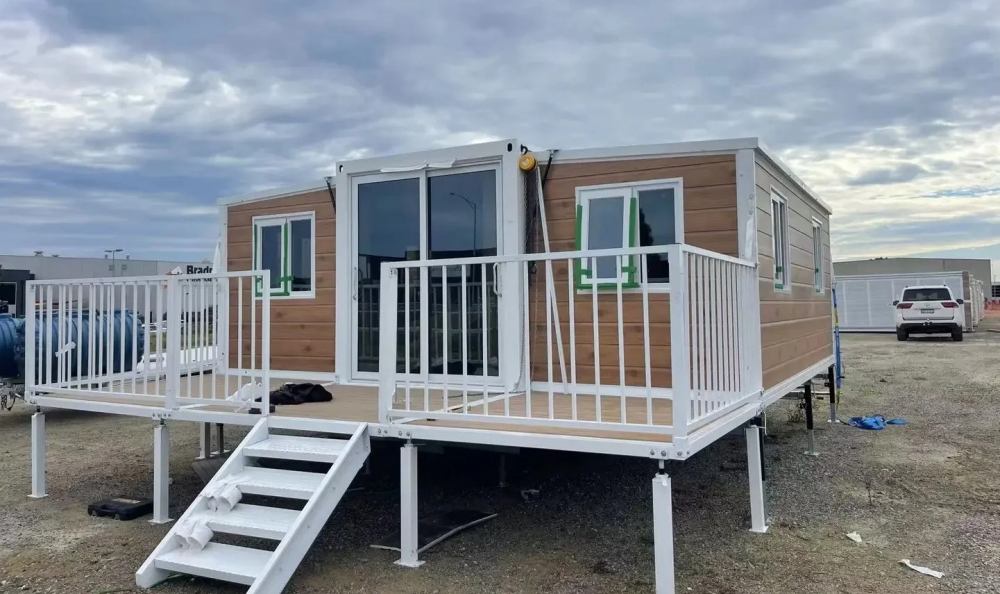
If you are searching for a Chinese manufacturer,I recommend focusing on four key areas:manufacturing capabilities,customization capabilities,technical documentation,and project experience.
First,consider manufacturing capabilities.
A genuine manufacturer should have its own quality control systems covering steel structures,wall panels,doors and windows,insulation,interior fit-outs,and modular production processes.You should ask to see the factory,production workflows,and examples of similar projects,rather than relying solely on website photos.
Next,look at customization capabilities.
Australian projects rarely involve simply purchasing a"standard box."If the unit is intended for use as a residence,a"granny flat,"or long-term accommodation,the layout,doors and windows,insulation,electrical systems,and plumbing often need to be tailored to the specific project.
Then,examine the technical documentation.
If a supplier can clearly provide product specifications,structural data,material information,installation instructions,and other relevant technical documents,it will greatly facilitate communication with Australian professionals later on.
Finally,consider their track record with actual projects.
WZHhouse is a Chinese manufacturer of modular and container homes established in 2001,specializing in modular construction,container housing,and related prefabricated building products.The company operates modular housing production lines capable of customization based on specific project requirements—such as intended use,dimensions,layout,and configuration—and offers comprehensive project support ranging from conceptual design and factory production to transportation.
WZHhouse possesses practical experience with projects in Australia.For instance,the Australian 20ft Expandable Container Granny Flat project features a bedroom,living room,bathroom,and open-plan kitchen,with designs tailored to the specific site and the client's budget.Such projects demonstrate that container homes are not merely exported in fixed dimensions;rather,their spatial layout and functionality can be customized for specific residential applications.
WZHhouse also showcases a 40ft Shipping Container House project for Australia.The layout,door and window configurations,and internal amenities—such as the kitchen and bathroom—can be adjusted to meet specific usage requirements,making the unit suitable for permanent housing,temporary accommodation,or other modular building purposes.
For Australian clients,it is crucial to clarify the intended use,project location,dimensional requirements,and design specifications at the outset.WZHhouse can then handle product design and factory manufacturing based on this information,while providing the necessary product and technical documentation.Aspects involving local Australian approvals,engineering certification,and on-site construction require coordination with local professionals based on specific project needs.
This collaborative approach allows design and manufacturing teams to account for the project's actual conditions at an early stage,thereby minimizing the likelihood of extensive modifications after production is complete.
This method is generally a more effective way to evaluate a supplier's suitability than simply comparing three price quotes.
Neither option is automatically better for every project.The right choice depends mainly on your customization needs,project requirements,budget,and preference for local or overseas manufacturing.
Australian-made container houses can be convenient if you prefer local sourcing,shorter transportation,and a more standardized product.However,customization options may be more limited when you want significant changes to the layout,dimensions,windows,insulation,kitchen,bathroom,or interior finishes.
China-made container houses can offer greater flexibility in customization.Before production,you can work with the manufacturer to adjust the floor plan,dimensions,doors and windows,insulation,kitchen and bathroom configuration,electrical system,and interior finishes according to your project requirements.
China also has a mature manufacturing supply chain for steel structures,wall panels,windows and doors,sanitary equipment,electrical components,and interior materials.This allows manufacturers to complete more work in the factory and,for customized or multiple-unit projects,may provide a cost advantage even after international shipping is included.
If local sourcing and convenience are your priorities,an Australian-made container house may be the better choice.If you need more customization,flexible factory production,and competitive overall costs,a China-made container house can be a practical alternative for Australian projects.
To summarize the points above in a single sentence:Don't view this as a simple container purchase;view it as a cross-border modular construction project.
Where the house is manufactured is just one factor.The true determinants of project success are product design,technical documentation,manufacturing quality,the project site,local permitting,and the ability of the Chinese manufacturer to collaborate effectively with Australian professionals.
If you are simply looking for a cheap container house,there are plenty of options on the market.
However,if you intend to use it for a residence,granny flat,holiday accommodation,or other long-term building project in Australia,your approach to selecting a supplier needs to change.
You shouldn't be looking for the"cheapest container house,"but rather a manufacturer who understands your project and resolves critical issues before production begins.
So,can you use a container house from China in Australia?
Yes,but you cannot simply assume that it is ready for immediate occupancy or use the moment it is imported.For Chinese-manufactured container houses,specifications must be confirmed based on the project's intended use,site conditions,applicable NCC(National Construction Code)requirements,local planning and approval regulations,and relevant technical standards.
The safest procurement approach is to clarify the project location and intended use*before*production begins,allowing the manufacturer to design and configure the unit accordingly,with reviews by Australian professionals where necessary.
The process can be summarized as follows:
Site→Requirements→Design→Engineering Review→Manufacturing→Inspection→Shipping→Installation
...rather than:Buy→Ship→Fix Problems Later.
If you are considering sourcing container houses from China for Australia,the most important takeaway is:
The best time to address Australian compliance is before the container house is manufactured—not after it arrives in Australia.
This approach not only lowers the risk of approval issues but also avoids the extra costs associated with discovering design flaws after international shipping.
Can a container house purchased from China serve as an Australian"Granny Flat"?
Yes,provided it meets the residential building requirements applicable to the specific project.Approval and design requirements for Granny Flats depend on factors such as location,site conditions,floor area,planning regulations,and technical building standards.If you plan to use a Chinese-made container house as a Granny Flat,it is best to confirm project requirements before placing an order and have the manufacturer adjust the design to suit these conditions.
Must the Chinese manufacturer complete all Australian certifications in China?
No.The Chinese manufacturer is primarily responsible for design,production,and providing technical documentation;local Australian tasks—such as engineering reviews and building approvals—are handled according to project requirements.
Can the structural drawings provided by the Chinese manufacturer be used directly for Australian approvals?
Not necessarily.Drawings usually require review or adjustment to align with the project location,intended use,and local engineering requirements.
Do I need to find an Australian engineer myself when purchasing a container house from China?
Whether this is necessary depends on the project and local approval requirements.If the project involves structural elements,foundations,or unique site conditions,it is generally recommended to involve Australian professionals in the review process prior to production.
What on-site work is required after the container house arrives in Australia?
This typically involves foundation work,module installation,and on-site connections for utilities such as water,electricity,and drainage.The specific tasks depend on the house's level of prefabrication and project requirements.
Does sea freight significantly increase the total cost of purchasing a container house from China?While shipping adds to project costs,products manufactured in China may offer advantages regarding production and customization expenses.When making comparisons,it is important to consider the total cost,including shipping,customs clearance,foundation work,installation,and regulatory approvals.
What project details should be provided to the manufacturer before purchasing a Chinese container home?
It is advisable to provide information regarding the project location,intended use,dimensions,layout,and key configuration requirements in advance.The more specific this information is,the easier it will be for the manufacturer to finalize the design and customization before production begins.



Copyright © Hebei Weizhengheng Modular House Technology Co., Ltd. All Rights Reserved
Sitemap



 +8615081877521
 +8615081877521