- icy@wzhgroup.com
- +86 15081877521


If you're considering building or buying a container house,you might wonder:**Are container houses really safe in windy or high-altitude areas?**The answer is yes—the vast majority of professionally designed and reinforced container houses are safe in high-wind or high-altitude areas.This is provided that structural reinforcement,foundation stability,roof design,and environmental adaptation measures are all taken into account.
Imagine this scenario:in a vast valley on the Tibetan Plateau,a blue container house stands in a windy spot with wind speeds reaching 25 meters per second,and snowflakes are being blown about.The steel beams of the roof firmly support the house,the windows are tightly sealed,and the helical pile foundation firmly anchors the house to the ground.You stand inside,watching the wind flutter the flags outside,but the house barely sways—this is the power of professional design and reinforcement.
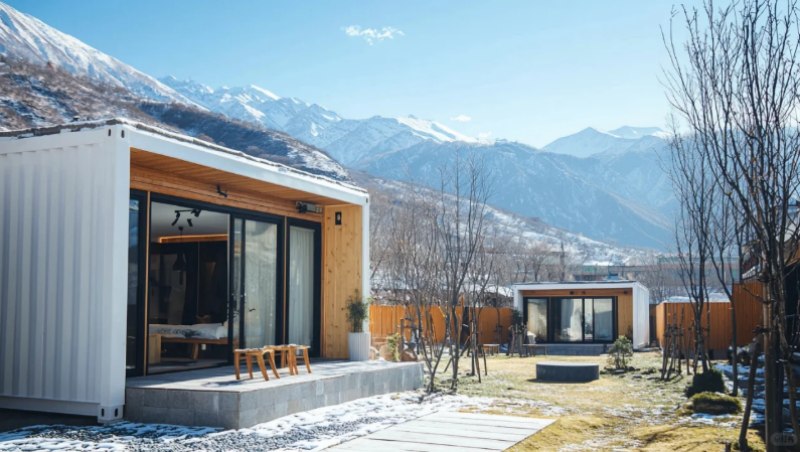
The impact of wind and high altitude on buildings is far greater than commonly imagined.Wind not only exerts horizontal pressure but can also create a"wind shear effect,"causing the roof,walls,and even the entire structure to sway slightly.
Imagine winds blowing across a coastal cliff;a container house is like a small box surrounded by wind,each side feeling the strain of wind pressure.In high-altitude areas,the air is thin,temperature differences are large,and wind speeds are often faster.At the same time,snow pressure and frost cycles exert significant stress on the roof and foundation.
Typical countries and regions:
North American coast:Florida,Gulf Coast,Caribbean,hurricane wind speeds can reach 40 meters per second.
Southeast Asian coast:Philippines,Central and Southern Vietnam,Gulf Coast,typhoon season wind speeds 30–35 meters per second.
High-altitude areas:Himalayas,Tibetan Plateau,Andes Mountains,wind speeds 15–25 meters per second,snow pressure 150–200 kg/m².If it's just an unreinforced container with large windows or added sliding modules,the wind force might cause the roof to sway slightly,and the base might even move slightly.Therefore,considering reinforcement and foundation stabilization in advance is crucial.
The biggest advantage of containers lies in their steel structure.Imagine a standard 40-foot shipping container.Even when lifted dozens of meters for transport,the steel shell,approximately 2–3 mm thick,remains sturdy and stable,resisting bending and deformation.Even during bumpy transport or in strong winds,this steel structure ensures the overall container remains undeformed.
However,if you want to add windows,sliding modules,or modify the kitchen and bathroom,the previously uniform stress distribution on the steel structure will be disrupted.Without additional reinforcement,sliding modules or large windows may sway in strong winds,and the roof may even be affected by pressure.
Therefore,in professionally designed homes,you'll see engineers installing crossbeams under the roof for support,essentially creating a steel framework inside the roof.These beams are approximately 3 mm thick and spaced 50–80 cm apart,allowing the roof to withstand snow loads of 100–200 kg/m².The corner fittings of the sliding modules are also thickened and welded,ensuring the modules won't sway in strong winds.Even with wind speeds of 25–30 meters per second,the furniture and equipment inside remain rock-solid.
Regarding the walls,high-quality container houses typically retain 2–3 mm thick steel plates and add an internal 30 mm thick sandwich insulation layer.This not only makes the structure robust but also improves thermal resistance(approximately R-4 to R-5),ensuring indoor warmth even in cold or high-altitude areas.
The foundation of a container house is crucial for ensuring the overall structural stability,especially in windy or high-altitude areas.A stable foundation can withstand not only vertical loads but also the horizontal thrust from the wind,effectively reducing the risk of the house swaying or tilting.
Common foundation design options include:
Concrete slab foundation:Generally≥20 cm thick,covering the entire bottom of the container,providing uniform support and high stability,suitable for flat areas with solid soil.
Helical pile foundations:With a diameter≥15 cm and driven 1.5–2 m into the ground,these foundations can"secure"the container in soft soil or on slopes,enhancing pull-out resistance.They are particularly suitable for environments with strong winds or loose soil.
Pile foundations:Commonly used in high-altitude permafrost regions,these foundations reduce the impact of freeze-thaw cycles on the foundation and structure,while improving the overall stability of the house.
The fixing method is also a crucial part of foundation design:
Frame-mounted fixing:The container's steel frame is directly fixed to the foundation,offering the strongest stability and effectively resisting wind and earthquakes.
Bed-mounted fixing:Fixed to the container's floor,this method is easy to install but may experience slight swaying in extreme winds.Therefore,it is typically used for short-term or low-wind areas.
In summary,the rationality of the foundation design directly determines the safety of the container house in windy or high-altitude environments.Choosing the appropriate foundation scheme and fixing method is the first step in improving the house's wind resistance.
The roof and walls are the most directly affected parts of a container house by wind and snow,and their design quality directly determines the house's wind resistance and lifespan.
Roof design needs to consider the following factors:
*Materials and thickness:The thickness of the sandwich steel or composite panels for the roof is generally 30–50 mm,capable of withstanding a static snow load of 100–200 kg/m²,while maintaining lightweight construction.
*Structural support:Reinforcement with steel beams or crossbeams can distribute wind pressure and snow load,improving overall stability.The load distribution of sliding modules and roof attachments must be considered during the design phase.
*Sealing and waterproofing:Roof joints should use an integrated design or high-quality sealing strips to prevent wind pressure or rainwater from seeping into the house.
Wall design must meet wind resistance and insulation requirements:
*Material selection:Steel plate or composite panel walls,approximately 2–3 mm thick,with an internal insulation layer of about 30 mm to improve structural strength and thermal resistance.
Horizontal Wind Pressure Resistance:The wall structure must be designed to withstand horizontal wind pressure of 1.0–1.5 kPa,ensuring stability even at wind speeds of 25–30 meters per second.
Wind Resistance of Doors and Windows:Wind resistance rating≥130 km/h,effectively preventing wind pressure damage or water leakage.
A well-designed roof and wall structure not only withstands wind and snow but also enhances the overall safety of the container house in high-altitude and extreme weather conditions.Thorough consideration of material thickness,structural support,snow load,and wind pressure during the design phase is crucial for ensuring the long-term stability and comfortable use of the house.
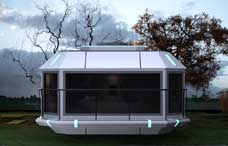
For areas with strong winds and frequent hurricanes,WZHhouse has launched a series of hurricane-resistant container houses.
Thickened Steel Structure:3 mm steel plates in the walls and 50 cm spacing between roof steel beams.The thickened steel structure improves overall load-bearing capacity and wind resistance,making the roof and walls less prone to deformation under strong winds or snow pressure,ensuring the long-term stability of the house.
Foundation Support:Combination of helical piles or concrete slabs,wind resistance≥40 m/s.A stable foundation effectively resists horizontal winds and uneven ground settlement,ensuring the house remains stable under extreme weather conditions and improving safety.
Roof Load Capacity:200 kg/m²,capable of supporting 300 W solar panels.The high load-bearing roof can support snow pressure,solar panels,or lightweight luggage racks,preventing subsidence or deformation while enhancing the house's functionality.
Wind-Resistant Window Frames:Wind speed resistance 150 km/h.High-grade wind-resistant window frames prevent wind pressure damage to windows or water leakage,improving the house's airtightness and comfort during storms.
Modular Design:Sleeping modules,kitchen modules,and storage modules can be freely combined.The modular design allows for flexible spatial layout adjustments to meet usage needs,while also facilitating structural reinforcement and maintenance.
Suitable Regions:Florida,coastal Mexico,coastal Philippines,Caribbean.Designed for hurricane-prone and high-wind coastal areas,ensuring the house's safety and durability in high-wind environments.
These hurricane-resistant container houses remain stable even in hurricanes reaching 35 meters per second near the coast.The roof and wall structures show no deformation,and the interior furniture and appliances remain safe.
Similar results have been verified in multiple locations along the Gulf Coast and the Philippine coast,fully demonstrating the reliability of reinforced steel structures and solid foundations in wind resistance.
Q:What wind speeds can container houses withstand?
A:With reinforcement and foundation stabilization,container houses can typically withstand wind speeds of 25–30 meters per second,with high-grade designs reaching 35–40 meters per second.
Are special materials required for high-altitude areas?
A:For high-altitude areas,it is best to choose container houses using sandwich steel panels or integrated roofs.This not only enhances insulation performance but also improves the wind and snow resistance of the roof and walls,ensuring the house remains stable and reliable in severe cold and strong winds.
Q:Do snow loads and storms affect the roof?
A:Snow pressure and strong winds do put pressure on roofs,but if the roof is reinforced with a steel frame and thickened sandwich panels,and the foundation is securely fixed,most professionally designed container houses can safely withstand common snow pressure and storms.
Q:Are converted container houses suitable for long-term living?
A:Converted container houses can certainly be used for long-term living,provided that the structure is properly reinforced,the foundation is stable and reliable,and the roof and walls have good sealing performance.
Summary:In windy or high-altitude areas,container houses are a feasible and safe living solution,provided that the structure is properly reinforced,the foundation is stable,and the roof and wall design meets regulations.When purchasing,users should focus on steel structure parameters,foundation type,roof load-bearing capacity,wall thickness,wind resistance rating of doors and windows,and design wind speed limit,and should have the design plan evaluated by professionals whenever possible.
Through these data-driven and practical purchasing suggestions,users can not only determine the safety of the house but also ensure its long-term usability,achieving a safe and comfortable living experience in windy or high-altitude areas.



Copyright © Hebei Weizhengheng Modular House Technology Co., Ltd. All Rights Reserved
Sitemap

 +8615081877521
 +8615081877521