- icy@wzhgroup.com
- +86 15081877521


With the rapid global expansion of modular construction,foldable container houses have found widespread application across various sectors,including construction sites,mining camps,schools,medical facilities,tourist campsites,and emergency shelters.Compared to traditional buildings,they offer lower transportation costs and faster installation speeds,while also allowing for flexible configurations tailored to specific project needs—making them an increasingly popular choice for international buyers.
As a major global manufacturing hub for modular construction,China boasts a comprehensive supply chain and a mature export system,shipping large quantities of foldable container houses worldwide.However,for first-time buyers,the real challenge isn't just"where to buy,"but"how to make the best purchase."Factors such as supplier selection,price comparisons,and key questions to clarify beforehand directly impact project costs and the end-user experience.
Written from the buyer's perspective and addressing common issues in international procurement,this article highlights key considerations for sourcing foldable container houses from China,helping you formulate a clear purchasing strategy before submitting formal inquiries.
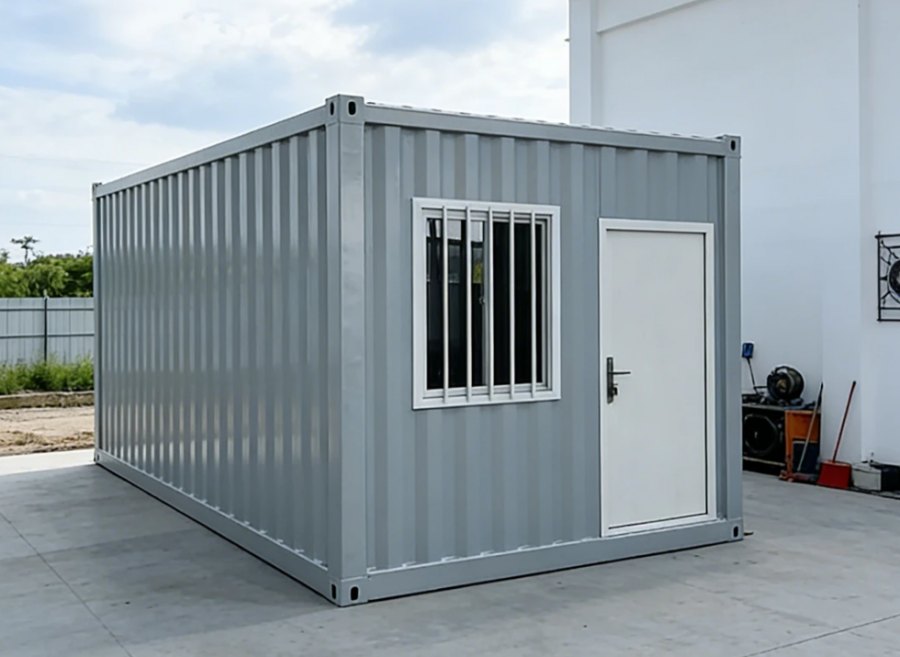
For international engineering projects,procurement affects not only product costs but also delivery efficiency and long-term operational expenses.The growing trend of sourcing foldable container houses from China is driven not merely by low prices,but by the country's mature advantages in supply chain integration,product customization,and delivery capabilities.
Manufacturing a foldable container house involves multiple components,including steel structures,sandwich panels,doors and windows,electrical systems,and hardware accessories.If these resources are scattered among various suppliers,communication costs rise and production cycles lengthen.
After years of development,China has established a complete modular construction supply chain.Many specialized manufacturers handle the entire process—from design,production,and assembly to quality control and export packaging—which not only enhances efficiency but also ensures consistent product quality.When projects require dimensional adjustments,changes to insulation materials,or additional interior features,established suppliers can typically modify plans quickly without disrupting the overall delivery schedule.
This supply chain advantage is particularly pronounced in bulk procurement projects.Unified production not only boosts efficiency but also makes it easier to ensure consistent quality standards across every batch of products.
While foldable container houses are versatile and applicable to various scenarios,not every procurement need is best met through importation.
For small-scale projects requiring only a few standard units for immediate use,local suppliers may offer a time advantage.However,for engineering projects,government procurement,commercial campsites,or long-term construction sites,Chinese manufacturers typically offer a wider range of customization options,more stable production capacity,and more competitive overall procurement costs.
Many international buyers start with an initial order of just a few dozen units,placing subsequent orders as the project progresses.Establishing a stable partnership early on facilitates smoother communication,ensures consistent product standards,and lowers long-term operation and maintenance costs.
Many buyers are accustomed to requesting quotes from several suppliers and making a decision based solely on price.In reality,for customizable products like foldable container houses,the accuracy of a quote depends heavily on the completeness of the information provided.Thorough upfront preparation results in more valuable proposals from suppliers and minimizes the need for subsequent revisions.
Before formally contacting suppliers,it is advisable to outline the project's basic details,including the intended use of the units,the quantity required,the expected service life,and the project location.
For instance,the requirements for thermal insulation,interior layout,and exterior design will differ significantly depending on whether a foldable container house is intended for a construction site or a tourist campsite.Without this background information,a supplier can only quote based on standard products,making it difficult to truly meet the project's specific needs.
If you already have dimensions,floor plans,or reference images,providing them is highly beneficial.These materials help suppliers quickly grasp project requirements and facilitate productive discussions regarding the proposed solutions.
Requirements for modular buildings vary by country.Some regions prioritize thermal insulation,others mandate higher fire-safety standards,and some impose specific regulations regarding electrical systems,wind resistance,or material certifications.
Before requesting a quote,verify the relevant requirements with local design firms or construction teams and share this information with the Chinese supplier.This approach minimizes the need for later modifications and prevents the issue of discovering non-compliance with local regulations only after the products have been manufactured.Manufacturers with extensive export experience often offer suggestions based on the project's location to help clients further refine product specifications.
A comprehensive inquiry package is far more likely to elicit a professional response than a simple request like"Please send me your best price."
It is recommended that your inquiry include at least the following details:project location,purchase quantity,intended use of the structure,dimensional requirements,needs regarding bathrooms or kitchens,estimated purchase timeline,and any other special requirements.If the destination port or trade terms have already been determined,it is helpful to specify these upfront.
Sending the same inquiry package to multiple suppliers ensures that the quotes you receive are based on identical requirements,making it easier to compare them side-by-side later.
As the market grows,the number of Chinese manufacturers producing foldable container houses is increasing.Since companies vary significantly in terms of production capacity,export experience,and service quality,you should not focus solely on price;instead,prioritize whether the company truly has the capability to successfully execute the project.
A reliable manufacturer will typically showcase its production workshops,equipment,and past projects,rather than relying solely on product renderings.
During discussions,you can ask for factory photos or production videos,or even arrange a video tour to verify the company's production stability.You should also check if they have experience with projects similar to yours—such as construction sites,schools,camps,or commercial developments.
Real-world examples not only demonstrate product quality but also help you assess whether the supplier has relevant implementation experience.
International procurement involves drawing approvals,product configuration,export documentation,and ongoing technical support.If a supplier lacks experience with international projects,the entire procurement schedule could be disrupted,even if the product quality itself is excellent.
A professional export team will proactively confirm project locations,technical specifications,and delivery timelines,while promptly providing quotes,drawings,and technical data.They can also quickly coordinate with engineers to make design adjustments when necessary.
Timely communication and professional responses are often indicators of how efficient future collaboration will be.For long-term partnerships,this factor is even more critical than the initial price quote.
Many buyers requesting quotes from Chinese suppliers for the first time encounter a common phenomenon:quotes for foldable container houses that look nearly identical on the surface can vary by hundreds or even thousands of dollars between manufacturers.
A higher price does not necessarily guarantee better quality,nor does a lower price automatically mean better value.The factors that truly influence a quote are product specifications,service inclusions,and the overall value the supplier offers.Relying solely on the final price can easily lead to poor purchasing decisions.
In international procurement,product specifications deserve more attention than the price itself.
Manufacturers differ in their use of steel thickness,wall panel materials,insulation,door and window specifications,and flooring configurations.Some quotes include electrical systems,lighting,sockets,and distribution boxes,while others cover only the main structural shell.Without clarifying these details,a meaningful comparison is impossible,even if the price difference appears small.
It is recommended that,upon receiving quotes,you compile a list of specifications for each supplier to verify that key materials and technical parameters align before comparing prices.Only quotes based on identical specifications provide a valid basis for comparison.
Additionally,if a supplier’s quote is significantly lower than the market average,do not rush to place an order;instead,investigate the reason for the low price.Often,price discrepancies stem from differences in material specifications,product configurations,or the scope of service,rather than the company simply accepting lower profit margins.
Beyond the product itself,the services offered by different suppliers impact the total procurement cost.
For instance,some manufacturers provide product drawings,installation guidance,export packaging,and remote technical support at no extra cost,while others charge for these items.Some companies can also optimize internal layouts or provide custom designs based on project requirements;while these services may not be immediately visible in product photos,they can reduce the costs associated with subsequent communication and revisions.
When reviewing quotes,pay particular attention to the following aspects:
Inclusion of design and drafting services;
Inclusion of installation guidance;
Provision of a product warranty;
Availability of long-term spare parts supply;
Availability of comprehensive after-sales technical support
When prices are similar,service capabilities often determine the quality of the ongoing partnership and the project's smooth execution.
When making a purchase,the key factor to control is not merely the product price,but the cost over the project's entire lifecycle.
If a product offers stable quality,low maintenance costs,and excellent after-sales service,it may save significantly on maintenance expenses in the coming years—even if the initial purchase price is slightly higher.Conversely,choosing a lower-spec product to cut the budget can increase total investment due to future repairs,replacement parts,or even the need for a complete repurchase.
Many experienced buyers consider product quality,delivery capabilities,after-sales service,and the value of long-term partnership alongside price quotes,rather than using price as the sole criterion.For ongoing procurement or large-scale engineering projects,this approach generally aligns better with long-term interests.
Tip:A good quote does more than state the price;it helps you understand what is included,what the supplier offers,and the potential value the product brings to your project.By comparing quotes based on specifications,service,and long-term costs,you are more likely to find a partner that truly suits your project.
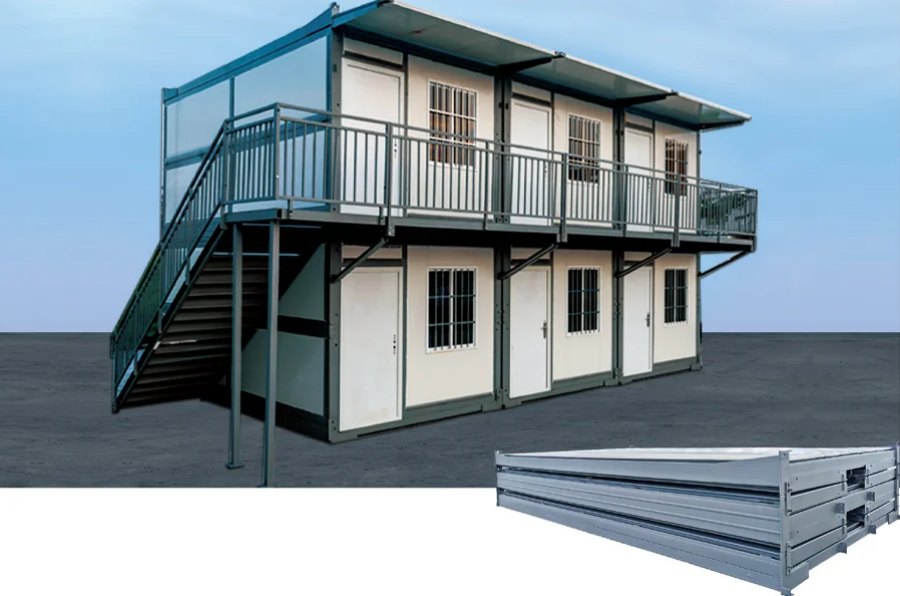
Even with extensive procurement experience,you may encounter easily overlooked issues when importing foldable container houses for the first time.These issues are not complex,but failing to verify details in advance can impact delivery,installation,and even future usage.
The following points reflect lessons learned by many international buyers.
The lowest quote does not necessarily mean the lowest total procurement cost.
Without carefully verifying steel structure specifications,wall panel thickness,insulation materials,and door/window configurations,the product may fail to meet actual usage needs upon arrival.Retrofitting later not only increases costs but also disrupts the project schedule.
Starting production without confirming all requirements
Foldable container houses are customizable products.Once production begins,modifying dimensions,layouts,or specifications can delay delivery and incur additional costs.
Therefore,before confirming an order,it is advisable to thoroughly review product drawings,specification lists,and all technical requirements to ensure mutual understanding before production begins.
Price is just one part of the procurement decision.
A supplier with a slightly higher quote might possess a more mature production system,more stable quality control,and superior after-sales service.In the long run,these advantages often help reduce hidden costs for the project.When sourcing,consider factors such as factory capabilities,export experience,past projects,and communication efficiency,rather than focusing solely on the quoted price.
Many buyers assume the partnership ends once the products are shipped.
In reality,for projects involving long-term use,the ongoing supply of spare parts,technical support,and product maintenance is equally important.If a supplier cannot provide continuous service,procurement and communication costs will rise significantly when repairs or part replacements are needed.
Therefore,before signing a contract,it is advisable to clarify the warranty period,after-sales response procedures,and the long-term availability of common spare parts.
If you plan to continue sourcing foldable container houses in the future,avoid treating each purchase as an isolated transaction.
Establishing a long-term partnership with a reliable Chinese manufacturer not only improves communication efficiency and ensures consistent product standards but also secures more stable lead times,mature technical support,and more competitive procurement packages for future orders.
Sourcing foldable container houses from China is not simply about finding the supplier with the lowest price;it is about selecting a partner capable of supporting the project's long-term success.Product quality,supply chain capabilities,export experience,and after-sales service all play crucial roles in the procurement process and directly impact the project's final outcome.
If this is your first time sourcing foldable container houses from China,consider dedicating more time to preliminary preparation.Clearly defining project requirements,carefully comparing proposals from different suppliers,understanding the configuration differences behind the quotes,and selecting a manufacturer with proven export experience are often more valuable than repeatedly trying to drive down the price.
When procurement decisions are based on thorough communication and professional assessment,you not only acquire products that better meet your project's needs but also establish a stable,efficient supply partnership that creates long-term value for future projects.



Copyright © Hebei Weizhengheng Modular House Technology Co., Ltd. All Rights Reserved
Sitemap



 +8615081877521
 +8615081877521