- icy@wzhgroup.com
- +86 15081877521


The price of mobile office containers typically ranges from$1,500 to over$20,000,depending on factors such as container type,size,steel structure specifications,insulation,interior fit-out,and customization requirements.
Basic,knock-down(flat-pack)container offices generally cost between$1,500 and$4,000,while standard flat-pack units range from$2,000 to$6,000.In contrast,mobile offices featuring expandable structures,full interior finishes,and residential-style amenities typically range from$5,000 to$20,000 or more.
The final price of a mobile office container is not determined solely by floor area;specifications regarding the steel structure,wall materials,insulation performance,electrical systems,and interior finish standards all influence the total cost.There can be significant differences in configuration and price between a basic office intended for short-term projects and a fully equipped modular office designed for long-term use.
When selecting a mobile office container,it is important to understand the price differences between various product types.The following section outlines the price ranges for different types of mobile office containers and the key factors influencing the final quote,helping you choose the most suitable solution for your project needs.

Mobile offices differ from standard container homes in their design priorities.
Office spaces generally require greater flexibility—such as ease of transport,rapid deployment,multi-user capacity,and adaptability for future changes.Consequently,the mobile office containers most common in overseas markets include detachable container offices,flat-pack container offices,expandable container offices,and modified shipping container offices.
For short-term projects—such as construction sites or temporary administrative areas—economical products usually suffice.However,for long-term office use or to achieve a comfortable environment comparable to a traditional office,higher-specification modular solutions should be considered.
Detachable container offices represent a lower-cost solution in the mobile office sector and are a major export product for Chinese manufacturers.
These offices utilize a light-gauge steel frame and sandwich panel structure,with all components designed to be disassembled,packaged,and transported.Due to their compact shipping volume,they are particularly convenient for projects involving long-distance ocean freight or sites with limited space.
A basic 20-foot knock-down container office typically costs between$1,500 and$4,000.The standard configuration usually includes a steel frame,wall panels,doors and windows,flooring,and a basic electrical system.
They are well-suited for:
Construction site offices;
Site management offices;
Temporary guard booths;
Office space for small-scale projects.
While these units are cost-effective,their interior space and fit-out standards are relatively basic.If you plan to use them for more than a few years,or require features like air conditioning,soundproofing,or enhanced insulation,an upgraded configuration is usually necessary.
Flat-pack container offices are widely used as mobile office solutions in overseas engineering projects.
Similar to knock-down containers,they are manufactured using a modular approach but offer a higher degree of standardization.Components such as wall panels,roofs,floors,and certain fixtures are pre-fabricated in the factory,allowing for rapid on-site assembly.
This design reduces on-site construction time and facilitates the combination of multiple units.For instance,several flat-pack units can be combined to create:
Project manager offices;
Conference rooms;
Staff office areas;
Break rooms.
A standard 20-foot flat-pack container office typically costs between$2,000 and$6,000.Prices can exceed$6,000 if upgrades such as rock wool insulation,fire-resistant wall panels,glass partitions,or enhanced electrical systems are added.
For engineering projects requiring bulk procurement of office units,flat-pack containers often offer excellent cost-efficiency.
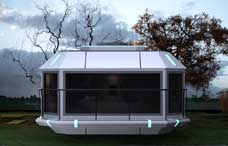
Expandable container offices have attracted significant interest in overseas markets in recent years.
Their key feature is a compact footprint during transport that expands upon arrival at the site,providing a much larger usable interior area.For example,a 20-foot expandable office unit occupies the footprint of a standard shipping container during transport but unfolds to create a more spacious office area.This is highly attractive for projects with limited land availability or those requiring a rapid expansion of office space.
Due to the inclusion of unfolding mechanisms,reinforced steel structures,and more complex sealing designs,these units are priced higher than standard container offices.
Market prices typically range from$5,000 to$15,000.
If configured with features such as:
a private restroom;
a kitchenette;
an air conditioning system;
high-performance insulation;
office furniture;
the price may exceed$15,000.
These mobile offices are particularly suitable for:
remote site projects;
long-term project offices;
commercial office spaces;
scenarios requiring temporary yet highly comfortable facilities.
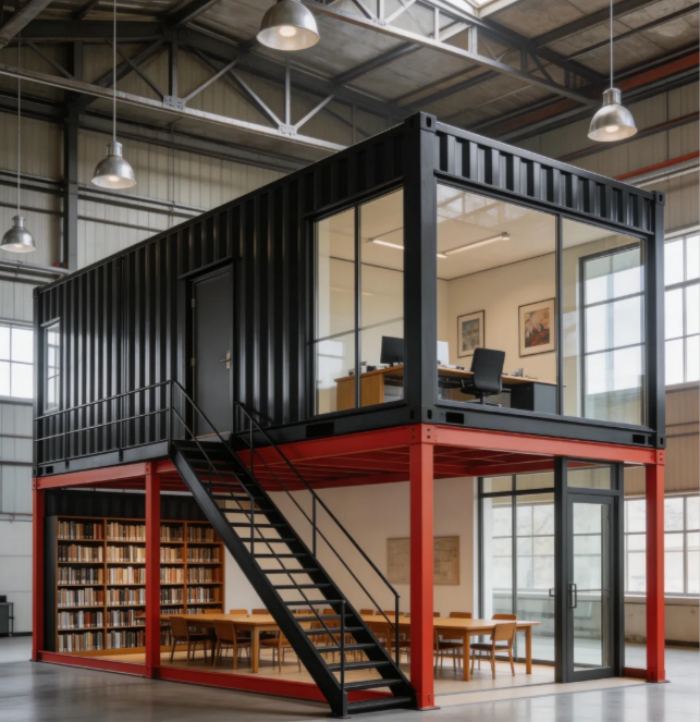
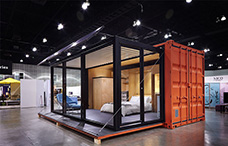
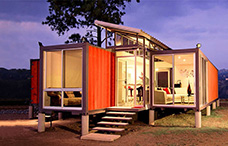
Modified shipping container offices are typically based on standard 20-foot or 40-foot containers.
Compared to standard modular offices,they feature a more robust structural foundation and allow for greater design customization—such as large glass windows,modern office layouts,and industrial-style aesthetics.
Prices generally range from$8,000 to over$20,000.
The higher cost is primarily driven by modification work,such as:
adding insulation;
replacing doors and windows;
installing electrical systems;
adding office furniture;
installing air conditioning and ventilation equipment.
This solution is better suited for long-term office use,such as corporate site offices,sales centers,business park offices,or commercial spaces.
If you want a mobile office that goes beyond basic functionality to offer superior aesthetics and a better user experience,a modified container office is the ideal choice.
Price differences among mobile office containers stem from more than just size.Two offices of the same dimensions can vary by thousands of dollars in their final quotes depending on the steel structure,wall materials,and interior fit-out.
When inquiring about prices from Chinese manufacturers,it is essential to look beyond the total quote and understand the specifications behind the product.For long-term projects,material selection and structural design are often more critical than the initial price.
Size is the most direct factor influencing the price of mobile office containers.
Common specifications include 20-foot and 40-foot container offices.A 20-foot office is typically suitable for use as a single-unit project office,a guardhouse,or a small administrative space,with prices ranging from approximately$2,000 to$8,000.
A 40-foot mobile office offers a larger interior area,allowing for multiple zones such as a manager's office,a meeting area,and staff workstations.Due to the increased use of steel,larger wall panel surface areas,and more extensive interior fit-outs,prices generally range from$5,000 to$15,000.
If a project requires a combination of multiple units—such as for a large construction camp or an industrial project office—the overall cost will also be influenced by the layout design and connection methods.
The steel structure is a vital component of mobile office containers and a major reason for price variations between manufacturers.
Some budget-friendly products utilize lighter steel structures suitable for short-term use.Conversely,projects destined for markets like the US,Australia,or Canada often require designs that account for local climatic conditions,such as wind loads,snow loads,and seismic requirements.
Projects in coastal areas require structural reinforcement to withstand strong winds,while those in cold regions must account for the weight of accumulated snow on the roof structure.
Upgrading the steel structure specifications typically increases costs by 10%–30%but enhances the building's stability and long-term durability.
When comparing quotes,you should examine the steel specifications,structural design standards,and whether anti-corrosion treatments have been applied,rather than focusing solely on the final price.
The comfort level of a mobile office depends largely on its wall construction and insulation system.Common wall materials from Chinese manufacturers include EPS sandwich panels,rock wool sandwich panels,and PU/PIR insulation panels.
EPS sandwich panels are relatively economical,making them suitable for regions with mild climates or short-term office projects.Mobile offices using this configuration have lower costs but offer limited fire resistance and long-term thermal insulation performance.
Rock wool sandwich panels generally come at a higher price point;their main advantages are superior fire resistance and sound insulation,making them better suited for industrial projects,long-term offices,and areas with strict safety requirements.
PU/PIR insulation panels are high-performance materials that offer better thermal insulation than other types at the same thickness.This configuration is more common in markets with significant temperature fluctuations,such as Australia and Canada.
Upgrading the insulation system typically adds between$500 and$2,000 to the cost,but it improves the indoor environment and reduces long-term energy consumption.
The price difference between a basic mobile office and a fully equipped office space usually stems from the interior configuration.
A basic office setup might include only:
Flooring;
Wall finishes;
Doors and windows;
Basic lighting.
Adding office amenities—such as:
Air conditioning systems;
Electrical upgrades;
Restrooms;
Kitchenette areas;
Office furniture;
Network cabling;
—can increase the total price by$1,000 to$5,000 or more.
For short-term projects,a basic configuration is usually sufficient.However,for long-term use,adding comfort-enhancing features can significantly boost office productivity.
A key reason for the popularity of mobile office containers is their ability to reduce on-site construction time.
Traditional offices typically require multiple stages—such as site preparation,building construction,and interior finishing—resulting in a construction period that can last several months.In contrast,most of the production for modular mobile offices takes place in a factory;once they arrive on-site,only installation and utility connections are required.
Mobile offices save a significant amount of time for temporary projects or scenarios requiring rapid deployment.
For instance,if a construction project needs an on-site management office quickly,traditional construction methods would entail a lengthy build time.Modular offices,however,can be manufactured in advance and put into use shortly after the foundation is completed.
However,mobile offices are not suitable for every situation.If a project requires a permanent,large-scale office building and faces strict local building codes,traditional construction or large-scale modular buildings may be more suitable.
When chose a mobile office container,consider the project's duration,location,and specific office requirements.
Different types of mobile offices vary significantly in price,installation method,and lifespan.Short-term projects prioritize transport and cost control,whereas long-term office spaces require a focus on comfort,structural safety,and functional amenities.
If you need an office for a construction site,temporary project management quarters,or a short-term workspace,detachable container offices and flat-pack container offices are usually the more economical choice.
These products typically range from$1,500 to$6,000;they feature modular designs,are easy to transport,and allow for rapid on-site installation.Once the project concludes,they can be disassembled and relocated for use elsewhere.
For projects with short timelines requiring a quick office setup,these solutions meet basic office needs while keeping costs under control.
If the project is located in a remote area—such as a mining site,energy project,or infrastructure development zone—expandable container offices are often the best fit.
These units remain compact during transport but expand on-site to provide a larger workspace;they can also be equipped with amenities such as air conditioning,restrooms,and electrical systems.
Expandable container offices typically cost between$5,000 and$15,000.
Although the initial investment is higher than that of standard container offices,they offer a more comfortable working environment,making them ideal for projects requiring long-term on-site operations.
If you plan to use the mobile office as a long-term workspace—such as a corporate office,campus management center,or commercial facility—a customized modular office is the most suitable option.
These solutions allow for interior layouts tailored to specific project needs,including private offices,meeting areas,break rooms,and comprehensive office facilities.
Prices typically start at$10,000,with the final cost depending on floor area,material specifications,and functional features.Compared to simple mobile offices,customized modular buildings offer a user experience closer to that of traditional office buildings,while retaining the advantages of rapid construction and flexible future expansion.
WZHhouse is a Chinese manufacturer of modular buildings,specializing in the design and production of container houses,modular structures,and steel-frame buildings.
To meet the specific needs of different countries and projects,WZHhouse offers comprehensive services ranging from product design,structural planning,and material selection to export and delivery.
A mobile office is not merely a simple shipping container;it is an architectural solution designed with the specific operating environment in mind.For instance,projects in the US might prioritize structural standards and thermal insulation;Australian projects may need to account for high temperatures and local building codes;while projects in remote areas often emphasize transportation and installation efficiency.
By offering various structural types and configurations,WZHhouse helps you select a mobile office solution that aligns with your project budget and operational requirements.
Whether for construction site offices,industrial project management centers,or long-term modular office spaces,solutions can be customized to meet specific needs.
How much do mobile office containers cost?
Prices for mobile office containers typically range from$1,500 to over$20,000.Economical flat-pack(demountable)offices cost around$1,500–$4,000;standard flat-pack units are approximately$2,000–$6,000;and expandable offices range from$5,000 to$15,000.Final pricing depends on size,materials,and interior configuration.
What is the cheapest mobile office container?
Demountable container offices are generally the most affordable option,with basic models starting at around$1,500.They are suitable for temporary offices,construction sites,and short-term projects.For long-term office use,upgrading the structural and insulation specifications is recommended.
Can a container office be used as a permanent office?
Yes.By incorporating high-performance insulation,electrical systems,air conditioning,and interior fit-outs,mobile office containers can meet long-term office requirements.Many overseas projects utilize modular offices for industrial parks,engineering sites,and commercial office spaces.
How long does a mobile office container last?
A high-quality mobile office container typically has a lifespan of 15–30 years.Its actual longevity depends on factors such as the anti-corrosion treatment of the steel structure,the local climate,and routine maintenance.
The price of a mobile office container is not determined by a single fixed figure.Products range from flat-pack container offices to expandable modular offices,each designed for specific use cases.Prices vary from around$1,500 for basic models to over$20,000 for high-spec configurations,with differences primarily driven by structural design,materials,and functional features.
Focusing solely on the lowest price may lead you to overlook critical factors such as structural strength,thermal insulation performance,and long-term operating costs.
A well-planned mobile office solution requires a comprehensive assessment of the project site,duration of use,number of occupants,and future expansion needs.
If you are planning a mobile office project,you can provide WZHhouse with details regarding the intended use,dimensions,location,and functional requirements.We can then offer tailored structural plans and price estimates to help you find a modular office solution best suited for long-term use.



Copyright © Hebei Weizhengheng Modular House Technology Co., Ltd. All Rights Reserved
Sitemap


 +8615081877521
 +8615081877521