- icy@wzhgroup.com
- +86 15081877521


Container houses are becoming increasingly common in Australia,from farms in Queensland to resorts in Victoria and backyard housing projects in New South Wales.This construction method is gaining acceptance among more and more homeowners.
If you've been following container houses recently,you've likely seen many different design examples,such as small Airbnb studios,family homes,and even modern residences with patios.
However,when it comes to actually planning,many people encounter the same question:Which container house design is right for me?
Some people simply want to add an office or rental unit to their backyard,some plan to build a farmhouse,and others hope to build a family home for long-term living.Different uses require different floor plan choices.
In this situation,rather than focusing solely on size,it's more important to first understand your intended use and lifestyle needs.
Below,we've compiled some of the most popular container house designs on the Australian market to help you find the right fit for you.
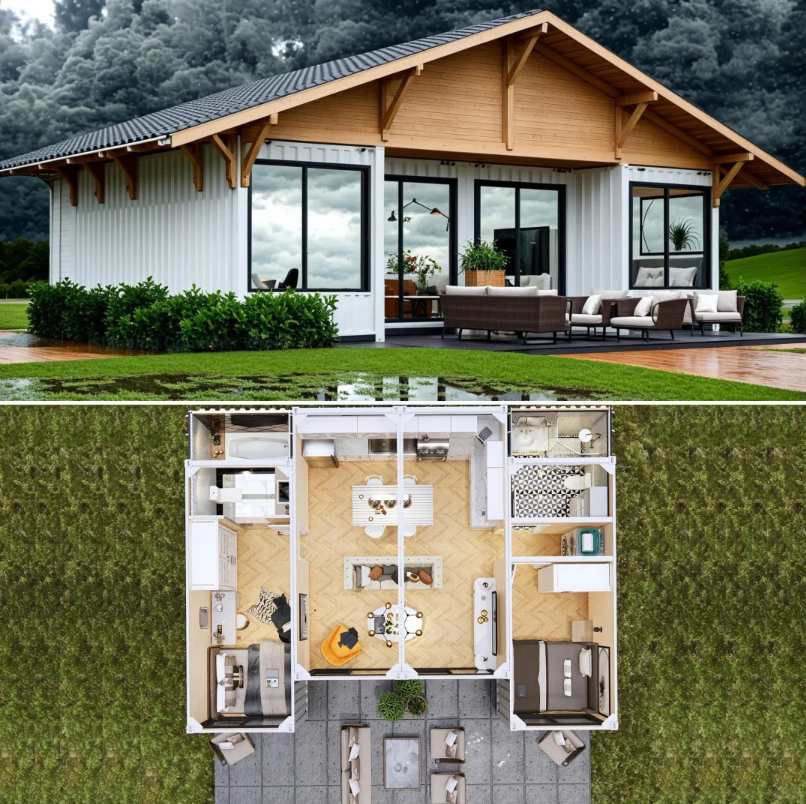
Many people focus on size when first learning about container houses.
How big is a 40-foot container?How many square meters are there when two containers are combined?Is a larger area always more comfortable?In reality,what truly impacts the living experience is often not the size of the space itself,but rather the spatial planning.
Two 40-square-meter apartments can have vastly different layouts depending on their design.A well-designed layout can provide a comfortable bedroom,a spacious living room,and ample storage.Conversely,a poorly laid-out apartment,even if larger,can feel cramped and oppressive.
This is especially true in Australia,where many projects are located near the coast,on farms,or in rural areas.Good natural lighting,ventilation,and seamless integration of indoor and outdoor spaces are often more important than simply adding a few square meters.
This is why more and more designers are prioritizing lifestyle considerations,rather than just building area,when designing container homes.
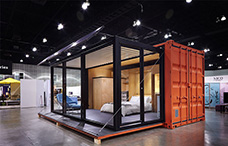
A 20-foot container studio is often the first step for many people into container architecture.
While not large,an open-plan design can still accommodate a sleeping area,a kitchenette,and a separate bathroom.For one person or short-term accommodation,this space is practical enough.
In Australia,many Airbnb hosts choose this option as backyard rental units.Compared to building traditional cabins,it has a shorter construction period and relatively lower initial investment.
If you own a vacant plot of land or want to add a separate office space,a 20-foot studio is often a simple and effective option.
If you plan to live there long-term,a 40-foot container house is usually more suitable.
Compared to a 20-foot option,it offers more complete living space.With proper planning,it can have a separate bedroom,living room,kitchen,and bathroom,providing an overall experience closer to a traditional apartment.
Many young Australian homeowners use 40-foot container houses as holiday homes or their first home.For those who prefer a minimalist lifestyle,this size is neither cramped nor incurs excessive maintenance costs.
From an investment perspective,it is also one of the most popular basic house types on the market.
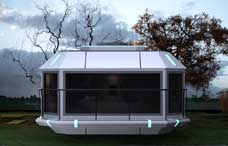
The popularity of expandable container houses has grown rapidly in recent years.
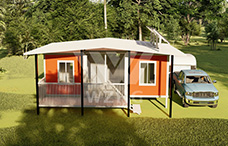
The biggest feature of this design is that it maintains the standard container size during transportation,but can be unfolded upon arrival at the site to create a larger living space.
For many families,this option balances convenient transportation with comfortable living.The unfolded area can typically reach 37 square meters,54 square meters,or even over 70 square meters,approaching the usable space of a typical residence.
You'll find that more and more farmhouses,holiday camps,and short-term rental projects are adopting this design.
As a professional modular building manufacturer,WZH House has also provided Australian clients with a variety of scalable housing solutions in recent years,helping different projects achieve higher space utilization.
When the number of residents increases,a single container often falls short of the required capacity.
Combining two 40-foot containers typically yields an overall area ofaround 60 to 80 square meters.This space can easily accommodate two bedrooms,an open-plan living room,and a full kitchen.
For families of three or four,this design offers a more comfortable living experience.
Many Australian families choose double container homes not because they are the cheapest,but because they strike a good balance between budget,space,and construction efficiency.
If you enjoy outdoor living,then a U-shaped layout is worth considering.
This design typically consists of multiple containers surrounding a central courtyard,ensuring privacy while creating a separate outdoor activity space.
Australians have always been passionate about the outdoor lifestyle.Weekend barbecues,family gatherings,and children's activities often take place outdoors.
The U-shaped layout perfectly integrates these lifestyle scenarios into the residential design,creating a natural connection between indoor and outdoor spaces.
Compared to the U-shaped layout,the L-shaped design is more compact.
Two containers forming a 90-degree angle can create a semi-open courtyard or viewing area.
For land with sea,lake,or mountain views,this design makes better use of the surrounding environment.Many modern-style container houses adopt this layout because it is both architecturally aesthetically pleasing and improves space utilization efficiency.
If you want a house that is both practical and stylish,the L-shaped layout is a worthwhile option to consider.
Granny flats have always been a popular product in the Australian real estate market.
Simply put,it is a small,detached house located next to the main residence.Many families use it for elderly people,adult children,or for rental purposes.
The container structure is naturally suited for building granny flats.
It occupies a small area,has a short construction period,and can achieve complete living functions within a limited space.
For owners looking to improve land utilization,this design not only increases living space but also has the potential to generate additional rental income.
Many people believe that container houses can only be built into small residences.
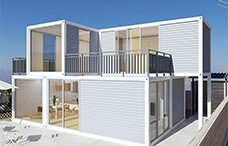
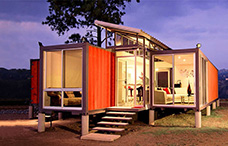
In fact,multiple containers can be combined to create high-end modern homes.
Through open-plan design,large glass curtain walls,and double-layered structures,the final result is so realistic that it's hard to tell it was ever built from containers.
In recent years,more and more such projects have emerged in Australia.They not only meet long-term living needs but also showcase a unique modern architectural style.
This design offers great potential for those seeking personalized housing.
Australia has a large amount of land in remote areas,making off-grid housing increasingly popular.
Using solar systems,energy storage devices,and rainwater harvesting systems,container houses can operate independently in environments far from urban infrastructure.
Many farmers and ecotourism operators are beginning to adopt this model.
For those who appreciate nature,off-grid cabins are not just a way of living,but a lifestyle.
Many people overlook the potential of the top of a shipping container.
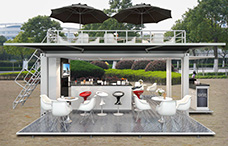
In fact,the rooftop space can be completely transformed into a viewing platform,a leisure terrace,or an outdoor dining area.
This design is especially popular for seaside vacation homes or scenic residences.It provides additional living space without increasing the footprint.
When you stand on the terrace enjoying the sunset or the surrounding scenery,you'll find that this space often becomes one of the most attractive areas of the entire residence.
After seeing various designs,many people still have a question:Which type of container house is right for their project?
In fact,there is no absolutely best layout,only designs more suitable for specific uses.
You should start by considering your actual needs,rather than simply comparing size or price.Because with the same budget,the optimal choice may be completely different in different usage scenarios.
House Types and Recommended Uses
House Type | Recommended Use |
20-foot Studio | Airbnb, backyard office, guest accommodation |
40-foot Residence | Long-term living for singles or couples |
Expandable House | Family homes, farm housing, vacation properties |
Granny Flat | Backyard extensions, rental units, family accommodation |
Double Container House | Families of three to four people |
L-shaped House | Scenic-view homes, coastal or mountain properties |
U-shaped House | Courtyard homes with private outdoor living areas |
Off-grid Cabin | Farms, ranches, remote living, ecotourism projects |
Luxury Multi-Container House | Permanent family residences and custom homes |
Tips:If you are primarily focused on short-term rentals or backyard extensions,20-foot studios and Granny Flats are often more cost-effective options;if you plan to live there long-term,expandable houses and double container houses often offer more comfortable living space.Instead of simply comparing size and price,it's better to first clarify your usage needs,land conditions,and future plans,making it easier to find a house type that truly suits you.
If you are planning a container house project,price is likely one of your biggest concerns.How much dose a contaier house cost in Australia?
However,the actual cost of container houses is not as simple as many people imagine.Online advertisements often boast about owning a container house for just tens of thousands of dollars,but when you actually start budgeting,you'll find that the final cost is often influenced by many factors.
The house itself is only one part of the overall project.Costs such as transportation,hoisting,foundation construction,approvals,and on-site plumbing and electrical connections all need to be factored into the budget beforehand.
Below is a Reference Price Range for the Australian Market
House Type | Reference Price (AUD) |
20ft Studio | $25,000–$50,000 |
40ft Residence | $45,000–$90,000 |
Granny Flat | $60,000–$120,000 |
Expandable House | $30,000–$100,000 |
Double Container House | $80,000–$180,000 |
Luxury House | $200,000+ |
Note:These figures are general market estimates for Australia and may vary depending on factors such as insulation specifications,interior finishes,transportation distance,site preparation,foundation work,local labor costs,and council approval requirements.
Before finalizing the house type,it's recommended to understand the relevant requirements of your local council.
Regulations for residential buildings vary across different states and territories in Australia.Confirming approval requirements in advance can avoid design modifications later.
It's also crucial to consider local climate conditions during planning.
For example,Queensland may prioritize ventilation and shading,while Victoria places greater emphasis on insulation.
If there are future expansion plans,it's advisable to allocate sufficient space in the initial design phase.This will reduce additional costs associated with later modifications.
What are the most popular types of container houses in Australia?
Currently,the most popular on the market are expandable container houses,granny flats,and double-container family homes.These designs achieve a good balance between space,cost,and functionality.
Is a 40-foot container suitable for long-term living?
For single individuals or couples,a 40-foot container can perfectly meet long-term living needs.The key is to plan the interior layout effectively.
Are container houses suitable for Airbnb?
Exactly.Unique architectural appearances and modern designs often attract more bookings,especially in tourist areas.
How many containers does a family typically need?
Small families often choose a combination of two 40-foot containers.If more bedrooms or common areas are needed,consider a combination design of three or more containers.
Can container houses be expanded?
Most modular designs support future expansion.Planning the structure and layout in advance will make future expansion much easier.
The development of container houses in Australia has far exceeded the scope of temporary construction.
From Airbnb rentals to family homes,from granny flats to off-grid cabins,more and more projects are proving the practicality and flexibility of this construction method.
Instead of pursuing the largest possible area,it's better to first clarify your living needs.
When you clearly understand how you will use the house in the future,choosing the right floor plan is not difficult.
If you are planning a container house project in Australia,WZHHouse can provide you with expandable houses,granny flats,custom container homes,and modular building solutions.Whether it's a residential,holiday home,or commercial project,choosing the right design solution in advance often makes the entire project run more smoothly.



Copyright © Hebei Weizhengheng Modular House Technology Co., Ltd. All Rights Reserved
Sitemap

 +8615081877521
 +8615081877521