- icy@wzhgroup.com
- +86 15081877521


Beyond traditional construction,container homes and modular homes have become incredibly popular today.Breaking away from conventional building methods—and serving as modern architectural types—neither container homes nor modular homes require vast amounts of time or manpower to construct.You simply need to select the appropriate type and floor plan,and the structure can be completed within just a few months.
So,what exactly are the differences between container homes and modular homes?Do they differ in their intended uses?Below is a comprehensive overview of both container homes and modular homes,designed to help you understand their distinctions and choose the modern building solution that best suits your specific needs.
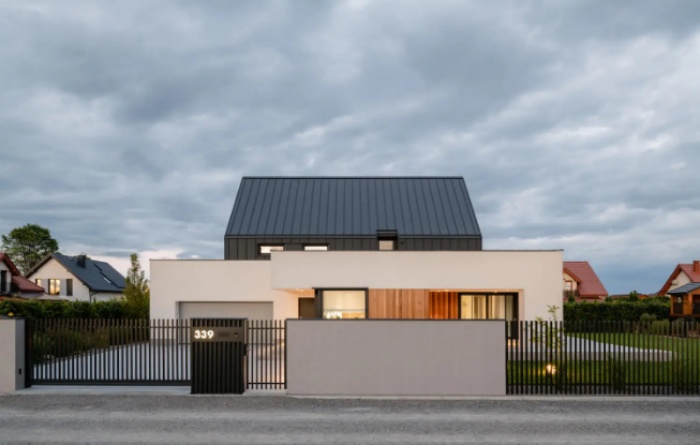
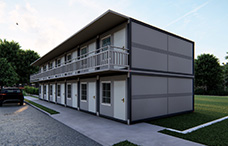
Modular homes center around the concept of factory prefabrication;typically,70%to 90%of the construction work is completed within a factory setting.For transport,the building is divided into multiple independent modules;once delivered to the construction site,these modules are assembled and combined to form the complete structure.
Compared to traditional construction,modular homes reduce on-site construction activities by approximately 70%,relying instead on an industrialized production system to complete the building process.
The core characteristics of modular homes are actually quite evident from their construction method.
A key distinction from traditional buildings is that most of the primary structural components are not built slowly on-site;instead,they are prefabricated and processed in a factory beforehand.Upon arrival at the site,the work primarily involves hoisting and joining the modules,along with performing basic connection tasks;consequently,the overall construction process is significantly simpler.
Precisely because of this,on-site construction time is typically much shorter than that of traditional buildings,and the process is relatively less susceptible to weather conditions.When advancing many projects,even if rainy seasons or climatic shifts occur,the overall progress is unlikely to be significantly delayed.
Furthermore,this construction method is inherently flexible.Modules can be combined according to specific project requirements,and in some cases,the structure can even be expanded later—for instance,by adding functional spaces or adjusting the layout—without being completely"locked in"like traditional buildings.
The production and construction processes for modular homes lean heavily toward industrialized and standardized methods,rather than relying on the logic of building a structure piece by piece directly on-site.
Therefore,strictly speaking,a modular home is not merely a single,fixed type of house,but rather represents a modern architectural approach or construction system.
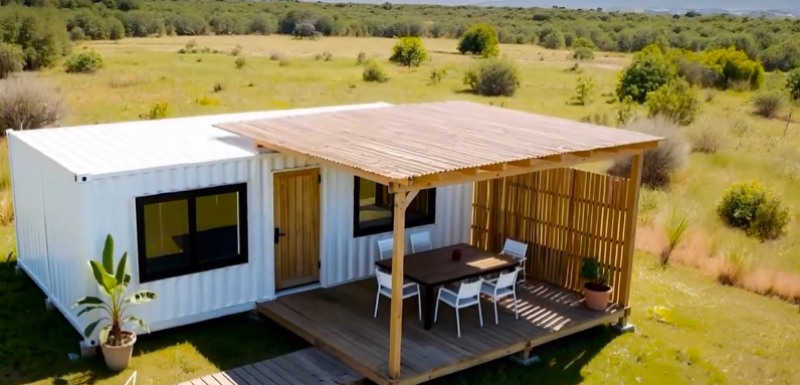
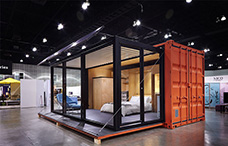
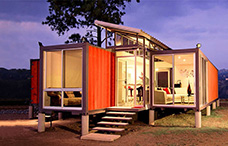
A container home is a form of modular architecture created by repurposing standard shipping containers.Through structural reinforcement,the installation of windows and doors,thermal insulation treatments,and interior finishing,these containers are transformed to serve both residential and commercial purposes.
Given that the containers themselves are constructed from high-strength steel,these structures possess inherent advantages in terms of safety and durability.
The defining characteristics of container homes can be easily understood by examining their structural origins and intended applications.
Their fundamental basis lies in standard shipping containers;since these are inherently designed as steel structures,the resulting buildings possess high overall structural integrity,offering excellent compressive strength and durability.
Another distinct feature is their standardized dimensions—typically adhering to the standard 20-foot or 40-foot specifications.This uniformity greatly facilitates transportation and assembly,allowing for largely standardized operational procedures.
In practical application,the primary advantage of container homes lies in their*speed*.Since the structural foundation is already in place,only minimal modifications and interior finishing are required to render the unit ready for occupancy within a relatively short timeframe;consequently,they are widely utilized in various temporary projects.
However,precisely because they are derived from repurposed shipping containers,the overall spatial layout is relatively fixed,offering limited design flexibility.Furthermore,their aesthetic tends toward an industrial style,with the primary emphasis placed on functionality rather than residential comfort.
Strictly speaking,container homes are not competitors to modular homes;rather,they represent a specific form of implementation within the broader system of modular architecture.They constitute a sub-branch under this larger category,rather than being a concept of equal hierarchical standing.
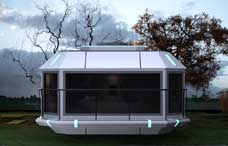
Understanding this through the lens of structure makes it clearer:Modular housing constitutes a larger architectural system.Beneath this umbrella fall various types,including container homes,light-gauge steel modular homes,precast concrete modular buildings,and pod-style structures such as"Apple Cabins."Although these types differ in appearance and application,their underlying logic remains consistent:factory prefabrication followed by on-site assembly.
The primary reason many people tend to compare them side-by-side is the overlap in their practical applications—for instance,both can be utilized for vacation rentals,campsites,or temporary projects,and both share the characteristics of rapid construction and industrialized production.However,fundamentally,they do not represent choices on the same hierarchical level;instead,their relationship is one of"system and sub-type."
The spatial layout of container homes is largely standardized,typically utilizing 20-foot or 40-foot shipping containers as the foundational units.
20-foot Container:Approximately 6m×2.4m×2.6m,with a usable floor area of roughly 14–15 m².
40-foot Container:Usable floor area of approximately 28–30 m².
This structural framework imposes certain limitations on spatial design,meaning that design efforts are largely focused on"optimization within a fixed framework."
Modular homes,conversely,are different;they do not rely on fixed container dimensions.Instead,they can be designed and configured in various combinations to meet specific project requirements.Common unit sizes can range from a few dozen square meters to over a hundred square meters,and the system even supports expansion into multi-story structures.
From a practical standpoint,container homes—due to their steel structure's high thermal conductivity—can experience significant indoor temperature fluctuations if proper thermal insulation measures are not adequately implemented.Industry data typically indicates that standard steel-structure buildings—if not equipped with a comprehensive insulation system—may exhibit thermal conductivity rates 3 to 5 times higher than those of traditional buildings;consequently,their level of indoor comfort is heavily dependent on the quality of subsequent retrofitting.
Modular homes,conversely,typically have 70%to 90%of their interior finishes and insulation systems integrated during the factory production phase,resulting in a final product that offers an experience much closer to that of a traditional residential home.
In terms of cost,the primary distinction between the two lies in the contrast between"initial outlay"and"total delivered cost."
The base price for a container home typically falls within the following ranges:
20-foot unit:Approximately$12,000–$18,000
40-foot unit:Approximately$18,000–$30,000
(Note:These figures may fluctuate significantly depending on the region and specific configurations.)
Modular homes,on the other hand,have a broader overall cost range,generally falling between:
$150–$350 per square foot(equivalent to approximately$1,600–$3,800 per square meter)
This implies that the total cost for an 80-square-meter modular home could range from$120,000 to$300,000,depending on the chosen level of configuration and finishes.
Container homes and modular homes also differ somewhat in terms of their expected service life;you can select the housing type that best suits your specific needs.
High-quality container homes are typically designed with an expected service life of 10 to 25 years;however,with proper routine maintenance over time,their operational lifespan can be extended to exceed 30 years.
Modular homes,benefiting from a more robust and comprehensive structural system,can typically achieve a service life comparable to that of traditional buildings—generally exceeding 30 years—and can even serve as permanent,long-term residences in residential-grade projects.
The primary advantage of container homes is their speed.From production to final installation,a standard unit typically requires only 7 to 20 days to complete,operating almost on a"ready-to-use upon arrival"model at the construction site.
Modular homes,conversely,follow a more systematic and process-driven approach:70%to 90%of the structure is prefabricated in the factory,requiring only on-site assembly.This method typically reduces the overall construction timeline by 30%to 60%compared to traditional building methods.In other words,shipping containers are more akin to a"plug-and-play"solution,whereas modular homes resemble an"assembly of prefabricated systems."
If you have reviewed the concepts and comparisons outlined above,the ultimate choice essentially boils down to one core question:Where do you intend to use it,and for how long?The answer varies depending on the specific usage scenario—a factor far more critical than simply debating"which one is better"in the abstract.
On construction sites or for short-term building projects,spatial requirements are often straightforward:the structure must be quick to deploy,functional,and portable.
In this context,container homes are typically the more common choice.Their primary advantage lies in their deployment speed;generally,the entire process—from manufacturing to final installation—takes only about 7 to 20 days,allowing them to be put into service very quickly.
Furthermore,such projects often require the bulk construction of office areas or dormitories.Thanks to their high degree of standardization,container homes are convenient for both transportation and reuse,making them easier to manage uniformly.
Overall,this type of application environment prioritizes"temporariness"and"efficiency"over the spatial experience itself;consequently,the advantages of container homes are more pronounced here.
If the usage scenario shifts to guesthouses,vacation campsites,or branded accommodation spaces,the situation changes significantly.
These types of projects typically demand more than just a space that is"merely habitable";they place a greater emphasis on the overall guest experience—including spatial design,visual aesthetics,brand image,and the stability of long-term operations.
Here,the advantages of modular homes become more prominent.They can be flexibly designed to meet specific project requirements—whether that involves combining multiple rooms,creating open-plan communal areas,or even crafting a holistic spatial layout that integrates seamlessly with the natural surroundings.
Additionally,the factory prefabrication ratio for modular homes typically ranges from 70%to 90%.This allows for a reduction of approximately 30%to 60%in on-site construction time compared to traditional building methods,thereby ensuring efficiency while simultaneously meeting the quality standards required for long-term operation.
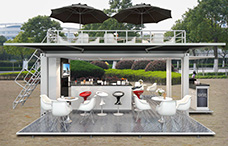
For commercial display purposes or temporary retail spaces—such as pop-up shops,small exhibition booths,or temporary brand activation points—both structural formats are viable options.
The primary deciding factor in this context is,once again,the projected duration of the project.If the intended usage period is relatively short—ranging from a few weeks to a few months—container homes often present a more straightforward solution.Not only are their costs relatively controllable,but they can also be deployed on-site much more rapidly.
However,for medium-to-long-term brand exhibition spaces or fixed commercial locations,modular homes tend to hold the advantage.This is because they offer superior spatial expressiveness,a more refined overall aesthetic,and greater structural stability for prolonged use.
In emergency scenarios—such as post-disaster relief,temporary rescue operations,or urgent accommodation needs—time is often the most critical factor.
In such situations,the advantages of container homes are immediately apparent.They can be rapidly transported to the site and deployed within a very short timeframe,quickly establishing habitable living spaces.
Furthermore,individual container units possess a high degree of structural independence,making them ideal for mass deployment;in an emergency,they allow for the rapid assembly of a comprehensive shelter system.
Consequently,in scenarios where"speed"and"functionality-first"principles are paramount,container homes typically represent the more practical choice.
If the project objective involves long-term residency or serves an investment purpose—such as vacation properties,campsite operations,or branded boutique guesthouses—modular homes are generally the more suitable option.
Their advantages manifest in several key areas.First,they boast a longer service life;their overall structural design is typically engineered to endure for 30 years or more.
Second,they offer greater spatial flexibility,allowing for customized designs tailored to the specific positioning of the project.They also possess superior scalability,making them well-suited for future upgrades or expansions.
In terms of the living experience,modular homes generally feel much closer to traditional residential dwellings;regarding natural lighting,spatial perception,and overall comfort,they are far better suited for long-term occupancy.
From a long-term operational perspective,their maintenance costs also tend to be more predictable and stable,making them better suited as"enduring assets"rather than merely short-term projects.
Container homes and modular homes are not,in fact,two mutually exclusive choices.More accurately,a container home is a specific form within the broader system of modular architecture,whereas"modular homes"represent a larger architectural concept that encompasses a diverse range of industrialized construction solutions.Once this relationship is understood,the indecision many people face when selecting a project approach naturally diminishes;the focus shifts from asking"which option is inherently better?"to asking"which option is best suited for this specific application scenario?"
Based on WZHHouse’s practical project experience,different types of engineering projects typically call for distinct structural solutions.If you are currently planning temporary site facilities,a camp project,a commercial space,or a long-term operational facility—but remain unsure which structural form to choose—please feel free to contact us directly for tailored advice and technical support.
WZHHouse container house factory offers customized solutions for container homes and modular buildings—spanning the entire process from design and production to final delivery—helping you bring your project to fruition with greater efficiency.



Copyright © Hebei Weizhengheng Modular House Technology Co., Ltd. All Rights Reserved
Sitemap

 +8615081877521
 +8615081877521