- icy@wzhgroup.com
- +86 15081877521


What standards must be met when purchasing a Prefab Container Home in Australia?
You might assume that a container home is merely a standard consumer product—something you can simply order off the shelf,much like buying furniture.In reality,however,in Australia,these structures are classified as"buildings";consequently,purchasing and utilizing one requires strict adherence to rigorous regulations and approval processes.
The following sections will provide a detailed breakdown of the core requirements for Prefab Container Homes for sale in Australia—covering standards,materials,certifications,and the approval process—to help you avoid common,costly mistakes.
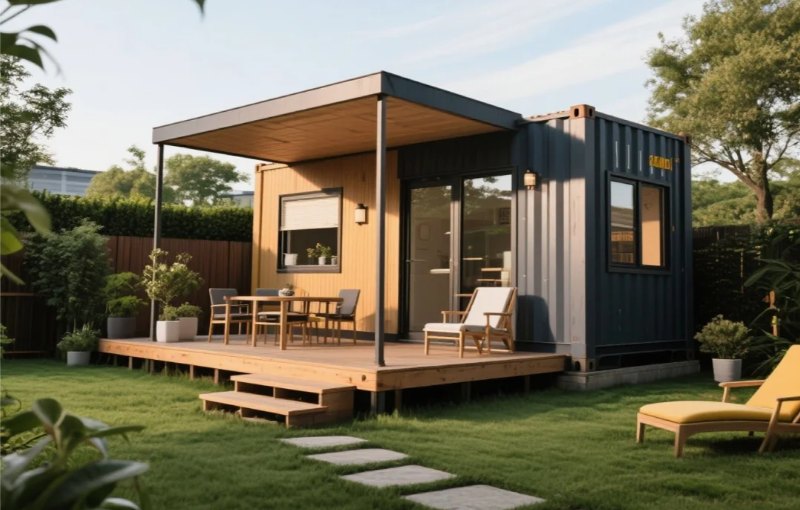
Before delving into the specific standards,you must first clarify a crucial premise:in Australia,a container home is not merely a simple"product,"but is instead classified as a form of building structure.
This means that,to be legally utilized,it must comply with the National Construction Code and obtain approval from the local government.Neglecting this fundamental requirement can lead to a host of complications.For instance:
Failure to secure approval from the local Council;
The inability to legally inhabit or rent out the property;
Orders to modify—or even demolish—structures that have already been built.
These risks often result in costs that far exceed the price of the container unititself.Therefore,familiarizing yourself with the relevant standards*before*making a purchase is not only essential but also a critical step in avoiding financial loss.
Before discussing the specific standards,let's briefly examine the cost structure of Prefab Container Homes in Australia;this will help you better understand why"compliance"plays such a significant role in determining the final price.
Generally speaking,the total cost of a container granny flat is made up of several key components.Each category contributes a different proportion to the overall budget:
Category Budget Share Estimated Cost Range Description
Main Structure 40%–60%$15,000–$60,000 Covers the core building components,including the steel structure,wall panels,insulation,doors,and windows.This is the largest cost portion and depends heavily on size and customization level.
Transport Costs 10%–20%$3,000–$10,000 Includes international shipping(e.g.,from China to Australia)and local delivery to the installation site.Costs vary based on distance and logistics conditions.
Foundation&Installation 10%–20%$5,000–$20,000 Covers site preparation,ground leveling,foundation work(such as concrete slabs or footings),and on-site assembly or crane installation.
Approvals&Design 5%–10%$2,000–$8,000 Includes architectural drawings,engineering certifications,and local council approvals required for legal installation.
Miscellaneous Costs 5%–10%$2,000–$10,000 Covers additional expenses such as plumbing,electrical systems,interior finishes,and optional upgrades like air conditioning or solar systems.
Specific prices will vary depending on the region.For instance,the overall cost in Sydney or Melbourne is typically significantly higher than in remote or regional areas.
In Australia,the key to legally utilizing a container home lies not in how inexpensive the price is,but rather in whether the product genuinely complies with local building standards.Many buyers,when first encountering container homes,focus solely on the"attractive appearance and low price,"while overlooking the most critical issues:safety and regulatory compliance.
All prefabricated container homes intended for residential use must comply with the requirements of the**NCC(National Construction Code)**.The NCC not only stipulates standards for structural safety,energy efficiency,and fire protection,but also strictly defines the classification of residential buildings.
For example:
Class 1a:A detached dwelling;legally permitted for residential occupancy.
Non-Class 1a:Typically regarded as a temporary structure;cannot be used as a permanent residence.
This means that even if your container home has been delivered to the site and fully assembled,if it fails to meet Class 1a standards,you will be unable to obtain an occupancy permit—and thus cannot use it for long-term habitation.This point is particularly critical for residential investment properties or rental housing projects.
In addition to the NCC,container homes must also satisfy a series of specific technical standards;these standards determine the structural integrity and safety of the dwelling under extreme weather conditions and during long-term use.For example:
Structural Design:AS 4100,ensuring the stability of the steel structure.
Wind Loads:AS/NZS 1170,used to assess the building's load-bearing capacity under strong winds.
Welding Processes:AS/NZS 1554,guaranteeing reliable weld quality.
Foundation Requirements:AS 2870,ensuring the house foundation is stable and resistant to settlement.
Electrical Standards:AS/NZS 3000,safeguarding electrical circuit safety.
While these standards may appear technical and complex,they directly determine whether a home can be safely occupied and whether it will successfully pass government approval processes.
It is crucial to note that the reason many low-cost container homes are so inexpensive is precisely because their design and manufacturing stages did not fully adhere to these standards.Purchasing such products may seem like a cost-saving measure in the short term,but over the long term,it can lead to serious safety hazards and incur significant additional costs for rectification work.
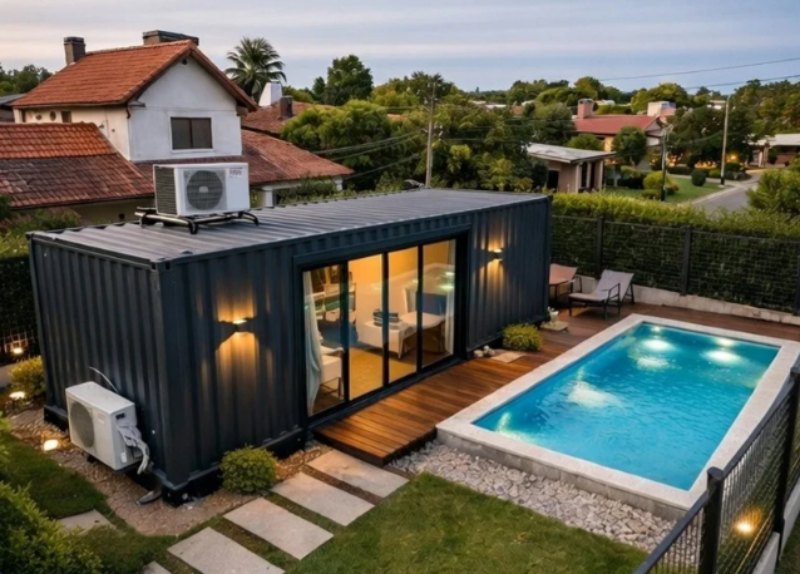
In practical projects,material selection is often the most easily overlooked—yet most treacherous—stage of the process.
Many buyers initially focus solely on aesthetics and price;seeing product photos that look neat and feature a full set of amenities,they assume the unit is ready for immediate purchase.However,in Australia,this method of assessment is far from sufficient.What truly determines whether a home is fit for use is the underlying quality of its materials and its compliance with relevant standards.
If materials fail to meet the required standards,not only will the project struggle to gain regulatory approval,but it may also pose safety risks during subsequent occupancy.Therefore,it is absolutely essential to understand these critical requirements before making a purchase.
The steel structure constitutes the core component of a container home—effectively serving as the"skeleton"for the entire dwelling.
In Australia,a steel structure must be not only robust and durable but also backed by comprehensive technical documentation.Typically,the following documents are required:
Steel Mill Certificates(Mill Certificates)
Specifications regarding strength grades
Documentation tracing the origin of the materials
While these documents may appear to be mere"paperwork,"they are,in reality,an indispensable part of the engineering review process.
If a supplier is unable to provide this supporting documentation—even if the house appears structurally sound on the surface—it will be extremely difficult to pass the necessary structural inspections.More importantly,for such products,the long-term wind resistance and overall stability cannot be guaranteed.
Simply put,a steel structure must be not only"visually reliable"but also"quantifiably reliable."
Compared to structural integrity,insulation is an aspect that many buyers tend to overlook.
However,in Australia,building energy efficiency is a mandatory requirement;this means that a home must possess excellent thermal insulation properties.
Specifically:
Walls must incorporate an insulating layer(such as PU foam or rock wool).
Doors and windows must possess a certain level of thermal insulation capability.
Without these features,a home can become stiflingly hot in the summer and struggle to retain heat in the winter—not only compromising the living experience but also failing to meet relevant regulatory standards.
In fact,in most regions of Australia,a container home lacking a proper insulation system cannot legally be used as a residential dwelling.
Therefore,when selecting a product,do not simply look at whether"walls exist,"but rather focus on"what lies*inside*the walls."
Beyond basic structural integrity and insulation,Australia imposes more detailed requirements regarding a home's safety performance.
Natural environmental conditions vary significantly across different regions,and consequently,the applicable standards differ as well.For instance:
In areas prone to bushfires,specific fire-resistance ratings must be met.
In coastal or high-wind regions,the structure must possess enhanced wind-resistance capabilities.
These requirements are not elements that can be easily retrofitted later;they must be carefully considered and integrated during the initial design phase.
Neglecting these factors can result in the home failing to obtain regulatory approval,or even necessitating a complete redesign and renovation—thereby incurring substantial additional costs.
Beyond the materials themselves,relevant certifications and documentation are equally critical.
Frequently,the product itself is entirely sound,yet the entire project stalls because the necessary supporting documentation is missing.
This serves as the primary basis for determining whether a home is structurally safe.
It typically includes:
Structural calculation reports.
Certification signed and endorsed by a professional engineer.
These documents serve to demonstrate the home's stability under various load conditions—such as strong winds,heavy loads,and other environmental stresses.
In the Australian market,products lacking proper structural engineering certification are,for all intents and purposes,impossible to bring into actual use.
When submitting a project for regulatory approval,a series of foundational documents must typically be provided,such as:
A Statement of Compliance with the National Construction Code(NCC).
Material testing reports.
Technical product specifications.
The purpose of these documents is to enable the approving authority to clearly understand the home's design rationale and performance characteristics.
If the documentation is incomplete,the approval process will often be repeatedly sent back for revisions,severely delaying the project's progress.
In addition to the basic mandatory requirements,certain supplementary certifications can significantly expedite and streamline the regulatory approval process.For example:
CodeMark Certification
WaterMark Certification(where water systems are involved)
Although these certifications are not strictly mandatory,in practical projects,they often help reduce communication overhead and ensure the entire process runs more smoothly.
In many projects,the approval stage is often the most overlooked component.
Some buyers assume that once a product has been purchased and installed,it is ready for immediate use.However,in Australia,this is an unrealistic expectation.
Regardless of whether the structure is sourced locally or from overseas,it must undergo government approval.
Typically,there are two pathways for this:
DA(Development Application)
CDC(Fast-track Approval)
During the approval process,the design of the structure,its structural integrity,and land-use compliance are comprehensively evaluated.
Failure to plan adequately in the preliminary stages can result in prolonged approval cycles—or even outright rejection.This not only delays occupancy but may also incur additional modification costs.
In practice,many issues arise not from technical complexity,but from misconceptions or cognitive biases.
Here are some common mistakes:
Focusing solely on price while neglecting regulatory compliance
Purchasing products that lack engineering certification
Assuming that container homes do not require government approval
Failing to consult with local government authorities in advance
Underestimating installation and foundation costs
These issues often remain invisible during the initial stages but gradually surface later on,potentially causing the project budget to spiral out of control.
Conversely,gaining a clear understanding of the regulations upfront can often prevent the vast majority of these problems.
Among all the factors involved,the choice of supplier is often the most critical step.A professional container house supplier should offer not merely a product,but a comprehensive solution.
When making your selection,consider focusing on the following key points:
Do they provide complete engineering drawings?
Are they knowledgeable about Australian standards?
Do they possess relevant project experience?
Can they provide the necessary certification documents?
This information will help you assess whether the supplier possesses the actual capability to successfully deliver the project.
From a long-term perspective,selecting a reliable supplier is often far more important than simply chasing the lowest price,as it directly impacts not only the quality of the product but also the successful realization of the entire project.
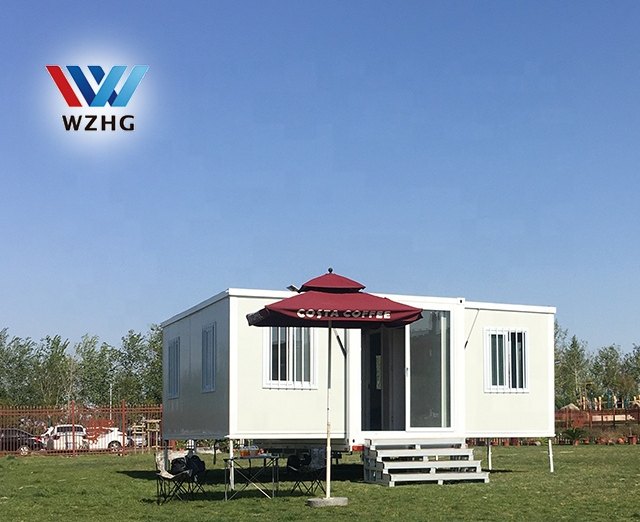
In the Australian market,selecting a container home involves looking beyond just the price;safety and regulatory compliance are paramount.WZHhouse offers distinct advantages in this regard:
Compliance with Australian Standards:From the initial design phase,we prioritize structural safety,thermal insulation,fire resistance,and wind load requirements,making it significantly easier to secure government approvals.
Comprehensive Certification Support:We provide NCC Statements of Compliance,structural engineering calculations,material testing reports,as well as CodeMark and WaterMark certifications—helping clients expedite the approval process and avoid common regulatory hurdles.
Flexible Customization Options:Whether for residential living,farm accommodation,or commercial applications,our designs can be fully tailored and adapted to meet your specific needs,balancing both safety and practicality.
Choosing WZHhouse means more than just purchasing a container home;it means selecting a reliable,compliant,and fully actionable end-to-end solution—ensuring your entire purchasing and installation journey is as smooth and worry-free as possible.
Prefabricated container homes indeed represent a flexible and cost-effective construction method in Australia.However,a fundamental prerequisite is that they must comply with relevant standards and successfully pass regulatory approval processes.
From structural design to material selection—and from certification documentation to government approvals—every single stage directly impacts the final cost and the ultimate outcome of the project.
Rather than simply opting for the lowest-priced solution,priority should be given to compliance and feasibility.Only when these prerequisites are met can a container home truly realize its full value.
If you are planning to purchase a prefabricated home in Australia for use as a primary residence,we invite you to contact us.We not only provide fully certified homes but can also customize the design to suit your specific needs,ensuring you enjoy a living space that is truly comfortable and tailored to you.



Copyright © Hebei Weizhengheng Modular House Technology Co., Ltd. All Rights Reserved
Sitemap






 +8615081877521
 +8615081877521