- icy@wzhgroup.com
- +86 15081877521


When making a purchasing decision for an Expandable Container House,many people initially oversimplify the issue:
“China is cheaper—shouldn't I just buy directly from there?Local options are more expensive,but wouldn't they be less of a hassle?”
However,once the project actually enters the execution phase,this question often becomes far more complex.You will discover that price is merely one component;the major variables are actually hidden within shipping logistics,regulatory compliance,timelines,and the entire execution chain.
In the article below,we aim to dissect this choice and clarify the nuances,adopting a perspective that closely mirrors the reality of an actual project.
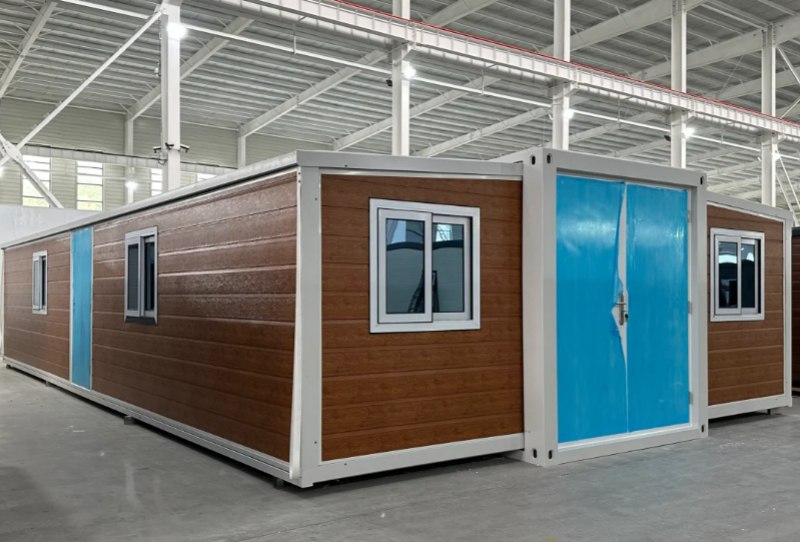
Choosing between a Chinese or a local supplier for an Expandable Container House is fundamentally not about selecting a country,but rather about choosing between two delivery models:"low cost,high complexity"versus"high cost,low risk."The former is suitable for large-scale projects,while the latter is ideal for scenarios requiring rapid deployment and strict regulatory compliance.
When discussing supplier selection,there is a point that is often easily overlooked:while everyone assumes they are comparing prices,what they are actually comparing is"project uncertainty."
A Chinese supply chain typically translates to lower unit costs,but it also means you must manage a greater number of logistical steps;conversely,local suppliers come with a higher price tag,but offer a streamlined process.
To put it bluntly:one option involves"taking on more personal burden in exchange for lower costs,"while the other involves"paying a premium to purchase certainty."
When sourcing modular housing globally,many buyers are choosing China for efficiency and scalability.The advantages of Chinese expandable container house suppliers go beyond price,including strong manufacturing capacity and flexible customization.Below are the key advantages that make them a preferred choice worldwide.
If one were to base a purchasing decision on a single criterion,most people would ultimately return to"price"—and this is precisely where Chinese expandable container house suppliers demonstrate their most direct and compelling advantage.
In the current market,the pricing structure for a standard Expandable Container House—ranging from basic functional models to high-end custom configurations—is quite clearly defined.With options ranging from entry-level models at around$5,500 to premium solutions exceeding$15,000,the range effectively covers diverse needs,from temporary accommodation to long-term residential use.
More importantly,compared to local suppliers,these products are often 20%to 50%cheaper.This price gap is not merely a result of"accidental low pricing,"but rather a systemic advantage cultivated over the long term.The reasons are,in fact,quite pragmatic:
On one hand,China possesses a comprehensive steel supply chain,resulting in lower raw material procurement costs.On the other,the reduction in marginal costs driven by large-scale production has led to a continuous compression of unit prices.Simultaneously,increasing levels of automation have reduced reliance on manual labor.
Simply put,this isn't merely a case of"one specific factory being cheap";rather,it is the entire manufacturing ecosystem working to save you money.
If you have had exposure to modular housing from various countries,you will notice a distinct difference:in terms of"product maturity,"Chinese suppliers have long since moved past the early stages of trial and error.
Whether regarding structural design or deployment mechanisms(such as folding or expandable systems),most mainstream manufacturers have established robust and stable solutions.What does this signify?It means you are not purchasing an"experimental prototype,"but rather a standardized product that has been repeatedly validated by the market.
More importantly,their expertise is often derived from real-world,large-scale projects—such as mining camps,tourist resorts,and construction site dormitories.These projects impose rigorous demands regarding durability,transport adaptability,and installation efficiency.
In other words,Chinese manufacturers are selling not just the product itself,but a complete package of"proven project experience."
In many procurement scenarios,a standard product serves merely as a starting point,not the final destination.Particularly when commercial operations or long-term usage are involved,the question of"can it be customized?"often carries more weight than"is it in stock?"
Chinese suppliers typically demonstrate greater flexibility in this regard.
From internal spatial layouts and exterior architectural styles to interior finishing standards,almost every aspect can be adjusted to meet specific requirements.Whether you intend to create an office space,a guesthouse,a campsite accommodation,or even a small-scale commercial venue,these objectives can be realized through the modular combination of units.
Additionally,the ability to seamlessly join multiple units is a common capability.While a single container unit serves as the basic building block,combining multiple units allows for the expansion into larger functional spaces—such as reception centers,dining halls,or staff dormitory complexes.
In essence,it functions more like a"building-block system"than a rigid,fixed product.
Once a project scales up—involving dozens or even hundreds of units—a supplier's"delivery capability"becomes the decisive factor.
In this respect,the advantage held by Chinese manufacturers is exceptionally clear.
Leveraging mature production lines and substantial manufacturing capacity reserves,they are capable of fulfilling large-volume orders within relatively short timeframes.This capability is absolutely critical for engineering projects,mining operations,and real estate developers.Imagine a scenario where a project requires the deployment of 100 housing units within just two months;a local supplier might be forced to deliver in batches due to production capacity constraints,whereas a Chinese supplier can often complete the entire production run at once and ship the units collectively.
For the project owner,this is not merely a matter of time;it directly impacts the overall construction schedule and cash flow.
Of course,Chinese suppliers are not the"perfect option,"and certain practical issues must be carefully considered in advance.
First is the issue of transportation costs.
Shipping fees,local unloading charges,crane rentals,and on-site installation costs—when tallied together—can sometimes significantly inflate the overall budget.This cost component is particularly substantial and cannot be overlooked in landlocked or inland regions.
Second are customs clearance and regulatory issues.
Requirements for construction products vary significantly across different countries—covering aspects such as certification standards,structural safety codes,and electrical systems.Without proper advance planning,it is easy to encounter roadblocks during the customs clearance or permitting stages.
Finally,there is the matter of after-sales service.
Due to the vast geographical distance,should any issues arise,both response times and the ease of repairs can be compromised.Sourcing replacement parts is also not as straightforward as it would be with a local supplier—a factor that requires particular scrutiny for projects intended for long-term use.
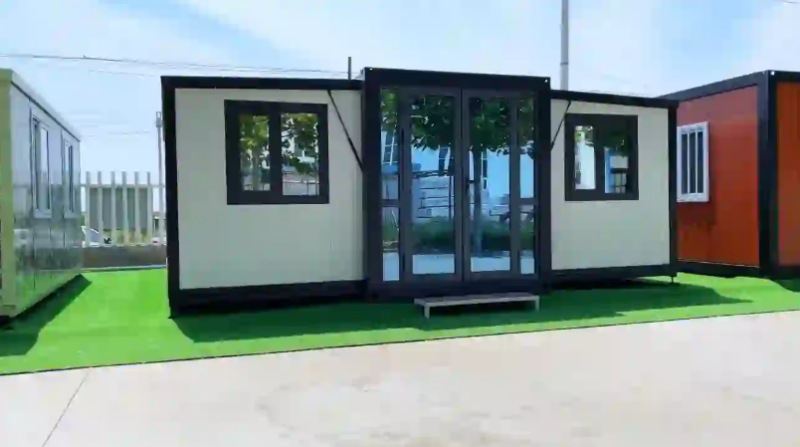
If your project operates under extremely tight deadlines,local suppliers often hold a distinct advantage.
Eliminating the need for international shipping and the associated waiting periods for sea freight,local manufacturers can typically complete production and delivery in a much shorter timeframe.Some suppliers even maintain ready-to-ship inventory,allowing for immediate arrangement of transport and installation.
For temporary projects,emergency housing initiatives,or short-cycle construction jobs,this"buy-and-use"capability is absolutely critical.Simply put,local suppliers are the more suitable choice for projects where"time is the priority."
In Western markets(Europe and North America),regulatory compliance in construction is often an unavoidable and central topic.
Local suppliers are typically intimately familiar with local regulations,zoning requirements,and the specific permitting processes in their region.The products they offer are more likely to meet local standards and stand a better chance of securing necessary permits and approvals.
In contrast,imported products sometimes require additional certifications or design modifications;this not only incurs additional time costs but can also introduce elements of uncertainty.
Therefore,if your project involves long-term residential use,commercial applications,or operates within a strictly regulated environment,opting for a local supplier will likely save you a great deal of hassle.
After-sales support issues are often easily overlooked during the procurement phase,yet they prove to be absolutely critical during actual operation and use.The primary advantage of local suppliers lies in their"proximity."Should any issues arise,they can respond rapidly—even dispatching personnel directly to the site to resolve the problem.This level of service is crucial for long-term operational projects.
Furthermore,replacing spare parts is more convenient,as there is no need to wait for international shipping,keeping maintenance costs relatively manageable.Simply put,sourcing locally feels more like a"secure,long-term partnership."
However,the most significant drawback of local suppliers is equally obvious:price.
Due to higher labor and material costs,comparable products typically cost 30%to 100%more than those from Chinese suppliers.For budget-sensitive projects,this price disparity is often unacceptable.
Additionally,regarding product selection,local markets tend to focus on standardized products,offering a relatively limited range of available models.While customization capabilities do exist,they often lack the flexibility and cost-efficiency found within Chinese supply chains.
From a scalability perspective,as project volume increases,the cost advantages of local suppliers do not typically decrease significantly in proportion to the increased quantity—a factor that becomes particularly pronounced in large-scale projects.
When evaluated across the five key dimensions of cost,time,risk,customization capabilities,and regulatory compliance,Chinese suppliers hold a distinct advantage in terms of pricing and flexibility,whereas local suppliers offer greater stability regarding delivery certainty and regulatory compliance.Taking markets such as the U.S.and Australia as examples,local prices are typically 30%to 100%higher than those from China.
If we were to place both supply chain options side-by-side for comparison,the differences would be immediately apparent.Below,we break down these differences using data derived from real-world market scenarios.
For many clients,their first interaction with Chinese suppliers yields one immediate and striking impression:the price disparity is remarkably significant.
Take"Expandable Container Houses"as an example:
Chinese Suppliers:Approximately$8,000–$15,000 per unit(Ex-works price)
Local U.S.Suppliers:Approximately$18,000–$35,000 per unit
Local Australian Suppliers:Approximately AUD 25,000–45,000 per unit
Even after factoring in international shipping,customs duties,and local installation fees,the overall cost of purchasing an expandable container house from China still results in savings of 30%to 60%.However,it is crucial to note that a low quoted price does not necessarily equate to a low total cost.Beyond the price of the container home itself,you must also factor in the following:
Ocean freight costs(which can fluctuate significantly)
Customs clearance and applicable taxes/duties
Local hoisting and installation services
Potential costs associated with rework or communication issues
Chinese suppliers possess an almost absolute advantage in terms of"price competitiveness";however,you will need to exercise a certain level of project management expertise to effectively control these hidden costs.
Do you assume that purchasing a container home locally will be a faster process?In reality,this may not be the case.
When purchasing from a Chinese container supplier,the typical production cycle is 2 to 6 weeks.Ocean shipping takes approximately 15 to 40 days—depending on your specific location—bringing the total lead time to roughly 5 to 10 weeks.
When purchasing from a local container supplier,the production scheduling cycle ranges from 4 to 12 weeks(a timeframe that may extend further during peak seasons).Since there is no need for long-distance shipping,the time it takes for you to receive the container home generally falls within this 4-to-12-week window.
Therefore,from a purely chronological standpoint,purchasing from a local supplier does not guarantee that you will receive your container home any sooner.Furthermore,if you require specific customizations,Chinese container suppliers tend to be more flexible—and may even be able to complete production and delivery more rapidly.
Whether you choose to purchase a container home from China or from a local supplier,a certain degree of risk is always involved;however,the nature of these risks differs—a distinction you must keep in mind.
The primary risks associated with purchasing container homes from Chinese suppliers lie in the areas of shipping and after-sales support.Cross-border shipping is susceptible to delays,and given the vast geographical distances involved,resolving after-sales issues may require a considerable amount of time.
Conversely,purchasing from a local supplier may present risks such as lengthy production queues,slower technological updates or product iterations,and limited options regarding container types or customization services.For buyers requiring bespoke solutions,these limitations can be a significant disadvantage.
Customization capability is often the most overlooked dimension of the purchasing process,yet it is a requirement for a great many projects.
Chinese container home suppliers typically offer a range of customization services;for instance,the dimensions,structural design,and even the interior layout of the container home can be tailored specifically to meet your unique requirements.If you are looking to make a small-batch purchase,it is still possible to make certain adjustments.
However,local container home suppliers tend to favor standardized products;their customization fees are typically quite high,and they often impose minimum production volume requirements.If you require customized services,you may face a longer lead time.
Therefore,if your project involves specific customization requirements,Chinese container home suppliers offer distinct advantages and may be a more suitable choice for you.
This is a critical factor you must understand before making a purchase:the container units you procure must strictly adhere to local building codes and regulations.Neglecting this aspect during the initial planning stages can lead to significant cost overruns later on.
Local container home suppliers generally ensure full compliance with local building codes,making the approval process smoother.Furthermore,their documentation is typically comprehensive,so you generally do not need to worry about failing regulatory inspections.
Chinese container home suppliers are also capable of manufacturing products that meet specific standards—such as CE or AS/NZS—provided you clearly articulate your requirements.You must inquire whether the supplier’s production standards align with the regulations in your specific region to avoid purchasing non-compliant products.
This is particularly critical in markets like the United States and Australia,where the regulatory approval process is often more complex than the product itself.If compliance issues are not properly addressed during the initial planning phase,you may encounter situations later on where installation is impossible or extensive modifications are required.
Consequently,local suppliers hold a distinct advantage in terms of"compliance certainty,"whereas Chinese suppliers must compensate for this by prioritizing thorough communication and comprehensive documentation preparation during the preliminary stages.
Selecting a supply chain for container homes is not simply a matter of determining"who is better";rather,it depends heavily on the specific type,scale,and timeline requirements of your project.In other words,the optimal solution varies significantly depending on the specific context.
When analyzing market demand,large-scale or cost-sensitive projects are often best suited for the Chinese container home supply chain.Such projects typically include mining camps,worker housing at construction sites,resort expansions,and large-scale residential developments.Their common characteristic is sheer volume;once a project enters the mass-production phase,even small differences in unit costs are rapidly amplified,making the advantages of the Chinese supply chain—particularly in cost control and mass production capabilities—extremely evident.
Conversely,small-scale projects—or those with extremely tight deadlines—are generally better suited for local container home suppliers.Examples include small residential units,rapid-deployment commercial spaces,temporary office modules,and projects located in regions with particularly stringent regulatory requirements.The core priority for this type of project is not"lowest cost,"but rather"whether it can be put into operation as quickly as possible."In such scenarios,delivery speed and regulatory compliance efficiency often take precedence over price.
In real-world projects,these two options are not mutually exclusive;in many cases,a hybrid model emerges where different supply chains are utilized for specific modules or phases to strike a balance between cost-effectiveness and efficiency.
From a holistic perspective,the fundamental question regarding"China vs.Local Expandable Container House Suppliers"has never been simply"which is better,"but rather"which is better suited to your project's timeline and risk tolerance."
To distill this matter down to its essence,it can be understood in a more straightforward manner:
Chinese suppliers can typically help you drive down overall costs;however,the trade-off is that you must possess stronger project management capabilities to navigate the complexities associated with communication,logistics,and cross-border coordination.
Local suppliers,conversely,tend to make the entire process smoother and more controllable—though this often comes at the cost of a higher price tag.



Copyright © Hebei Weizhengheng Modular House Technology Co., Ltd. All Rights Reserved
Sitemap






 +8615081877521
 +8615081877521