- icy@wzhgroup.com
- +86 15081877521


In today's world,where modular construction and small-scale housing are becoming increasingly popular,Expandable Container Houses and Tiny Houses are frequently compared side-by-side.Both fall under the category of"small-space living solutions,"yet the fundamental logic behind them is entirely different.
If you are considering investing in a vacation rental business,establishing a campsite,or simply seeking a more flexible way of living,understanding the essential differences between these two options is crucial.
Below,we systematically break down this comparison across eight key dimensions.
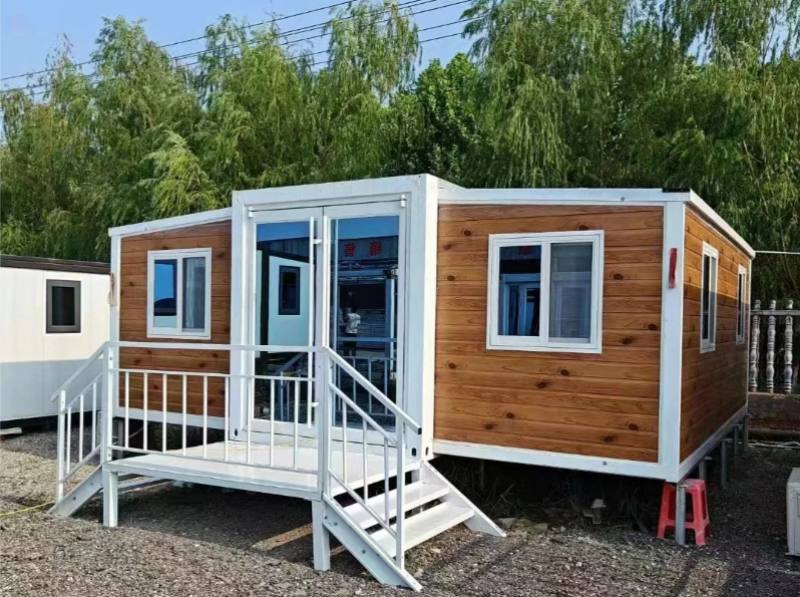
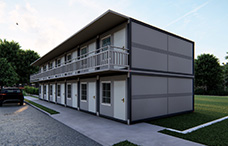
At its core,an Expandable Container House is an industrialized modular construction solution.Its primary design objective is not the"house itself,"but rather the"rapid delivery of usable space."Commonly found in settings such as construction site camps,temporary offices,and emergency housing,it leans heavily toward engineering applications.
From an industry perspective,these products typically consist of standardized steel structural units,emphasizing production efficiency,transport efficiency,and rapid deployment capabilities.In many large-scale engineering projects,the value of such structures lies not in the"living experience,"but rather in their ability to"quickly resolve basic accommodation needs for a large number of personnel."
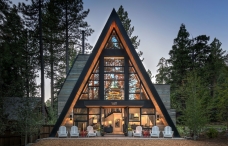
Tiny Houses,on the other hand,are a completely different proposition.Born out of the minimalist lifestyle movement in North America,they emphasize"achieving a complete life within a smaller footprint."They are not merely engineering products,but rather the embodiment of a living philosophy—geared more toward personal,long-term residential use.
In the actual market,Tiny Houses often integrate aesthetic design,lifestyle expression,and spatial psychology—for instance,demonstrating how to create a complete living ecosystem(comprising a living room,kitchen,bedroom,and storage)within a limited area.They function more as"lifestyle products"than as mere architectural structures.
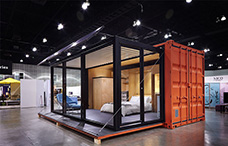
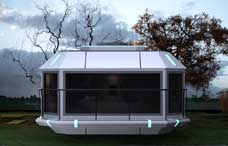
The defining characteristic of an Expandable Container House is its"transformability."In its transport configuration,it takes the form of a compact shipping container;however,once deployed on-site,its interior space can expand to 1.5 times—or even more than 3 times—its original size.For example,a 20-square-meter unit might yield over 40 square meters of usable space once expanded.
The core significance of this structural design lies in"maximizing spatial efficiency."This is particularly advantageous in situations involving high transport costs or limited land resources,where one can trade minimal transport volume for maximum usable floor area.In contrast,the Tiny House features a fixed structural design;typically ranging in area from 10 to 40 square meters,it does not undergo any structural expansion or alteration.Its spatial optimization relies entirely on internal layout design—utilizing methods such as multi-functional furniture,vertical storage solutions,and fold-away bed systems.
In other words,the Expandable Container House achieves spatial optimization by"structurally increasing space,"whereas the Tiny House does so by"designing for spatial compression";the optimization strategies employed by the two are fundamentally distinct.
The Expandable Container House utilizes a collapsible transport method.Most prefabrication work is completed at the factory,meaning that upon arrival at the site,only simple hoisting or assembly is required;installation can typically be completed within 1 to 3 days.This model is ideally suited for projects requiring rapid deployment.
In practical engineering applications,this"ready-to-use"characteristic is of paramount importance—particularly in remote regions,under tight deadlines,or for temporary projects—as it significantly reduces reliance on conventional on-site construction processes.
The transportation method for a Tiny House depends on its specific type.If it is a trailer-mounted unit,it can be transported in its entirety;however,this imposes specific requirements regarding road width,weight limits,and the towing vehicle used.If it is a fixed-foundation unit,it necessitates on-site foundation work,resulting in a significantly longer installation cycle that typically involves a full-scale construction process.
Furthermore,the transportation of a Tiny House requires careful consideration of regulatory constraints—such as varying state-level regulations regarding trailer dimensions and road transport—which can also impact the overall efficiency of its final deployment.
The cost structure of an Expandable Container House is relatively straightforward,comprising primarily the steel structure manufacturing costs,transportation fees,and basic installation expenses.Due to its high degree of industrialization,the overall pricing is largely standardized,making it highly suitable for bulk purchasing or project replication.
In large-scale projects,costs can be further amortized through standardized designs,resulting in greater price stability per unit;consequently,it is frequently regarded as an"engineering procurement product."
Conversely,the cost of a Tiny House varies dramatically.According to market data from North America,the price range for a single Tiny House can span anywhere from$30,000 to over$150,000,depending primarily on the complexity of the design,the grade of materials used,and the quality of the interior finishes.
In particular,as the degree of customization increases,cost fluctuations become more pronounced.Factors such as the use of eco-friendly materials,the integration of smart home systems,or the incorporation of artistic design elements can all significantly influence the final price.
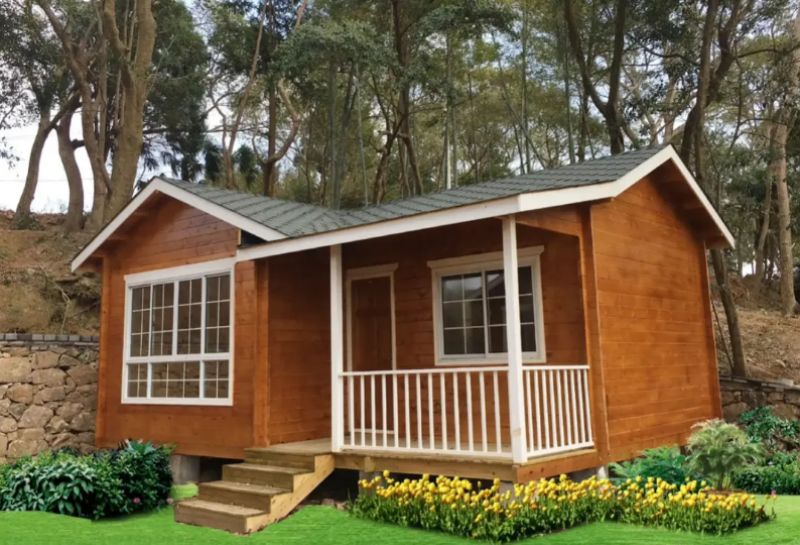
Expandable Container Houses appear more frequently in engineering or commercial projects—such as construction site dormitories,temporary office spaces,tourism camp expansions,or even post-disaster relief housing.Their core value lies in the"rapid resolution of spatial needs."
In practical application,they are often viewed as"part of the infrastructure"rather than as independent residential dwellings.For instance,in a large-scale construction project,dozens or even hundreds of modular units might be deployed simultaneously to meet temporary accommodation requirements.
Tiny Houses,conversely,lean more toward being a personal lifestyle choice;they are frequently utilized for long-term living,retirement spaces,unique Airbnb rentals,or as a practice in minimalist living.They place a greater emphasis on the living experience itself rather than on functional efficiency.
For many who choose a Tiny House,the decision is essentially a choice to"simplify the complexities of life,"rather than merely a choice of housing structure.
From a regulatory standpoint,Expandable Container Houses are typically classified as temporary structures or modular facilities;consequently,their approval process is relatively straightforward,though they may face restrictions regarding long-term residential use.
In certain regions,they can quickly obtain temporary occupancy permits;however,once intended for permanent residential use,they often require additional approvals or even reclassification.
The regulatory landscape for Tiny Houses is more complex,yet it aligns more closely with established"residential housing frameworks."In parts of the United States,they have been integrated into the ADU(Accessory Dwelling Unit)system,allowing them to serve as legal,long-term residences.However,regulations vary significantly by state—for example,the requirements in California,Texas,and Florida differ substantially.
Furthermore,Tiny Houses may encounter issues related to"minimum habitable area standards"and"permanent infrastructure requirements,"all of which can influence whether they qualify for legal,long-term occupancy.
The spatial living experience within an Expandable Container House is predominantly utilitarian;its design priority is to rapidly fulfill basic living or office requirements.While the overall space is expandable,the actual level of comfort depends largely on the specific configuration tier—specifically,the quality of insulation,ventilation,and soundproofing systems.
In lower-tier configurations,the structure functions more as a"standardized accommodation unit";in higher-tier versions,it can be upgraded to include air conditioning systems,insulated walls,or even modular bathroom units—though the overall living experience still tends to be driven by engineering logic.
Tiny Houses,on the other hand,place a much greater emphasis on the intricate details of the living experience itself.Even when space is limited,design optimization—such as open-plan layouts,concealed storage,and multi-functional furniture—is employed to enhance comfort and elevate the quality of life within a small footprint.
More importantly,Tiny Houses typically emphasize the"relationship between people and space,"focusing on elements like natural lighting,spatial flow,and psychological comfort—aspects that are often given less attention in standard utilitarian housing projects.
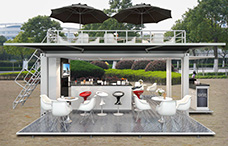
From a commercial perspective,Expandable Container Houses are better suited for scalable operational models—such as campsite accommodations,construction project housing,or bulk rental portfolios.Their core profitability stems from"replication efficiency."Due to their high degree of standardization,once a design prototype is finalized,it can be rapidly replicated across various projects,thereby lowering unit operating costs and boosting overall return efficiency.
This model is highly prevalent in practice;typical application scenarios include worker dormitories at large construction sites,modular expansions for campgrounds,and even temporary housing initiatives undertaken by government agencies or corporations.Its primary advantage lies not in the profit generated by a single unit,but rather in the"stable cash flow generated through scale."
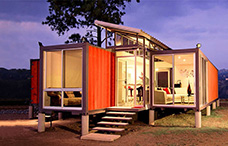
Tiny Houses,conversely,follow a completely different trajectory;they are better positioned as high-premium products—such as unique Airbnb listings,vacation cabins,or boutique accommodations within scenic tourist areas.Their profit logic relies not on sheer volume,but on"experiential differentiation."
In the North American short-term rental market,the average daily rate for certain Tiny House listings is often 20%to 60%higher than that of standard residential properties;this premium becomes even more pronounced during holidays and peak seasons in popular tourist destinations.This premium is driven by users'willingness to pay for a"unique living experience,"rather than simply for the physical space itself.
If you are making a project-level decision,you can apply a simple logical framework to determine the right direction:
If your objective is to"create a replicable system"—such as a campground,project-based workforce housing,or a bulk rental portfolio—then Expandable Container Houses are the more suitable choice,as they offer distinct advantages in terms of cost control and expansion efficiency.
If your objective is to"create a single,high-premium product"—such as a boutique guesthouse,a unique Airbnb listing,or a lifestyle-oriented project—then Tiny Houses hold greater potential,as they are more adept at commanding a premium through distinctive design and experiential value.
When viewed side-by-side,it becomes apparent that these two product categories are not actually competitors vying for the same market share;rather,they represent two distinct logical approaches to spatial solutions.The Expandable Container House leans more toward an industrial paradigm,addressing the issue of"spatial supply efficiency."Its core value lies in standardization,rapid deployment,and the capacity for scalable replication—making it ideally suited for project-based or commercial operational contexts.
The Tiny House,conversely,leans more toward a lifestyle paradigm,addressing the question of"how space defines one's way of life."Its value lies not in scale,but in the experience,design,and the expression of individual lifestyle.
In terms of market trends,these two concepts actually correspond to two distinct directions:one represents"efficiency-driven architectural industrialization,"while the other represents"experience-driven residential personalization."
Therefore,when making a choice,the real question to consider is not"which is better,"but rather:do you want your project to prioritize scalable operations,or a premium on lifestyle value?



Copyright © Hebei Weizhengheng Modular House Technology Co., Ltd. All Rights Reserved
Sitemap

 +8615081877521
 +8615081877521