- icy@wzhgroup.com
- +86 15081877521


In recent years,modular construction and container homes have gained increasing popularity in Australia.Compared to traditional construction methods,container homes offer distinct advantages,including rapid construction speeds,relatively lower costs,and greater flexibility during the building process.
A standard 40-foot container home typically provides approximately 25–30 square meters of interior space.With thoughtful design,this space can be adapted to serve a wide variety of purposes—ranging from residential living and office spaces to commercial applications.Consequently,these structures are now widely utilized across various Australian sectors,including residential housing,agriculture,tourism,and mining.
Outlined below are eight common applications for 40-foot container homes found throughout Australia.
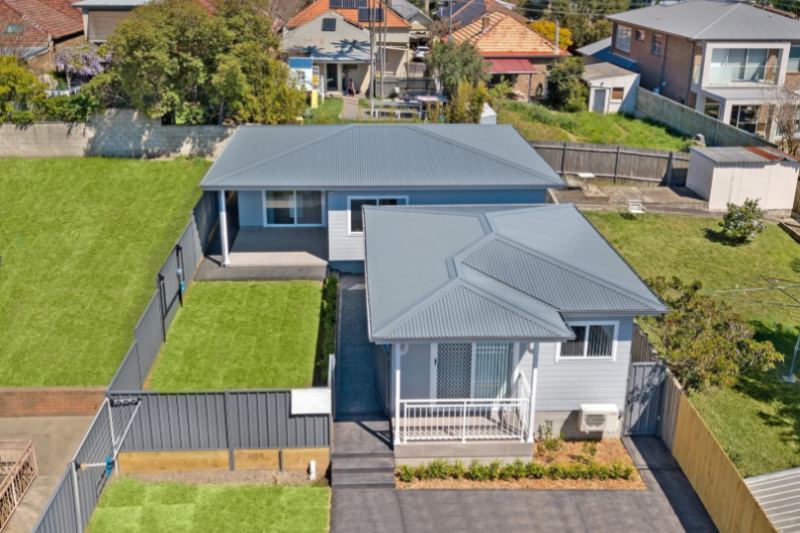
In Australia,as the cost of urban land continues to rise,40-foot container homes have emerged as an ideal solution for many families looking to build a"Granny Flat"(secondary dwelling)or a small standalone residence in their backyard.They can be installed rapidly,cost significantly less than traditional brick-and-mortar homes,and provide independent living quarters for parents,adult children,or tenants.
A standard 40-foot container home typically measures between 25 and 30 square meters,making it suitable for long-term occupancy by one or two people.The interior layout can be configured to include a bedroom,living area,kitchenette,and bathroom;however,careful consideration must also be given to the backyard's topography,drainage,and existing infrastructure.
If the land area is limited,it is necessary to obtain prior approval from the local Council and to ensure that all electrical,plumbing,and drainage systems fully comply with the National Construction Code(NCC)standards.
In certain suburbs of Melbourne and Sydney,residents have already successfully utilized container homes as Granny Flats.Each unit typically takes just 4 to 6 weeks to construct,resulting in cost savings of 30%to 50%compared to traditional residential construction.
Australia is blessed with an abundance of natural landscapes—including pristine beaches,lush forests,and sprawling vineyards—creating a significant demand within the holiday accommodation market.
Thanks to their rapid construction times and flexible modular nature,40-foot container homes have become an ideal choice for this sector.A single container unit can comfortably accommodate 2 to 4 guests,while multiple modules can be combined to create larger spaces suitable for family vacations or group stays.The interior layout typically features a bedroom,bathroom,kitchenette,and a small outdoor deck or patio area.In remote areas,where access to water and electricity may be limited,it is necessary to consider independent water supply or solar power systems.Additionally,designs for corrosion resistance,moisture proofing,and thermal insulation should be optimized to suit the local climate.
In coastal tourist regions of Queensland,multiple shipping containers are often combined to create seaside cabins offering ocean views;conversely,in the rural areas of Victoria,container homes serve as weekend retreats,allowing clients to move in quickly.
With the rise of short-term rental platforms such as Airbnb and Stayz,container homes have become a new favorite in the short-term rental market.A 40-foot container home offers a unique and modern accommodation experience,making it an ideal choice for eco-tourism zones or vineyard regions.
A single container can accommodate 2–4 people and typically features an interior layout comprising a bedroom,a kitchen,and a bathroom;balconies or patios can also be added to enhance the living experience.The design of the structure must comply with fire safety,security,and thermal insulation standards,while also taking into account short-term rental insurance requirements and local regulations.
On various rural farms across Australia,container homes are utilized for short-term rentals,generating annual returns that can recoup 60–70%of the initial construction costs.
Given Australia's vast agricultural landscape and high demand for seasonal labor,40-foot container homes are well-suited to serve as farm worker dormitories due to their rapid installation and reusability.
Each container can accommodate 2–4 workers and is typically fitted with bunk beds,a restroom,and a kitchenette.Since seasonal workers are highly mobile,the flexibility to easily relocate and redeploy these container homes offers a distinct advantage.For farms situated far from urban centers,provisions for electricity,water supply,and sewage disposal systems must also be addressed.
In the vineyards of South Australia,container homes provide accommodation for workers during the grape-picking season.Each unit takes approximately two weeks to construct;once the harvest concludes,the units can be dismantled and transported to the next farm for continued use.
Australia's remote mining regions face a significant demand for temporary accommodation and office facilities.Thanks to their modular design,ease of transport,and rapid installation capabilities,40-foot container homes have emerged as the ideal solution for these requirements.
A single module can serve as a dormitory for 2–4 people or function as an office space,while larger mining camps are typically constructed by combining anywhere from dozens to hundreds of individual containers.Due to the remote location of mining sites,transportation costs are relatively high;therefore,logistics must be planned in advance.Additionally,the structures must strictly adhere to mining site safety and hygiene standards.
At gold mining camps in Western Australia,container units are utilized as dormitories,dining halls,and recreational areas;their modular design allows for flexible adjustment based on the fluctuating number of employees.
Large-scale construction projects typically require temporary offices,meeting rooms,and break areas;40-foot container units offer a solution that is both quick to erect and easily relocatable.
A single container office can accommodate 4 to 8 people and can be outfitted with desks,meeting areas,air conditioning,and network connectivity.Given the vibrations and dust inherent to construction environments—factors that can impact equipment and furnishings—these container offices are designed to be relocated or repurposed once the project is completed.
In several major residential construction projects in Sydney,the use of container offices has resulted in a reduction of approximately 40%in the overall construction timeline.
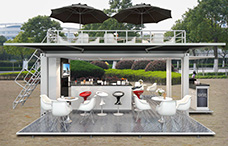
In urban commercial districts and tourist destinations,container units can be transformed into creative commercial spaces or pop-up shops designed to capture customer attention.
A single container unit covers an area ofapproximately 30 square meters;capable of rapid installation and relocation,these units are ideal for use as coffee shops,food stalls,retail outlets,or exhibition spaces.
In high-traffic areas,robust fire safety and security measures are essential.Furthermore,electrical and drainage systems must comply with all relevant regulations to ensure the commercial space remains safe,functional,and aesthetically pleasing.
In the aftermath of natural disasters,container units can be rapidly deployed to serve as emergency housing.
Thanks to a construction process involving over 90%factory prefabrication and rapid on-site assembly,these units can provide basic living quarters for affected residents within a very short timeframe.Deployment requires careful consideration of water supply,electricity,and sewage disposal systems,while also ensuring that fire resistance and wind-load designs fully comply with local building codes.
In bushfire-affected regions of New South Wales,container units have provided temporary shelter for displaced families;with construction cycles lasting just one to two weeks,they significantly alleviated the critical shortage of emergency accommodation.
In Australia,the price of a 40-foot container home is influenced by a variety of factors,including the complexity of the design,the standard of interior finishes,the specific internal fixtures and fittings,and the distance required for transportation.Generally speaking,the price of a basic container home ranges from approximately AUD 20,000 to AUD 40,000.These units typically offer only the most fundamental living amenities—such as a bedroom and simple sanitary facilities—making them suitable for use as construction site dormitories or temporary housing.
For residential use,container homes equipped with a full kitchen,bathroom,air conditioning,and basic interior finishes typically fall within the AUD 40,000 to AUD 80,000 price range.These units are suitable for long-term occupancy,featuring more efficient spatial layouts and enhanced comfort.
High-end,custom-built container homes—such as those featuring luxury finishes,modular extensions,smart home systems,or expansive floor-to-ceiling windows—may exceed AUD 100,000 in cost.
Furthermore,opting to source container homes from overseas manufacturers may result in lower overall costs due to relatively lower production expenses;however,one must factor in additional costs for shipping,customs clearance,and on-site foundation installation in Australia.
Typically,transportation costs from the factory to the construction site can add anywhere from several thousand to over ten thousand dollars to the total budget,depending on the distance and road conditions.These additional expenses must be anticipated during the budgeting phase to ensure that the overall project costs remain manageable.
In Australia,building a container home typically requires approval from the local Council and must comply with the relevant standards outlined in the National Construction Code(NCC).The approval process primarily focuses on the structure's safety,fire resistance,thermal insulation and energy efficiency requirements,as well as ensuring that electrical and plumbing systems meet regulatory standards.
Approval procedures may vary by state or city;for instance,New South Wales and Victoria have slightly different requirements for residential container homes,including whether detailed design drawings,construction plans,and water/wastewater management schemes must be submitted.
Beyond the structure itself,the approval process may also involve land-use zoning regulations.If you intend to build a"Granny Flat"(secondary dwelling)or a holiday cabin in your backyard,you must verify whether the land zoning permits the construction of an ancillary dwelling,and ensure that the container home's dimensions(area and height)comply with local bylaws.
Typically,the Council will require an architect or engineer to provide structural certification and a safety assessment to ensure that the container home remains safe and reliable for long-term use.Therefore,prior to planning any construction,it is highly recommended that you consult with your local Council in advance to understand the approval processes and timelines involved.Additionally,consider engaging a professional building consultant to assist with both the design and the permit application process.This approach not only helps prevent unauthorized construction but also ensures that your home complies with all relevant regulations—whether for future sale or rental—thereby avoiding unnecessary legal and financial risks.
WZHHouse’s 40-foot container homes are crafted specifically for the Australian market.Drawing upon years of export experience and a modular design philosophy,they are engineered to meet local demands for safety,durability,eco-friendliness,and flexible living spaces.Whether intended for use as a primary residence,holiday home,short-term rental accommodation,or for worksites and farms,WZHHouse offers a cost-effective,rapid,and reliable solution.
Extensive Export Experience:With years of experience exporting to the Australian market,we are intimately familiar with local regulations and shipping logistics,ensuring that our products are ready for immediate use upon arrival.
Rigorous Quality and Certification:Certified under the ISO quality management system and compliant with CE/AS standards,our structures feature robust construction,fire-resistant and anti-corrosive properties,as well as superior waterproofing and thermal insulation capabilities.
Efficient Transport and Installation:Thanks to our modular design,units are prefabricated at the factory and can be rapidly transported to the site for assembly,resulting in short construction cycles and high operational flexibility.
OEM/ODM Customization Available:We offer personalized customization options—including interior layouts,exterior aesthetics,and functional configurations—tailored specifically to meet our clients'unique requirements.
40-foot container homes serve a wide variety of purposes in Australia,ranging from private residences and short-term rentals to farm worker accommodation,mining camp housing,construction site offices,commercial pop-up shops,and emergency shelter.As the demand for modular construction continues to grow,this flexible,economical,and sustainable building method is poised for further expansion within the Australian market.
If you are considering building a container home in Australia,or if you would like to learn more about the design,customization options,and pricing of WZHHouse’s 40-foot container homes,we invite you to contact the professional team at WZHHouse.We can provide detailed proposals,construction guidance,and price quotes tailored to your specific needs,helping you quickly realize a cost-effective,high-quality container home project that fully complies with Australian standards.



Copyright © Hebei Weizhengheng Modular House Technology Co., Ltd. All Rights Reserved
Sitemap

 +8615081877521
 +8615081877521