- icy@wzhgroup.com
- +86 15081877521


If you’re planning a homestay—whether near tourist zones,campsites,coastal resorts,mountains,or rural short-term rentals—you’ve probably asked yourself:should I build a container homestay or a traditional one?
Many people rely on intuition.Some think container homestays“look trendier and go viral easily,”while others feel traditional homestays“feel more like home and safer.”In reality,success depends less on style and more on site conditions,budget,target guests,and operational goals.
Investing in a homestay isn’t just about building rooms.You need to consider timelines,capital,regulations,guest experience,revenue potential,and ultimately ROI.This guide compares the two models objectively,so you can see which is a better fit for your project.
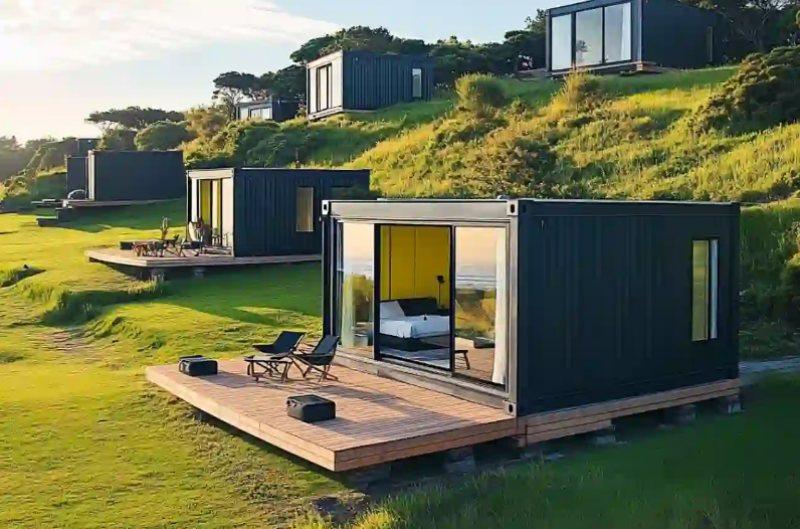
A few years ago,most homestay projects were traditional:wooden cabins,brick cottages,villas,or renovated houses.Today,container and modular accommodations are popping up everywhere—campsites in Australia,national parks in the US,rural resorts,and scenic areas in Europe.
Why the shift?Two main reasons:
1.Traveler expectations have changed.Accommodation is no longer just a place to sleep.Platforms like Airbnb and TikTok have turned lodging itself into an experience.Many travelers now plan trips around unique or photogenic stays.
2.Investors focus on efficiency.Speed,capital management,and phased deployment matter.Questions like“How fast can it open?”or“Can I test with a few units first?”are crucial.Container homestays fit this model perfectly.
Traditional homestays still dominate high-end projects because they offer mature guest experiences and stable acceptance.The question isn’t“which is popular?”but“which fits your project’s financial and operational goals?”
What exactly distinguishes container homestays from traditional homestays?
Before diving into a formal comparison,clarifying these two concepts will make it much easier to determine which option is the best fit for your project.
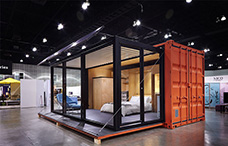
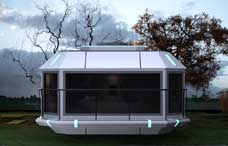
For many people,the moment they hear the term"container homestay,"their immediate mental image is that of a small dwelling with a strong industrial aesthetic—essentially a repurposed shipping container.
In reality,however,the container homestays found in today's global market have evolved far beyond the simple concept of"converting a box into a house."
They typically encompass a range of structures,including:
Small,single-container units
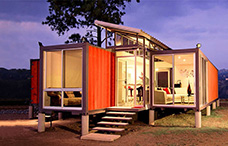
Suites formed by splicing two containers or combining multiple units
Modular vacation homes
Container-based hotels situated within scenic areas
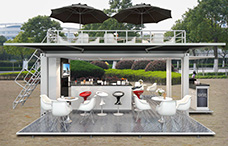
Containerized accommodation units designed for campsites
Their core defining characteristic is not merely that they"look like containers,"but rather their modular and prefabricated nature.This means that the majority of the structural construction and interior finishing work can be completed in advance at a factory;upon arrival at the project site,the units are simply hoisted into place,assembled,and connected to utility lines(water and electricity).
Consequently,what truly appeals to investors about container homestays is not just their"unique appearance,"but the practical advantages they offer:faster deployment,more flexible spatial layouts,and easier scalability for future expansion—all while making it easier to create distinct visual elements that leave a lasting impression.
The scope of what constitutes a traditional homestay is somewhat broader.
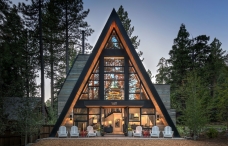
It can take the form of a brick-and-concrete structure,a wooden cabin,or a light-gauge steel house;it could be a rural residence,a vacation villa,or even an older building that has been renovated and repurposed.Common forms include:
Rural vacation homes
Stand-alone villa-style short-term rentals
Scenic area cabins or cottages
Boutique guesthouses converted from historic buildings
Family-style courtyard guesthouses
Their core advantage lies in the fact that their architectural forms are more mature,their spatial layouts are more complete,and their levels of comfort and user acceptance are typically more consistent.
To put it more directly:
Container guesthouses represent a"more flexible product logic"for accommodation;
Whereas traditional guesthouses represent a"more mature operational logic"for accommodation businesses.
Neither is meant to replace the other;rather,each is better suited to different types of project strategies.
When comparing these two types of accommodation,many people easily fall into a common trap:focusing solely on surface appearances.
Some feel that container guesthouses are more novel and more likely to attract tourists;others instinctively believe that traditional guesthouses are more stable—feeling more like"real,habitable homes."However,when viewed from the perspective of investment and operations,the differences between the two extend far beyond mere stylistic variations in appearance.
The true distinctions lie in factors such as:construction speed,upfront investment,implementation difficulty,guest experience,operational efficiency,long-term maintenance,revenue structure,and the logic behind the return on investment.
Ultimately,these are the factors that determine whether a project ends up being merely"nice to look at"or genuinely"profitable."
For overseas markets—such as scenic areas,campsites,coastal resorts,or rural tourism projects—time directly translates to cost.Every day a project remains unopened is lost capital without revenue.
Container guesthouses excel here.Modular construction allows small-to-medium units to be completed in 2–4 months.Traditional guesthouses,especially brick-and-mortar or villa-style,often take 6–12 months,or longer for complex foundations or remote sites.
This 30–50%time advantage lets projects open earlier,capturing peak seasons and accelerating revenue.While traditional guesthouses offer more spatial freedom,container units are ideal when rapid cash flow is the priority.
Container guesthouses are not just“cheaper”—they offer more predictable upfront costs.Modular units overseas typically cost$130–$250 per sq.ft.,compared to$150–$400 for traditional builds.
This predictability suits phased investment strategies,such as starting with 4–6 units to test occupancy before scaling.True cost includes insulation,windows,interiors,bathroom systems,and foundations,especially for mid-to-high-end projects.
Traditional builds often carry larger capital demands and uncontrollable variables,making container solutions attractive for“light,fast”deployment.
Construction feasibility does not guarantee operational success.Container units are flexible for irregular plots,remote locations,and phased setups.Most work is done off-site,reducing weather and labor risks.
Traditional guesthouses follow conventional architectural norms,making approvals easier in stable regulatory markets.The key is matching the construction type to the local environment.
Container units are visually striking,ideal for Airbnb or Instagram exposure.They attract guests for novelty,but comfort depends on proper insulation,soundproofing,and ventilation.
Traditional guesthouses provide consistent,reliable comfort,suitable for families,groups,or long-term stays.
In short:container stays attract curiosity;traditional stays ensure lasting satisfaction.
Container units excel in replicability,standardization,and phased expansion.They are ideal for scaling overseas tourism projects.
Traditional guesthouses suit boutique,site-specific operations with unique designs,but are harder to replicate.Container units fit an“expand while operating”model,while traditional builds fit“deep,focused single-project operations.”
Container guesthouses allow centralized management for standardized units,easing cleaning and operations.However,they require strong insulation,rust-proofing,and HVAC stability to prevent rising maintenance costs.
Traditional guesthouses have higher operational overhead due to larger spaces and complex furnishings but offer greater structural confidence.
In short:container units favor efficiency-driven management;traditional units favor experience-driven operations.
Revenue models differ.Container units leverage visual appeal and social media traction for“traffic-driven revenue.”Traditional units focus on stability and repeat guests.
Both depend on occupancy rate×ADR×sustained operations.Container guesthouses attract initial visitors;traditional guesthouses cultivate a loyal,long-term customer base.
Container guesthouses allow faster launch,lower upfront capital,and quicker ROI—often 2–4 years for small projects.
Traditional builds,with higher costs and longer construction,usually see payback in 4–8 years.The advantage comes from earlier revenue and lower initial risk,though long-term performance depends on sustained occupancy and appeal.
Container units suit rapid testing and expansion;traditional units suit long-term,stable operations.
The biggest challenge with container guesthouses lies not in their exterior appearance,but in the execution of the finer details.
While their structure appears simple,the factors that truly impact the guest experience are often the fundamental systems:thermal insulation,moisture control,soundproofing,ventilation,door and window sealing,and bathroom drainage.If these areas are poorly executed,guest feedback will be immediate and blunt.
Furthermore,while container guesthouses are adept at attracting initial traffic,they are also prone to the"early boom,later bust"phenomenon.Many projects see rapid growth immediately after opening,driven by visual appeal and social media buzz;however,without a consistently high-quality accommodation experience and a steady stream of fresh content to sustain it,the initial hype typically begins to fade after 6 to 12 months.
Another practical issue is market homogenization.In today's market—particularly overseas—modular housing and campsite accommodations are becoming increasingly common.If a project consists merely of"putting up a container unit"without establishing its own unique thematic atmosphere and operational philosophy,it becomes easily replaceable.
The greatest pressure associated with traditional guesthouses typically arises during the initial stages.
Compared to container guesthouses,they require heavier capital investment,involve longer construction timelines,and entail higher costs for experimentation.As mentioned earlier,the construction cycle for a traditional guesthouse typically spans 6 to 12 months,whereas many container guesthouse projects can be completed within approximately 2 to 4 months.This means that traditional guesthouses not only take longer to launch but also tie up capital for a significantly longer period.
The second issue is a slower return on investment.
While many container guesthouse projects aim for a relatively ideal payback period of 2 to 4 years,traditional guesthouses typically align with a longer-term operational logic,requiring closer to 4 to 8 years to recoup the initial investment.This does not imply that they are unprofitable;rather,it signifies that their success relies more heavily on sustained,long-term operation than on rapid market testing.
Additionally,traditional guesthouses face a common pitfall:they often end up being"decent,but not truly distinctive."If a property lacks distinct,memorable features—whether in its design,market positioning,or guest experience—it risks falling into the trap of"generic competition,"ultimately having to rely solely on price to secure bookings.
Ultimately,the choice of property type shouldn't be based on"what's trending,"but rather on which option best aligns with the specific conditions of your project.
If you have a relatively limited budget and wish to launch quickly to test the market,and if your project site is situated in a natural setting—such as a scenic area,campsite,farm,coastal area,or mountainous region—then a container guesthouse is typically the more suitable choice.This is because such structures are ideally suited for a strategy defined by"asset-light operations+rapid deployment+high virality,"and they also facilitate easier phased expansion and replication in the future.
Conversely,if your project is geared toward long-term operations—for instance,if the land conditions are stable,and your target demographic consists of families,groups,or long-stay guests who prioritize comfort,stability,and enduring reputation—then a traditional guesthouse is generally the better fit.This model is better suited for a strategy focused on"long-term operations+stable returns+brand equity building."
Simply put:
If you want to test the market first,launch quickly,and achieve a rapid return on investment→Lean toward a container guesthouse.
If you aim to build a long-term project with a consistent guest experience and stable returns→Lean toward a traditional guesthouse.
When comparing the two side-by-side,a very practical conclusion emerges:the container guesthouse acts more like a"sprinter,"while the traditional guesthouse acts more like an"endurance runner."
The advantages of a container guesthouse lie in its shorter construction timeline,greater investment flexibility,and higher potential for virality.It is also particularly well-suited for the"test-and-expand"strategy commonly adopted in international cultural tourism projects.Its core value extends beyond merely"looking unique";it offers an investment pathway that is faster,lighter,and more conducive to iterative experimentation.
The advantages of a traditional guesthouse,on the other hand,lie in its more mature guest experience,higher market acceptance,and greater long-term stability.It is the ideal choice for those who view their project as a long-term asset rather than a fleeting trend.
If you are currently planning an international guesthouse,campsite accommodation,or resort-style project but remain unsure which product format to choose,we recommend starting with a comprehensive assessment of your project's specific requirements.Based on your specific site conditions,budget range,target audience,and operational strategy,WZHHouse container factory offers tailored recommendations for container-based homestay solutions.This enables you to more efficiently assess the feasibility of your project—determining whether it is suitable for implementation—and identify the most appropriate configuration and layout options to adopt.
If you would like to obtain more detailed product information,layout suggestions,or project references,please feel free to contact WZHHouse for further consultation.



Copyright © Hebei Weizhengheng Modular House Technology Co., Ltd. All Rights Reserved
Sitemap

 +8615081877521
 +8615081877521