- icy@wzhgroup.com
- +86 15081877521


Over the past few years,the global construction industry has been undergoing a significant transformation.An increasing number of developers,investors,and engineering firms are shifting from traditional construction methods to modular solutions;among these,Expandable Container Houses are emerging as one of the fastest-growing product categories.Compared to traditional buildings,these structures not only shorten construction cycles but also allow for better control over overall costs,thereby garnering continuous attention within the global market.
For many overseas buyers,sourcing such products from China is no longer a novel concept.The real challenge lies in successfully navigating the entire import process while ensuring quality,reliable shipping,and regulatory compliance.This is particularly critical for enterprises new to sourcing modular buildings,for whom understanding the underlying logic of the entire supply chain is far more important than simply comparing prices.
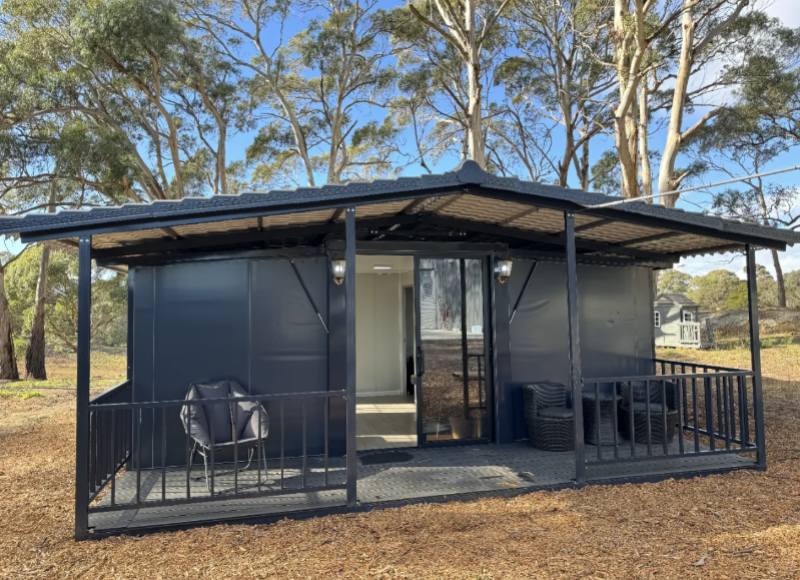
The rapid global growth of Expandable Container Houses reflects a fundamental shift in the demands of the construction industry.Traditional construction methods are increasingly constrained by labor costs,lengthy construction cycles,and complex approval processes,while the market demands projects that can be delivered faster and deployed with greater flexibility.
Especially in sectors such as short-term rentals,tourist campsites,and temporary office spaces,developers increasingly favor building solutions that can be implemented rapidly on-site.Unlike traditional buildings—which often require months or even longer to construct—Expandable Container Houses allow for the majority of prefabrication work to be completed in the factory;upon arrival at the site,they can be simply unfolded and put into immediate use,thereby drastically shortening the project timeline.
Concurrently,many regions across the globe are facing rapidly growing demand for both residential and commercial spaces.Against this backdrop,modular construction is gradually evolving from a mere"alternative solution"into a more efficient,mainstream building paradigm.
When global buyers begin searching for suppliers of Expandable Container Houses,China invariably emerges as the primary sourcing market.This is not solely due to lower pricing;more importantly,China has established a comprehensive and mature supply chain for modular construction.
From steel structure fabrication and insulation material production to windows,doors,electrical systems,and interior finishes,China's supply chain offers a high degree of vertical integration.For overseas buyers,this translates into products that are not only manufactured more rapidly but also offer greater flexibility for customization.
Furthermore,many Chinese manufacturing facilities have long served markets across Europe,North America,the Middle East,and Australia;consequently,they possess deep familiarity with export procedures and international building standards.Whether the requirement involves 110V electrical systems,specific wind-resistance ratings,or thermal insulation standards,established manufacturers are typically well-equipped to adapt their products to meet the diverse needs of different global markets.
Throughout the entire import process,supplier selection is often the most critical step.Many issues that arise in the later stages of a project—such as inconsistent quality,delayed deliveries,or even difficulties with customs clearance—actually stem from inadequate supplier vetting during the initial phase.
For B2B buyers,a reliable factory is not merely one that is"capable of manufacturing products";more importantly,it must possess robust engineering support capabilities.Established suppliers can typically provide structural design drawings,material specifications,and load-bearing calculations—documentation that is vital for the approval and construction phases of overseas projects.
Furthermore,a supplier's willingness to accept third-party inspections serves as a key indicator of their professionalism.Factories with genuine export experience typically possess mature quality management protocols and are,therefore,more inclined to cooperate with third-party inspection agencies such as SGS or BV.
Many buyers encountering expandable container homes for the first time often expect to receive a quick"standard price."In reality,however,these products function more like engineering projects,where price variations resulting from different configurations can be quite significant.
The core factors influencing the price typically include the thickness of the steel structure,the grade of insulation materials,the specifications for interior finishes,and the requirements for electrical and plumbing systems.For instance,a home of a specific size intended for use in a cold climate will typically require higher standards for its insulation system and structural integrity,resulting in a corresponding increase in cost.
In international trade,common pricing terms include FOB,CIF,and DDP.For experienced buyers,FOB often offers greater flexibility,as it allows the buyer to exercise better control over international logistics and shipping costs.
The production process for expandable container homes differs significantly from that of traditional manufactured goods.Fundamentally,it bears a closer resemblance to"prefabricated construction engineering,"making quality control during production absolutely critical.
Typically,the production cycle for a single project ranges from 15 to 45 days,depending on the complexity of the customization requirements.Throughout this process,key stages such as steel structure welding,waterproofing treatments,and the installation of electrical systems are pivotal in determining the final quality of the product.
Many international buyers opt to schedule mid-production inspections and pre-shipment checks;this is because the costs and risks associated with resolving issues at the factory stage are substantially lower than those incurred if problems are discovered only after the goods have arrived at the destination port.
Once production is complete,the product enters the international shipping phase.Since expandable container homes are inherently large-scale steel structure products,their logistics and transportation involve much more than simply"loading into a container and shipping."
To prevent structural deformation during long-distance sea voyages,manufacturers typically reinforce the units and optimize their container-loading methods.Oversized structures,in particular,may require the use of flat-rack containers or specialized transport solutions.
For international projects,logistics costs often constitute a significant portion of the overall budget.Consequently,many professional buyers plan their shipping routes and destination port strategies in advance to minimize additional expenses and mitigate transportation risks.
While many buyers focus primarily on production and shipping,customs clearance is,in reality,often the most problematic stage of the international procurement process.Definitions of modular buildings vary across different countries;consequently,product classification directly impacts applicable tariffs and regulatory approval requirements.
For instance,some countries classify these units as"prefabricated buildings,"while others categorize them as"steel structure products."Such discrepancies affect not only import duty rates but may also influence subsequent building permit procedures.
Therefore,most B2B buyers opt to partner with professional customs brokerage firms.Compared to handling documentation independently,a professional team can more effectively mitigate the risks associated with customs delays and documentation errors.
Compared to traditional construction methods,one of the greatest advantages of expandable container homes is their rapid on-site installation speed.Since the majority of the structural components and systems are prefabricated at the factory,on-site construction work is significantly reduced.
Typically,once the units arrive at the site,they require only hoisting,structural expansion,and utility connections(water and electricity)before being ready for immediate use.For standardized projects,a single unit can often be fully deployed within just a few hours.
This rapid deployment capability makes these units ideal for projects such as tourist camps,temporary office spaces,and emergency housing—scenarios where"time-to-occupancy"is a critical priority.
For international buyers,the cost of an expandable container home extends far beyond the manufacturer's quoted price.The true project budget must typically be calculated from a holistic supply chain perspective.
In addition to manufacturing costs,buyers must account for international shipping,customs clearance fees,local transportation,and installation expenses.Furthermore,varying tax rates,shipping distances,and on-site construction conditions across different countries will all have an impact on the final budget.However,compared to traditional construction,the greatest advantage of expandable container homes lies in their more transparent cost structure and shorter project timelines;consequently,the overall investment risk is relatively easier to manage.
Currently,expandable container homes have found widespread application across numerous global markets,each exhibiting distinct regional demand characteristics.
In the U.S.market,they are typically utilized for Airbnb short-term rental projects and small-scale residential developments;in the Middle East,they are more frequently deployed as worker dormitories and large-scale temporary camps;while in Southeast Asia,tourism resorts and seaside campsites constitute the primary areas of application.
As the acceptance of modular construction continues to grow,these products are gradually evolving from mere"temporary structures"into more permanent,commercially viable architectural solutions.
Importing expandable container homes from China is,in essence,far more than a simple product procurement transaction;it represents participation in the global modular construction supply chain.For B2B buyers,the true priority is not merely finding low-cost products,but rather identifying manufacturing partners capable of sustaining a stable,long-term collaborative relationship.
A mature supplier should possess a comprehensive combination of engineering capabilities,export expertise,and a robust delivery support system.Only through such capabilities can a project maintain stability across critical stages—including quality assurance,logistics,and installation.
As global market demand for rapidly deployable structures continues to rise,expandable container homes are increasingly becoming a preferred choice for a growing number of developers and investors.



Copyright © Hebei Weizhengheng Modular House Technology Co., Ltd. All Rights Reserved
Sitemap





 +8615081877521
 +8615081877521