- icy@wzhgroup.com
- +86 15081877521


As families grow and existing living spaces begin to feel cramped,many people's first instinct is often:Should we build a larger house from scratch?However,given Australia's currently rising construction costs and lengthy building timelines,this traditional approach is no longer the only option available.
Today,a more flexible and efficient solution is gaining acceptance among an increasing number of families:the Expandable Container Granny Flat.Not only does it provide additional living space in a significantly shorter timeframe,but it also offers distinct cost-saving advantages over traditional construction methods,making it a practical alternative for addressing issues of insufficient family space.
So,how much does it cost to set up an Expandable Container Granny Flat in Australia?Below,we provide a comprehensive breakdown of the total expenses involved in the installation process.
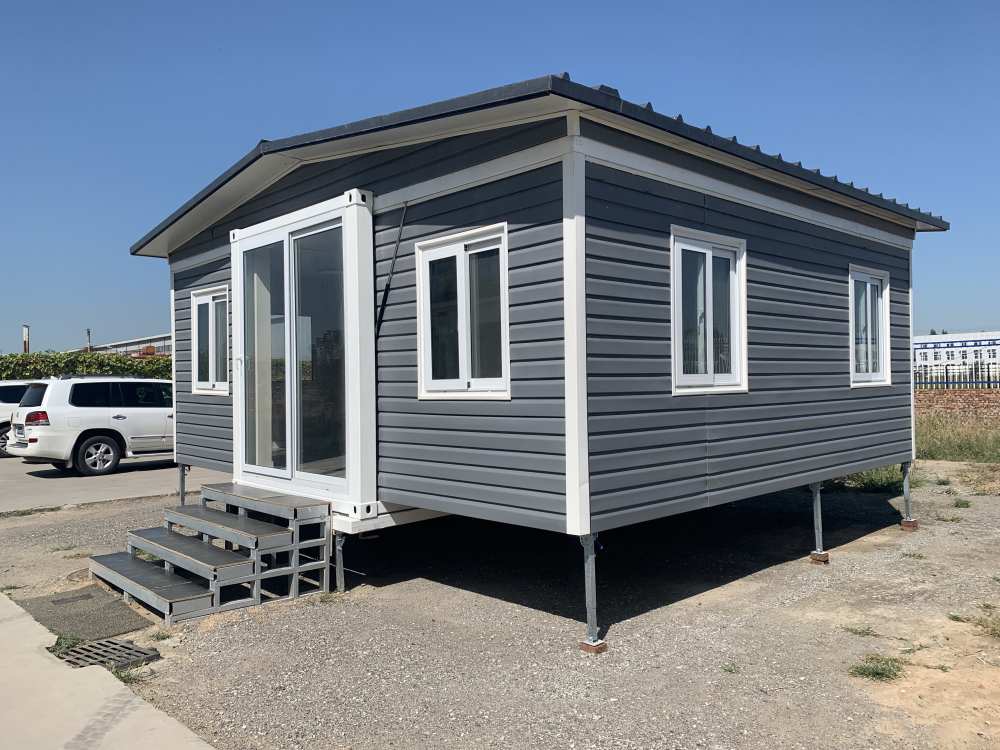
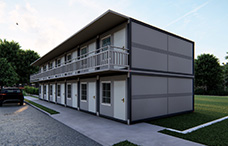
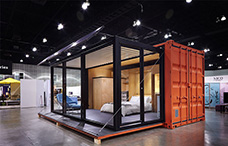
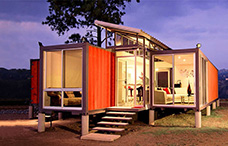
An Expandable Container Granny Flat is an adaptable residential unit built upon a modified shipping container structure.
During the shipping phase,these expandable units typically remain in a folded or compact state.Resembling a standardized modular unit,they occupy minimal space,making them easy to load onto trucks and transport via sea freight.
Once delivered to the site,the unit requires only a simple unfolding procedure to gradually extend into a complete,compact living space.Unlike traditional construction—which requires building up from the foundation piece by piece—this process achieves its final form rapidly through a"modular expansion"method.Typically,a basic unit comes pre-fitted with a bedroom area,a kitchen space,and bathroom facilities,thereby covering all fundamental living requirements.
Compared to traditional home-building methods,the advantages of this model are immediately apparent.
In Australia,the total cost for an expandable container Granny Flat—typically intended for backyard installation—ranges from approximately AUD$45,000 to$180,000.This price varies primarily based on the unit's size,internal layout,and the standard of interior finishes.
From a practical market perspective,these products do not come with a single fixed price;rather,they are configured and customized to meet the specific usage requirements of each family's backyard space.Consequently,there can be significant variations in pricing.
The more basic the configuration—and the simpler its functionality—the lower the price will be.Conversely,if you desire a unit that functions more like a fully-fledged small home with comprehensive amenities and higher-end finishes,the overall cost will naturally increase.
The price for the most basic type of backyard container-style Granny Flat typically ranges between$45,000 and$75,000 AUD.These units are commonly found in backyard settings and are primarily utilized for temporary accommodation or as auxiliary space.
The interior specifications of a basic Expandable Granny Flat are relatively simple;it functions as a compact living unit equipped with essential amenities,though it generally lacks extensive decorative finishes.For instance,the kitchen features a basic setup,and the bathroom utilizes a standard integrated design;the overall philosophy prioritizes functionality—ensuring the unit is"usable"and"sufficient"for its purpose.
The reason many families opt for this tier is straightforward:they wish to add usable space to their backyard without committing to a substantial budget.
The price for a standard Expandable Granny Flat generally falls between$75,000 and$120,000 AUD.This tier is currently the most popular choice among Australian families,as it strikes an optimal balance between"cost-effectiveness"and"comfort."
A standard residential Expandable Granny Flat closely resembles a complete small home,moving beyond the concept of a mere temporary space.Its interior layout typically includes a dedicated bedroom area,a separate kitchen,and a more thoughtfully designed bathroom configuration,resulting in a significantly enhanced living experience.
Many families choose the standard Expandable Granny Flat to house elderly parents or adult children,providing each party with their own private living quarters.Others utilize these units as rental properties to generate a stable stream of passive income.
High-end custom backyard Granny Flats typically range from$120,000 to over$180,000 AUD.These units transcend the role of mere functional spaces,leaning instead toward the status of a"residential-grade small home."
In terms of design,these units often feature more comprehensive spatial planning within the backyard setting—such as larger open-plan living areas,higher-spec kitchen systems,and interior finishes that closely mirror the aesthetic of the main residence.
Simply put,the primary focus at this tier is no longer merely on whether the space is"sufficient,"but rather on ensuring it offers a truly"comfortable"living environment.Many families who opt for this category typically aim to upgrade their backyard space into a fully self-contained,habitable unit—one suitable for long-term residency,or even for use as a long-term rental property or an Airbnb listing.
Once you have a general understanding of the costs associated with an expandable granny flat,you need to identify the specific factors that influence the overall price.This knowledge will enable you to select a layout and configuration that best aligns with your specific budget.
The core factors determining the price of an expandable granny flat primarily include its size,interior finishes,insulation system,and the conditions surrounding its transport and installation;together,these elements determine the final cost.
Size is the most direct cost driver;it accounts for approximately 30%to 40%of the total cost,making it one of the most critical factors influencing the final price.
When a granny flat consists of a single,monolithic structure,its cost is typically the most manageable.However,if the design involves expandable sections—such as a dual-sided fold-out mechanism—the overall construction cost will rise significantly.
This is because an expandable structure entails not only an increase in material usage but also greater complexity in the hinge systems,load-bearing frameworks,and transport-specific engineering.
Nevertheless,the reason expandable container homes are so popular is that,while their structural complexity may result in slightly higher construction costs,their transport costs are remarkably low.Since the unit's volume is reduced by one-third during transit,you save a substantial amount on shipping fees—a benefit that yields particularly significant cost savings in the context of international shipping.
Interior finishing represents another distinct cost differentiator.Interior finishes typically account for 20%to 30%of the total cost and constitute the most flexible component of the budget.
Some families require only basic functionality—such as simple flooring,standard wall panels,and basic light fixtures.Others,however,desire a space that feels like a fully-appointed small apartment,necessitating the use of higher-grade materials and more sophisticated design elements.
Factors such as flooring choices,whether the kitchen is custom-built,and the lighting system configuration can progressively drive up the overall cost;yet,they simultaneously serve to significantly enhance the overall living experience.
In essence,this is the area where the"price gap"is most pronounced:for the exact same structural shell,varying levels of interior finishing can result in vastly different final price points.
In Australia,climatic conditions vary significantly across different regions—a factor that directly influences the selection of specific features and configurations.The insulation and thermal regulation components typically account for 10%to 15%of the total cost;while this may not be the largest budgetary share,it exerts a profound and lasting impact on the long-term comfort and quality of the living environment.For instance,in warmer regions,a more robust thermal insulation system is required to maintain comfortable indoor temperatures;conversely,in colder regions,the focus shifts to maximizing heat retention.
The more sophisticated the insulation system,the higher the overall cost will be;however,this investment yields a more consistent and stable level of residential comfort.
Particularly in scenarios involving the long-term use of a backyard dwelling,this specific aspect often serves as the critical determinant of whether the living experience is truly comfortable.
This is a point that is often easily overlooked.Transport and installation typically account for 5%to 15%of the total cost,with the final price depending specifically on the site conditions and the project's geographical location.
If the backyard space offers easy access,the installation process will likely proceed smoothly;however,if space is limited,heavy lifting equipment is required,or access for machinery is difficult,installation costs will increase accordingly.
Generally speaking,costs in suburban areas are relatively predictable and manageable,whereas in remote regions or locations with restricted backyard access,costs can rise significantly.
Permit and approval policies vary across different regions of Australia.The costs associated with this administrative process typically range from 5%to 10%of the total budget;however,their impact extends beyond just the financial outlay,also affecting the overall project timeline.
Some backyard"Granny Flats"may qualify for expedited approval as ancillary dwellings,while other regions may require a more comprehensive and rigorous building approval process.
Once the project involves a formal approval process,it inevitably entails increased costs related to design,architectural drawings,and regulatory compliance.In other words,while this may not always be the single most expensive component of the project,it is frequently the factor most likely to cause significant delays and drive up time-related costs.
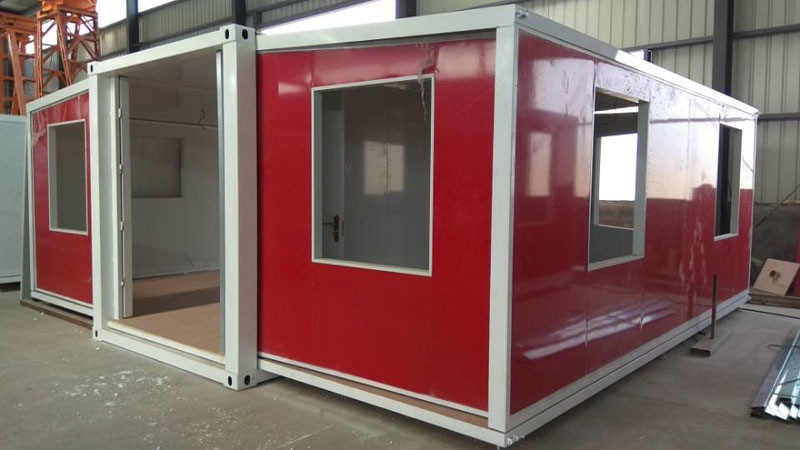
If you wish to keep your budget under control when purchasing an Expandable Granny Flat in Australia,the key lies in making sensible choices regarding size,limiting expensive interior upgrades,optimizing transport and installation logistics,and minimizing unnecessary custom design requests.
Many people,when budgeting,tend to focus exclusively on the"product price"itself;however,the actual total cost is determined by a combination of factors:the manufacturer,the chosen specifications and features,and the specific on-site conditions.You must take a holistic approach to your considerations and choices to ensure that,within a limited budget,you can acquire an Expandable Granny Flat that offers superior quality and comfort.
Optimizing your choice of manufacturer can typically result in savings of approximately 10%to 20%on the overall project cost.
Many people tend to overlook the importance of the manufacturer,yet in reality,significant price disparities objectively exist across different supply channels.By engaging directly with the original source manufacturer,you typically gain advantages in terms of material procurement and production efficiency,thereby resulting in a more reasonable and competitive overall quotation.Purchasing through intermediaries often entails additional distribution costs.
Of course,the goal here is not merely to chase the lowest price,but rather to strike a balance between cost and stability—taking into account factors such as whether the supplier possesses a mature product ecosystem or prior experience with overseas projects.
If you select the right dimensions,the cost of purchasing an Expandable Granny Flat can typically be reduced by approximately 15%to 30%.
When planning a backyard Granny Flat,many people initially tend to make the space larger;however,after actual use,they often discover that bigger isn't necessarily better.
A more sensible approach is to determine the spatial requirements based on actual living needs—such as the number of occupants and usage frequency—rather than blindly pursuing sheer size.
Additionally,the choice of expandable structure significantly impacts the price;for instance,there is a substantial cost difference between a single-sided expansion and a double-sided expansion.
Exercising prudent control at this stage can yield significant savings.
Interior finishing is often the easiest area to go over budget;making sensible trade-offs in this phase can save approximately 10%to 25%on costs.
From a practical standpoint,many high-end features are rarely utilized in daily life yet can significantly drive up expenses.
A more common strategy is to prioritize your budget for high-usage areas—such as the kitchen and bathroom—while opting for basic or mid-range specifications for elements like lighting fixtures and decorative panels,or even deferring upgrades to a later date.
The advantage of this approach is that it avoids excessive upfront investment without compromising the core living experience.
Although transport and installation occur in the later stages of the project,a lack of foresight during the initial planning phase can easily lead to unexpected costs.By planning for transport and installation logistics in advance,you can typically avoid approximately 5%to 15%in additional expenses.
This is particularly critical for backyard projects;situations involving narrow access routes,the need for heavy lifting equipment,or complex site conditions can result in a marked increase in installation fees.
The most prudent approach is to verify site conditions*before*selecting a specific model—confirming,for instance,whether necessary equipment can access the site or if specialized installation methods are required.
When selecting an Expandable Granny Flat,while custom solutions offer flexibility,they typically entail higher costs and longer lead times.Minimizing customization requests can result in cost savings of approximately 10%to 20%,while also expediting delivery times.
In contrast,mature,standardized products have already undergone optimization in terms of structural design and manufacturing processes;consequently,their pricing is more stable,and associated risks are easier to manage.
Unless you have specific,clearly defined requirements for personalization,opting for a proven,standardized solution is generally the more rational choice.
In Australia,the regulatory approval process is a critical stage that simply cannot be overlooked.Proactively planning for approvals can help you avoid approximately 5%to 10%in unnecessary expenses,while simultaneously shortening the overall project timeline.
Failure to thoroughly understand relevant policies during the preliminary stages may lead to issues later on—such as design revisions or the need to redraw blueprints—all of which incur additional costs.
A more prudent approach is to confirm local regulatory requirements*before*the project begins and to prepare accordingly,ensuring full compliance with all applicable standards.
Although the costs associated with this administrative phase may not constitute a large percentage of the total budget,mishandling them can result in wasteful,repetitive expenditures.
In 2026,the total cost of constructing an Expandable Container Granny Flat in Australia is not a fixed figure;rather,it is influenced by a multitude of factors—including size,internal configuration,and the choice of manufacturer.Generally,costs can be kept within a range of approximately AUD$45,000 to$180,000,offering a high degree of flexibility and excellent value for money.
As this comprehensive overview demonstrates,the growing popularity of Expandable Container Granny Flats is not solely attributable to their"lower price point."Instead,they are gaining traction because they offer a highly practical solution that strikes an optimal balance between cost-efficiency,construction speed,and spatial adaptability.
If you are considering adding an Expandable Granny Flat to your backyard,selecting a reliable manufacturer is absolutely crucial.
WZHhouse a container house manufacturer specializing in modular construction and container housing solutions,possesses extensive experience with international projects.We are equipped to provide end-to-end solutions—ranging from structural design to interior configuration—tailored specifically to the unique needs of each family.
Whether your primary goal is to keep within a strict budget or to create a premium-quality living space,our solutions can be flexibly customized to suit your specific usage scenarios.
For a more precise cost estimate or personalized configuration recommendations,we encourage you to contact WZHhouse directly to receive a detailed quotation and expert advice tailored to your specific project requirements.



Copyright © Hebei Weizhengheng Modular House Technology Co., Ltd. All Rights Reserved
Sitemap

 +8615081877521
 +8615081877521