- icy@wzhgroup.com
- +86 15081877521


As more and more families focus on multigenerational living,the idea of building a backyard ADU specifically for parents is becoming increasingly popular.Rising housing prices,an aging population,and the need for family members to care for each other are driving this trend.
Among the many solutions available,container houses are gaining attention.Compared to traditional houses,they typically have shorter construction times,less construction disruption,and can quickly add independent living space to existing residential land.
So,is a container house really suitable as a backyard ADU for parents?The answer isn't a simple"yes"or"no,"but rather requires comprehensive consideration of local regulations,backyard space conditions,living comfort,and future family plans.
Next,we will analyze this from multiple perspectives to help you fully understand whether a container house is suitable as a backyard ADU for parents.
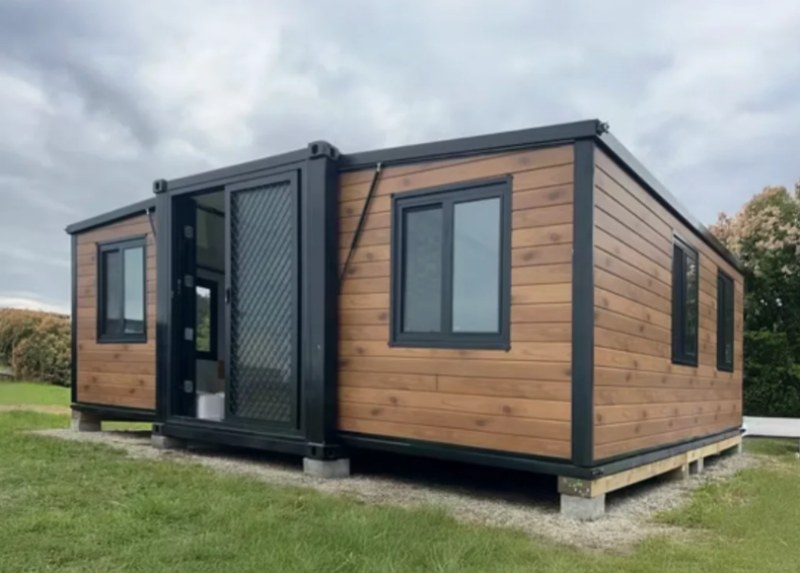
An ADU(Accessory Dwelling Unit)typically refers to an independent living unit built on the same land as the main residence.Although smaller in size,it offers complete living functionality,including a bedroom,kitchen,bathroom,and living space.
In recent years,ADUs(Apartment Dwellings)have gradually become an important way to address family housing needs.For families with elderly parents,it provides them with independent living space without having to move out of their existing community.
Compared to living under the same roof,ADUs allow family members to maintain close connections while preserving their privacy.
Traditionally,many families consider nursing homes or care facilities when their parents age.However,more and more families are seeking warmer and more flexible solutions.
A common challenge for many families is how to care for their parents without disrupting each other's living spaces.
Parents want the necessary support but often don't want to lose their ability to live independently.Children are willing to care for their elderly parents but also want to maintain their own family rhythm.
Backyard ADUs offer a perfect balance Parents have their own residence,while family members are just steps away,providing convenient care while maintaining appropriate independence.
In many cities,the cost of purchasing a second home is increasingly high.
Building an Accessory Dwelling Unit(ADU)on existing land is often more economical than buying a new property.It makes full use of existing land resources while adding extra living space.
For many families,this is a solution that balances cost and convenience.
More and more seniors prefer to age in familiar surroundings rather than moving to unfamiliar facilities.
With proper design,ADUs can incorporate features such as accessible ramps,wide doors,non-slip floors,and walk-in showers,allowing parents to live safely and comfortably for many years to come.
Yes,container houses can absolutely be used as backyard ADUs,and are increasingly being used by families for parent housing,granny flats,guest rooms,and rental units.As long as they comply with local building codes and ADU approval requirements,container houses can serve as long-term living spaces,just like traditional residences.
For many families who wish to care for their aging parents,container ADUs offer a solution that balances independence and convenience.Parents have their own living space while maintaining close contact with family and receiving timely care when needed.
Compared to traditional backyard housing,container houses offer advantages such as shorter construction cycles,higher installation efficiency,and flexible expansion options.This is one of the key reasons why more and more families are choosing container ADUs in recent years.
Many people still associate container houses with freight containers,but modern modular container homes have undergone significant changes.After professional design and modification,their interior comfort is not significantly different from that of ordinary small houses.
Today's container ADUs can be equipped with complete living facilities,including bedrooms,separate bathrooms,kitchens,living rooms,dining rooms,and storage space.Depending on project needs,laundry areas,home offices,and outdoor leisure platforms can also be added.
Furthermore,modern container houses are typically equipped with insulation,air conditioning systems,heating equipment,and soundproofing structures to ensure comfortable living year-round.For parents living there long-term,these features provide a living experience close to that of traditional housing.
The construction cycle is one of the important reasons why many families choose container ADUs.Traditional backyard homes typically require multiple stages,including design approval,foundation construction,main structure building,plumbing and electrical installation,and interior decoration,a process that can take months or even longer.
Container homes,on the other hand,are prefabricated in factories,with most production and decoration work completed on-site.Once transported to the site,only basic installation and plumbing connections are needed for immediate use,significantly shortening the overall construction time.
For families planning for their parents to move in as soon as possible,the shorter construction period not only reduces waiting time but also minimizes the impact of construction on their existing living environment.From this perspective,container ADUs(Automated Deposit Units)have a clear advantage in efficiency.
For most families,a 20㎡to 60㎡(approximately 215-650 square feet)container ADU is sufficient to meet the long-term living needs of parents.The specific size should be determined based on the number of residents,living habits,and future plans.The space requirements for an elderly person living alone will obviously differ from those for a couple living together.
During the planning stage,in addition to focusing on the building area,living comfort,storage needs,and future age-friendly modifications should also be considered.For long-term residence projects,a well-designed floor plan is often more important than simply increasing the area.
If only one parent lives there,an open-plan studio layout usually provides ample living space.This type of design integrates the bedroom and living area,while also featuring a separate kitchen and bathroom,achieving high space utilization within a limited area.
For families looking to control their budget,a studio layout is often a more economical choice.Proper furniture planning and storage design can also make the space appear more spacious and comfortable.
In actual projects,one-bedroom apartments are currently one of the most common floor plans in backyard ADUs.A separate bedroom provides better privacy and makes the overall living environment closer to a traditional house.
For parents living there long-term,having a separate resting space can improve their quality of life.Many families prioritize one-bedroom options when planning their ADUs because they strike a good balance between comfort and cost.
If both parents live together,or if they will need to entertain relatives and friends in the future,a two-bedroom layout is more practical.By combining multiple container modules,living spaces resembling typical small homes can be created.
Besides increasing the number of bedrooms,two-bedroom designs typically offer a more spacious living room and storage space,making them more suitable for long-term living needs.
Before building a container ADU,the most important task is not choosing a floor plan,but confirming regulations,budget,and future living needs.Many projects encounter problems later on not because of the house itself,but because key factors were overlooked during the planning stage.
Preparing in advance not only avoids unnecessary cost increases but also helps the project pass approvals smoothly and be implemented as planned.
Whether choosing container houses or traditional residences,the first step is to confirm the relevant local regulations for ADUs.Different cities and regions have different standards regarding building area,building height,setback requirements,and usage management.
Some areas have additional approval requirements for container buildings;therefore,it is recommended to consult local planning departments or professional consultants before finalizing the design plan.This can avoid the need for later design modifications or even reapplying for permits.
If the ADU is built for parents to live in long-term,age-friendly design should be incorporated into the planning from the initial stages of the project.It's usually more economical to implement accessibility features during the design phase than to modify them later.
For example,stepless entrances,wide doors,non-slip flooring,and handrail systems all improve the safety of elderly residents.The importance of these details often becomes more apparent with age.
Many families focus on the house itself,neglecting infrastructure construction.In fact,water,electricity,sewage,and internet access often account for a significant portion of the project budget.
If the backyard is far from the main house,plumbing costs can increase significantly.Therefore,it's recommended to fully assess existing infrastructure conditions before determining the ADU location to avoid budget overruns later.
For families planning to build a backyard home,both container ADUs and traditional ADUs can meet long-term living needs,but there are significant differences in construction time,construction methods,and investment costs.
If you prioritize quick move-in and flexible expansion,container ADUs generally offer advantages;if you prefer traditional housing construction methods,you might lean towards a traditional ADU solution.
Feature | Container ADU | Traditional ADU |
Construction Time | Faster installation and shorter project timelines | Longer construction process |
Upfront Cost | Lower to moderate investment | Moderate to higher investment |
Design Flexibility | Highly customizable layouts and finishes | Highly customizable layouts and finishes |
Site Disruption | Minimal on-site work and disturbance | More extensive construction activity |
Future Expansion | Easy to expand with additional modules | Expansion often requires major renovation |
Sustainability | Reuses steel structures and reduces waste | Typically consumes more building materials |
Recent trends show that more and more families are focusing on the convenience of modular construction.Especially with rising labor costs,the cost-effectiveness of container ADUs is becoming increasingly apparent.
Most container ADU projects for parents typically cost between$30,000 and over$150,000.Actual costs are influenced by factors such as house size,interior configuration,local construction costs,approval requirements,and infrastructure conditions.
A basic Studio container ADU typically has a relatively low budget;however,a one-or two-bedroom ADU equipped with a full kitchen,a separate bedroom,high-end finishes,and age-friendly design will significantly increase the total investment.
Container ADU Type | Typical Price Range | Best For |
Studio ADU | $30,000 – $60,000 | Independent living for one parent |
1-Bedroom ADU | $60,000 – $100,000 | Comfortable long-term accommodation for one or two parents |
2-Bedroom ADU | $100,000 – $150,000+ | Elderly parents who need extra space for caregivers, guests, or hobbies |
It's important to note that the prices above are generally for reference only.Labor costs,transportation distances,and building codes in different regions will all affect the final budget.
WZHhouse specializes in modern container houses and modular housing solutions,providing high-quality living spaces to clients worldwide.
Whether it's a compact ADU suitable for a single person,or a one-or two-bedroom home designed for a couple,we can provide customized solutions to meet your needs.
With factory prefabrication,flexible design,and professional project support,WZHhouse can help you transform your unused backyard space into a comfortable,safe,and functional living environment,creating a warm home for your parents.
Are container houses suitable for long-term living for seniors?
Yes,container houses can fully meet the long-term living needs of seniors,provided they are designed properly.Adding barrier-free entrances,non-slip floors,wide doors,and age-friendly bathroom facilities can significantly improve safety and comfort.
How much does it cost to build a container ADU for my parents?
The total investment for most projects typically ranges from$30,000 to over$150,000.Actual costs will be affected by factors such as size,interior furnishings,foundation construction,and local labor costs.
How long does it take to install a container ADU?
On-site installation of most container ADUs takes only a few days to a few weeks.Because the main structure and most of the finishing work are completed in the factory,the overall construction period is usually shorter than that of a traditional ADU.
Does a container ADU require a building permit?
Usually yes.Even prefabricated modular buildings require building permits,water and electricity connection approvals,and related acceptance procedures according to local regulations.
Does an ADU increase property value?
In many cases,it increases property value.A legally constructed ADU not only increases usable area but may also generate additional income for future rental,family living,or resale.
Are container ADUs cheaper than traditional ADUs?
In most cases,yes.Due to factory prefabrication,container ADUs typically reduce on-site construction time and labor costs,thus lowering overall construction costs.
Can a container ADU be expanded later?
Yes,this is a major advantage of modular construction.When family members increase or usage needs change,living space can be expanded by adding modules or connecting new units.
How long can a container ADU last?
With proper design and maintenance,a container ADU typically has a lifespan of 25 to 50 years or more.With the adoption of high-quality steel structure,anti-corrosion treatment and good insulation system,its durability can meet the needs of long-term living.



Copyright © Hebei Weizhengheng Modular House Technology Co., Ltd. All Rights Reserved
Sitemap

 +8615081877521
 +8615081877521