- icy@wzhgroup.com
- +86 15081877521


If you plan to source modular homes from China,the ex-factory prices offered by Chinese manufacturers are typically more competitive than comparable products from the US or Australia,especially when dealing with standardized products or large-volume orders.
This advantage is particularly pronounced in projects requiring mass customization and short delivery timelines.Chinese modular home factories benefit from mature supply chains and production systems,enabling mass production tailored to project needs;this not only controls procurement costs but also shortens production cycles.For projects requiring the purchase of multiple modular units,importing from China may offer superior advantages in terms of both cost and delivery compared to local sourcing.
However,determining whether purchasing modular homes from China is truly cost-effective requires looking beyond the ex-factory price and calculating the total cost of the project upon completion.In addition to the price of the units themselves,one must factor in international shipping,tariffs,customs clearance,inland transportation at the destination,foundation work,installation,local permits,and costs associated with meeting local building codes.
In other words,the true comparison lies not between"Chinese factory prices"and"local retail prices,"but between the"final landed cost of sourcing from China"and the"total project cost of local sourcing."Only by aggregating these expenses can one determine whether importing modular homes from China offers a genuine advantage.
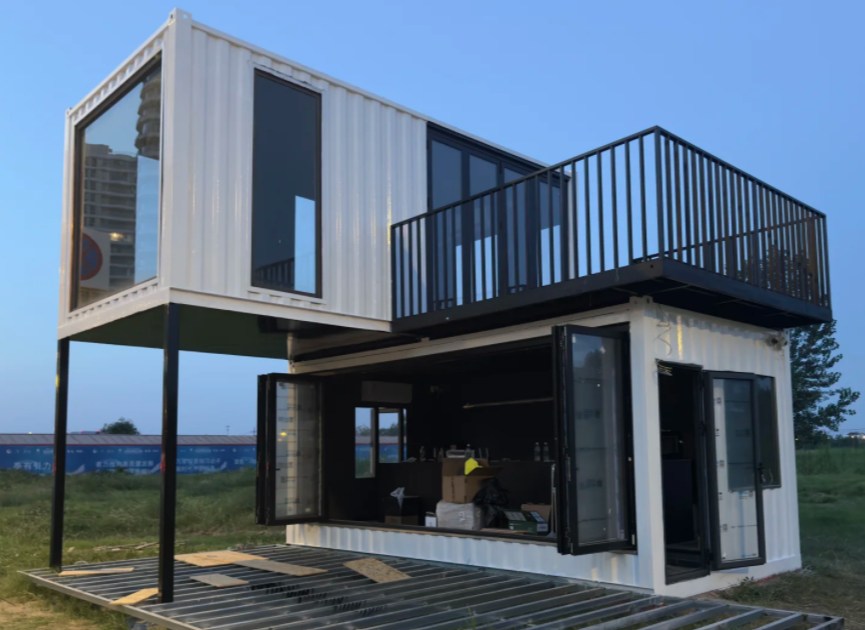
The comparison here focuses primarily on factory-prefabricated modular container homes,rather than large-scale,permanent modular residences in the traditional sense.
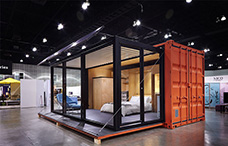
Modular container homes from the Chinese market typically feature steel structural frames and prefabricated wall panels;a significant portion of production and assembly takes place in the factory before the units are shipped to their destination via container transport or other international logistics methods.
Depending on the product structure,these may include:
Expandable Container Homes
Flat Pack Container Homes
Folding Container Homes
Slide-Out Container Homes
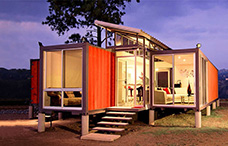
Modified Shipping Container Homes
The common characteristic of these products is that a substantial amount of work is completed in the factory,followed by transport to the site for final assembly,unfolding,or interconnection.Taking WZHHouse’s current product lineup as an example,the floor areas for their 20ft,30ft,and 40ft expandable container homes are approximately 37 m²,56 m²,and 74 m²(roughly 398,603,and 796 square feet),respectively.Certain residential models can be configured to include bedrooms,a living room,a kitchen,and a bathroom.
Because the prices of different types of"modular homes"cannot be directly compared.
A 2,000-square-foot permanent modular home and a 40ft expandable container home belong to entirely different product categories,even though both are classified as modular homes.The former may involve a complete residential structure,local building permit approvals,and on-site construction,whereas the latter emphasizes factory prefabrication,transport efficiency,and rapid deployment.
Comparing the price per square meter of these two products side-by-side can easily lead to erroneous conclusions.
The competitive pricing of Chinese modular container homes stems primarily from manufacturing scale,supply chain advantages,factory prefabrication,and standardized production—not merely from lower labor costs.
China possesses a mature supply chain for steel,insulation materials,doors and windows,bathroom fixtures,electrical components,and construction accessories.Container home manufacturers can integrate steel structure fabrication,wall panel installation,and the fitting of doors,windows,electrical systems,and interiors into a single production process.
For standardized products,factories can repeatedly manufacture homes with identical or similar specifications,thereby minimizing material waste and reducing production time.
WZHHouse currently operates three production lines with an annual capacity exceeding 15,000 units,supporting everything from single custom units to large-scale batch projects.For projects involving dozens or even hundreds of units,economies of scale directly impact unit costs and delivery efficiency.
Another key distinction lies in the location of production.
Traditional on-site construction requires the mobilization of vast quantities of materials,labor,and equipment to the project site to complete the build.Modular container homes allow for the majority of manufacturing and assembly to be completed in the factory before the units are transported to their final destination.
For instance,with WZHHouse’s expandable container homes,approximately 90%of the production and pre-installation work is carried out at the factory.
This does not mean the project requires no on-site work at all.Costs may still arise from foundation work,utility connections,hoisting,unfolding,assembly,and construction required to meet local regulations.
However,completing a significant portion of the work in the factory beforehand reduces the amount of on-site construction required.
If you choose standardized 20ft,30ft,or 40ft units—utilizing established floor plans and configurations—it is easier for Chinese factories to offer competitive pricing.
Prices will change significantly if you require structural redesigns,major changes to door and window placements,high-end bathroom fixtures,custom kitchens,specialized insulation systems,or electrical systems that meet specific national standards.
This is why,when comparing modular homes from China,you shouldn't simply ask,"How much is one modular home?"A more accurate question would be,"How much is this exact configuration?"
There is no single,fixed price for modular container homes from China,but the product and pricing information published by WZHHouse can help you establish a preliminary budget.
Prices vary significantly depending on the product.
For example,according to recent pricing references released by WZHHouse for mobile container homes,basic models might start at around US$1,500–$5,000.If you add a full bathroom,kitchen,air conditioning,furniture,or extensive customization,the price could rise to US$5,000–$15,000 or more.Specific pricing depends on the product type,size,configuration,order quantity,and trade terms.
For expandable container homes,the price generally cannot be calculated simply based on the cost of a standard 20ft shipping container;this is because they offer a larger usable area once expanded and may include full residential amenities.WZHHouse’s current expandable container homes have a floor area of approximately 37 m²(398 sq ft)for the 20ft model,56 m²(603 sq ft)for the 30ft model,and 74 m²(796 sq ft)for the 40ft model.
Therefore,even when comparing two"container houses,"the price quotes can vary significantly depending on whether one is merely a basic shell while the other comes fully equipped with a kitchen,bathroom,furniture,and a complete electrical system.
The most significant factors influencing price usually include:
Size and structure:40ft models generally require more steel,wall panels,flooring,and windows/doors than 20ft models.
Interior fit-out:Kitchens,bathrooms,water heaters,air conditioning,furniture,and cabinetry all add to the cost.
Insulation standards:Projects in cold regions typically require higher-grade insulation for walls,roofs,windows,and doors.
Electrical standards:Electrical requirements differ across the US,Australia,and Europe.
Level of customization:Standard products cannot be priced the same way as fully custom-designed units.
Order volume:Production methods,material procurement,and pricing logic may differ for orders of 10,50,or 100 units.
The factory quote represents only a portion of the cost;the true figure to consider is the"landed cost"or"total project cost"upon arrival at the project site.
You can use the following formula for a preliminary estimate:
Total Project Cost=Factory Price+Ocean Freight+Port&Customs Fees+Tariffs/Taxes+Inland Transport+Foundation+Hoisting/Installation+Utility Connections+Local Compliance Costs
Some of these expenses are not directly related to the product itself but significantly impact the final budget.
Container homes have a unique characteristic:while the product price itself may be highly competitive,the volume involved in international shipping can become a major cost factor.
For example,when comparing a standard 20ft unit with an expandable container house that opens up to 37 m²,one cannot simply compare factory prices based on floor area alone.You also need to confirm:
Folded or shipping dimensions
Number of units that fit into a 40HQ container
Product weight
Container loading method
Destination port
Ocean freight costs
Port-related charges
WZHHouse improves container loading efficiency by optimizing folded or shipping dimensions.For instance,the 20ft folding container house significantly reduces shipping volume when folded.
Local costs will be incurred after the house arrives at the port.
For example,a project in the US might involve port pickup,trucking,site preparation,foundation work,hoisting,and utility connections;projects in Australia require confirming planning,building,and installation requirements based on the specific state and intended use.
This means that a factory quote of US$5,000 from China does not equate to a final cost of US$5,000 for the house.If local transportation and foundation costs are high,the initial price advantage may diminish.
For modular container homes destined for the US market,prices from Chinese factories are generally competitive;however,determining whether they are ultimately cheaper requires a calculation that accounts for the specific destination and project conditions.
If the project is located in Los Angeles,the ocean shipping distance and port conditions are relatively favorable for sourcing from China.However,one must also consider post-arrival costs such as port fees,drayage(trucking),site conditions,foundations,and local building regulations.
For standardized projects—such as backyard units,temporary accommodation,or commercial modular builds—Chinese factory quotes may offer a significant price advantage,especially with larger order volumes.
Conversely,if only a single unit is required and the project entails extensive on-site modification,the advantage of local sourcing may become more apparent.
For inland or port cities like Houston,sourcing from China is also a viable option,but one should not simply compare FOB factory prices.
If the product requires long-distance inland transport after arriving at a US port,transportation costs will increase further.
Therefore,US projects are best evaluated using the following cost breakdown:
Factory Price+Freight to Port+Import Costs+Inland Delivery+Site Costs
For inland cities like Phoenix,the project site is far from the port,making the"last mile"of transport and on-site conditions particularly critical.
Large-volume orders can lower average transport costs;however,for a single,highly customized unit,sourcing from China may not offer a clear advantage.
Australia is a common export market for Chinese modular container homes,but the ultimate price advantage depends on product specifications,transport distances,and local approval and installation requirements.
WZHHouse currently has projects involving 20ft expandable container"granny flats"in Australia and offers products specifically tailored to the Australian market.
Projects in Sydney require special attention to land conditions,local approvals,transport access,and the intended use of the structure.
If you are purchasing a complete residential unit—such as for backyard living,a granny flat,or short-term rental accommodation—you cannot simply compare product prices;you must also verify that the product meets the building and usage regulations of the specific project location.
Melbourne's climate conditions impose specific requirements regarding thermal insulation,doors and windows,and overall building performance.Comparing a basic export model directly with a complete residential product sold locally in Australia might make the price appear very low,but the specifications differ significantly.
A more reasonable approach is to have the Chinese factory configure the unit according to the specific requirements of the Australian project before providing a quote.
For locations like Brisbane,structural design,insulation,waterproofing,and compliance with local regulations must all be considered based on the specific site conditions.
WZHHouse has provided budget estimates for the Australian market regarding expandable container houses:publicly available data indicates a reference FOB price from China of approximately US$8,000–$20,000,while the estimated budget for an Australian project ranges from US$15,000–$35,000.These are project budget estimates,not fixed prices for every product.
Sourcing from China typically offers a clear price advantage when projects involve standardization,volume production,and well-defined specifications.
If purchasing only a single unit,shipping and fixed costs can account for a disproportionately large share of the total expense.
For projects requiring 10,30,or even 100 units,continuous production of identical products allows for easier optimization of material procurement,production scheduling,and logistics planning.
This advantage is particularly pronounced for projects such as construction site housing,resorts,staff accommodation,temporary offices,and modular housing complexes.
If you have already determined the following:
20ft/30ft/40ft dimensions
Number of bedrooms
Kitchen setup
Bathroom setup
Door and window configurations
Insulation ratings
Electrical standards
then the factory can proceed directly to production using established designs.
Compared to redesigning every unit from scratch,standardized products make it easier to control costs and delivery timelines.
When a project requires a large number of identical units,the mass production capabilities of Chinese manufacturers become highly valuable.
WZHHouse supports everything from single custom units to large-scale batch production,offering tailored solutions for construction camps,worker dormitories,resorts,and modular housing projects.
Sourcing from China may not necessarily be cheaper if the project involves only a single unit,requires a high degree of customization,or entails complex local construction and approval requirements.
If you require just a single unit but demand a unique floor plan,a distinctive exterior,high-end interiors,specialized glazing,extensive smart home technology,and local construction,the costs associated with factory customization and shipping may rise significantly.
In such cases,a local manufacturer might be better equipped to handle design adjustments and on-site construction.
If the project site features narrow access roads,significant elevation changes,challenging conditions for crane operations,or complex foundation requirements,the logistical advantages of modular housing may be offset by on-site costs.
This is particularly relevant for expandable container houses;beyond shipping dimensions,you must consider the footprint after expansion and whether there is sufficient operating space on-site.
Just because a unit*can*be manufactured in a factory doesn't mean it is ready for immediate use at the destination.
For projects such as permanent residences,granny flats,or ADUs,you must verify requirements regarding structure,electrical systems,fire safety,insulation,doors and windows,sanitary facilities,and local building permits well in advance.
This is a crucial step in determining whether sourcing from China is the right choice.
The most effective approach is not simply comparing the total prices on the two quotes,but rather creating a specification sheet with identical product details.
| Comparison Item | China Factory Quote | Local Supplier Quote |
|---|---|---|
| House Type | 20ft / 30ft / 40ft | Same type |
| Floor Area | Specified m² / sq ft | Specified m² / sq ft |
| Steel Structure | Profiles, thickness, steel grade | Same standards |
| Walls | Materials, thickness, insulation | Same standards |
| Doors & Windows | Quantity, specifications, glass | Same specifications |
| Kitchen | Included or not included | Included or not included |
| Bathroom | Included or not included | Included or not included |
| Electrical | Standards and configuration | Local standards |
| HVAC | Included or not included | Included or not included |
| Furniture | Included or not included | Included or not included |
| Shipping / Transport | FOB / CIF / DDP, etc. | Local transport |
| Installation | Included or not included | Included or not included |
| Foundation | Included or not included | Included or not included |
| Permits / Compliance | Responsibilit |
Only when the product scopes are comparable can you determine which quote offers the best value.
If you are sourcing standardized modular container homes—and the project involves a significant number of units,clear specifications,and feasible shipping conditions—then sourcing from China is usually worth considering.However,if you are looking for a single,highly customized residence,you should exercise greater caution.
| Project Scenario | Feasibility of Sourcing from China |
|---|---|
| 1 Unit | Requires a comprehensive cost analysis |
| 1 Highly Customized Home | Local sourcing may be more convenient |
| 5–10 Units | Worth a serious cost comparison |
| Over 10 Units | The price advantage of Chinese manufacturing is usually worth evaluating |
| 30–100 Unit Projects | Economies of scale become even more significant |
| Construction Site Dormitories / Camps | Highly suitable |
| Resorts / Accommodation Projects | Highly suitable |
| Backyard / Granny Flat | Local regulatory compliance must be verified |
| Complex Permanent Residences | Requires detailed assessment of compliance and on-site costs |
What really matters is the progression:China Factory Price→Landed Cost→Local Project Cost
Sourcing from China only makes sense if there is still a cost advantage at the final stage.
Yes,modular container homes manufactured in China often offer a significant price advantage,making them particularly suitable for standardized products,bulk orders,and overseas commercial projects.
However,do not directly compare a Chinese factory quote with the retail price of a finished home in the US or Australia.
A more reasonable approach is to select the same type of modular container home—specifying identical floor area,structure,insulation,electrical systems,kitchen and bathroom fittings,and interior finishes—and then factor in ocean freight,tariffs,inland transport,foundation work,installation,and local compliance costs.
Only if the final landed cost and total project cost remain lower than a comparable local product can sourcing from China be considered truly"cheaper."
If you are comparing the costs of importing modular container homes from China versus purchasing local products in the US or Australia,you can ask WZHHouse to provide an assessment based on your project requirements.
WZHHouse is a Chinese manufacturer of container homes.Its product range includes expandable,flat-pack,folding,and slide-out container houses,with capabilities ranging from single-unit orders to large-scale bulk projects.You can provide the following information:
Intended use of the house
House type
Dimensions or floor area
Quantity required
Destination country and city
Layout details(e.g.,number of bedrooms,kitchens,bathrooms)
Local electrical or building code requirements
Requirements for furnishings,air conditioning,solar power systems,etc.
If you already have floor plans,renderings,or a project proposal,please include them as well.
A quote based on these details will be far more useful than simply asking,"How much does a modular home cost?"It will also make it easier for you to assess the differences between the factory price in China,import costs,and the final total project cost.



Copyright © Hebei Weizhengheng Modular House Technology Co., Ltd. All Rights Reserved
Sitemap

 +8615081877521
 +8615081877521