- icy@wzhgroup.com
- +86 15081877521


Apple Cabins can generate accommodation revenue for glamping resorts,holiday parks,and specialty hotels. However,profitability depends on factors such as the unit's purchase cost,nightly rates,occupancy rates,and operating expenses.
Assuming you operate five Apple Cabins at a rate of$150 per night with an annual occupancy rate of 50%,the annual accommodation revenue would be approximately$136,875.If annual operating expenses are$80,000,the simplified annual operating cash balance stands at$56,875—excluding potential financing costs,taxes,and other expenditures.
If you plan to develop a glamping resort or add unique accommodation units to an existing hotel,this article—drawing on industry benchmarks and practical calculations—analyzes rental revenue,operating profit,payback periods,and key risks to help you determine whether this business model suits your project.
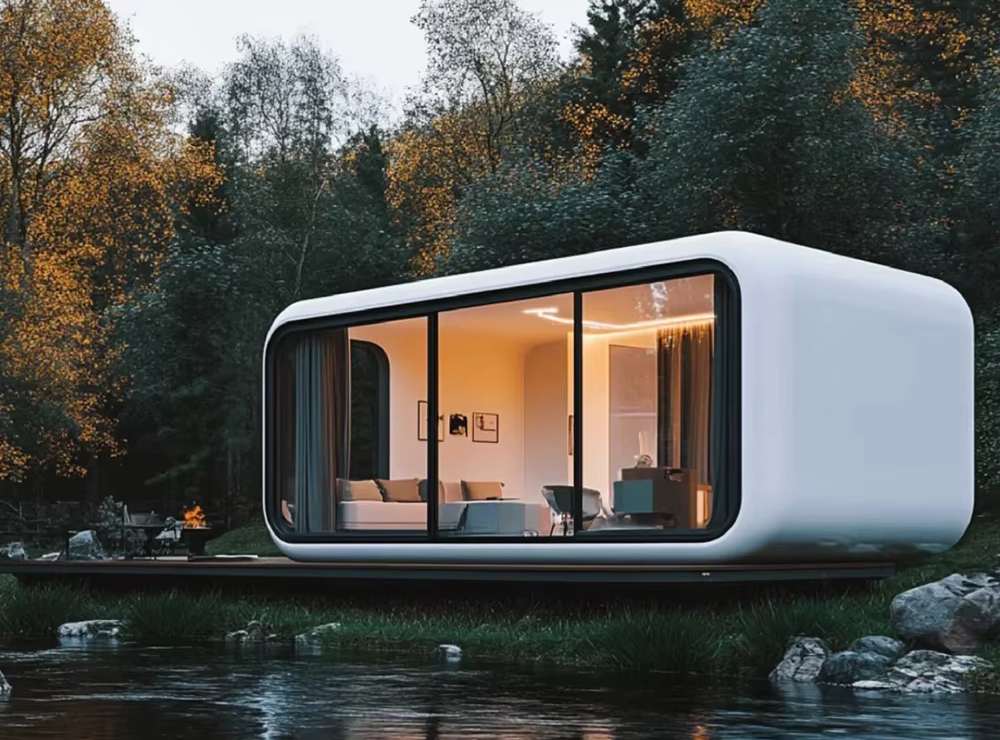
Yes,though a unique appearance does not guarantee high occupancy rates.You must find a price point that suits the local market while keeping construction and operating costs under control.
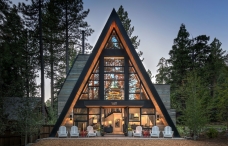
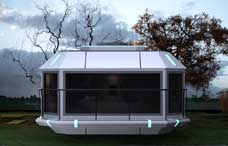
The distinctive design of the Apple Cabin helps differentiate your property from traditional hotel rooms and standard camping facilities.It holds significant market appeal for operators looking to offer natural scenery,privacy,and a unique accommodation experience.
It is particularly well-suited for the following business scenarios:
Glamping resorts and nature-themed vacation projects.
Holiday parks and tourist campsites.
Hotels looking to add unique guest units.
Landowners developing small-scale tourism accommodation projects.
Tourism enterprises planning to expand their accommodation capacity.
For instance,a forest-based project can highlight natural scenery and privacy,while a lakeside project can incorporate viewing windows and outdoor seating areas.If your target audience is couples,you might also consider layouts designed for two and outdoor leisure amenities.Before investing,you should focus on three key metrics:
Metric | Meaning | Impact on Operations |
|---|---|---|
Average Daily Rate (ADR) | Average revenue per booked night | Reflects actual pricing levels |
Occupancy Rate | Ratio of booked nights to available nights | Reflects demand for accommodation |
Operating Cash Flow | Cash remaining after deducting operating expenses from revenue | Determines operational sustainability and investment payback potential |
High rates and high occupancy do not always go hand in hand.You need to formulate a sustainable pricing strategy by considering local competition,seasonal demand,and operating costs.
Purchasing the cabin unit is only one part of the total project cost.For commercial rental projects,you must calculate the full cost from procurement to launch,rather than simply comparing factory quotes.
Cost Category | Key Components |
|---|---|
Cabin Purchase | Main structure, interior fit-out, bathroom, furniture, and optional features |
Transport & Delivery | Factory-to-port transport, international shipping, insurance, customs clearance, inland transport, and unloading |
Site Works | Site leveling, foundation or support structures, drainage, roads, and landscaping |
Utilities | Power supply, water supply, sewage treatment, internet, heating, and cooling |
Ancillary Facilities | Parking, reception area, walkways, outdoor seating areas, and other public facilities |
Permits & Compliance | Planning approvals, building codes, fire safety, and tourism operation licenses |
Pre-opening Costs | Photography, website, booking platforms, signage, and initial marketing |
Working Capital | Cleaning, staffing, utilities, maintenance, and initial operating expenses |
The actual investment required depends on the site's current condition and the product configuration.
If you already operate a holiday park,you can leverage existing parking,utilities,and booking systems to reduce costs for the new project.If developing a resort on undeveloped land,you may incur higher costs for roads,infrastructure,and utility connections.
Deploying a single cabin first allows you to test local demand,guest feedback,and actual operating costs.However,single-unit projects struggle to effectively amortize fixed costs such as reception,marketing,and maintenance.
Purchasing multiple units offers the potential for improved operational efficiency and facilitates centralized cleaning,maintenance,and management.Yet,this entails a higher initial investment and greater financial pressure should market demand prove insufficient.
Before placing an order,it is advisable to request clear product specifications and price quotes from suppliers,while also clarifying customization fees,the scope of delivery,shipping liabilities,warranty terms,and any exclusions.Only by consolidating these costs into a single budget can you accurately compare the true costs of different supply options.
Rental income is primarily determined by the average nightly rate and the annual occupancy rate.You can use industry data to establish a preliminary baseline and then refine your projections by analyzing comparable accommodations in your target location.
A 2026 glamping market overview published by Sage Outdoor Advisory analyzed 565 glamping properties across the United States.A report by Glamping Business(published August 20,2026)listed the average nightly rates for various accommodation types:
Accommodation Type | Average Nightly Rate (per report) |
|---|---|
Cabins | $354 |
Safari Tents | $375 |
Tiny Homes | $259 |
Airstream Trailers | $298 |
Yurts | $257 |
Mirror Cabins | $458 |
Source:Glamping Business—2026 Glamping Market Overview.
While this data provides insight into pricing levels within the U.S.glamping market,the$354 figure does not represent the actual average rate for an Apple Cabin,nor should it be used directly for revenue forecasting.The"cabin"data in the report covers a broad range of properties studied and is not based on a rental sample specific to Apple Cabins.
If you plan to operate an Apple Cabin in the U.S.,you should conduct further research on short-term rentals and glamping sites near your chosen location,comparing factors such as nightly rates,occupancy rates,accommodation capacity,amenities,and guest reviews.
You can also utilize AirDNA’s U.S.short-term rental market data to track local metrics like average daily rates(ADR),occupancy rates,and annual revenue.Since this data is not exclusive to glamping units,you should select comparable properties for your analysis.
The calculation formula is simple:
Annual Accommodation Revenue=Average Nightly Rate×365×Annual Occupancy Rate×Number of Units
Suppose you plan to operate 5 Apple Cabins at a rate of$150 per night;the annual accommodation revenue based on different occupancy rates would be as follows:
Annual Occupancy Rate | Annual Revenue per Unit | Annual Revenue for 5 Units |
|---|---|---|
35% | $19,163 | $95,813 |
50% | $27,375 | $136,875 |
65% | $35,588 | $177,938 |
The figures above are hypothetical calculations,not actual operating data for Apple Cabins.Amounts have been rounded and do not account for operating expenses,taxes,or other costs.
As the table shows,assuming the nightly rate remains constant,the annual accommodation revenue for 5 units rises from approximately$95,813 at a 35%occupancy rate to approximately$177,938 at a 65%occupancy rate.
The difference between the two is over$82,000.In the rental business,occupancy rates are often just as important as nightly rates.
When determining your budget,you must also consider variations between peak,shoulder,and off-peak seasons,as well as weekend pricing,minimum stay requirements,cleaning fees,and booking platform commissions.Do not base your annual revenue projections solely on high holiday rates.
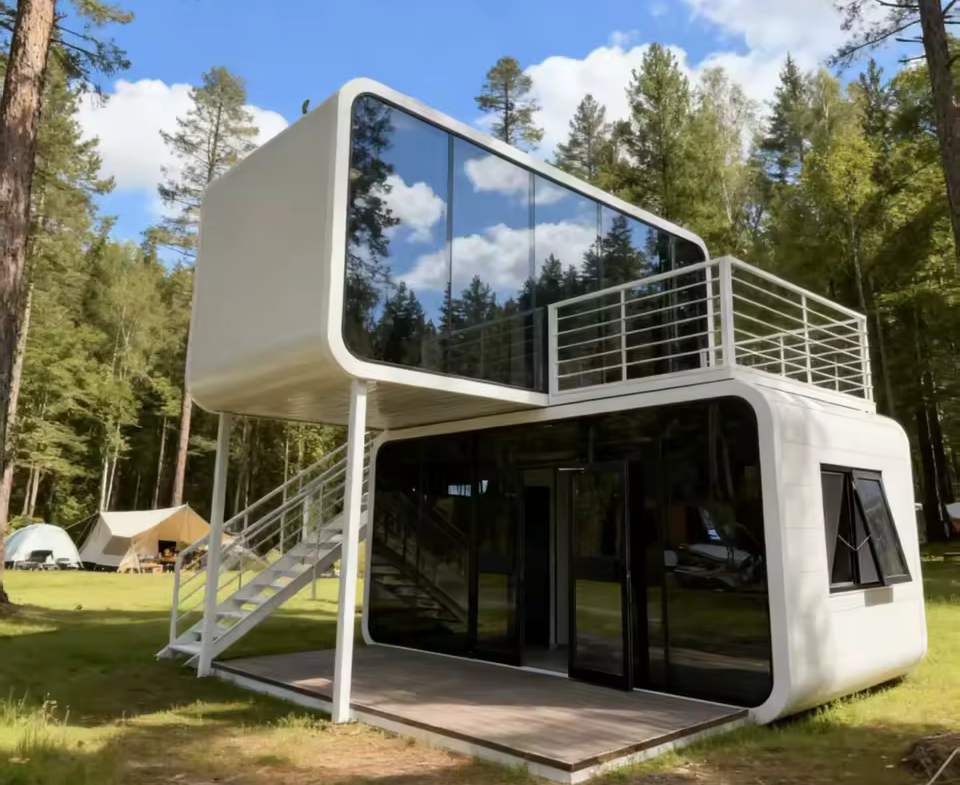
Annual accommodation revenue is not the same as profit.To evaluate the project's operational performance,you must deduct expenses such as cleaning,staffing,utilities,maintenance,marketing,and other operational costs.
Assume the following operating conditions for the project:
Operating Assumption | Value |
|---|---|
Number of Units | 5 |
Average Nightly Rate | $150 |
Annual Occupancy Rate | 50% |
Annual Operating Expenses | $80,000 |
Based on the revenue calculations above,the annual financial results are as follows:
Financial Item | Annual Amount |
|---|---|
Accommodation Revenue | $136,875 |
Assumed Operating Expenses | $80,000 |
Simplified Operating Cash Balance | $56,875 |
Calculation Method:
$136,875−$80,000=$56,875
The$80,000 figure used here is a hypothetical assumption for demonstration purposes and does not represent industry-average operating costs.Actual expenses depend on location,staffing,service standards,maintenance requirements,and utility costs.
The$56,875 figure should not be viewed directly as net profit.Financing costs,income taxes,depreciation,major equipment replacements,and other unbudgeted expenses could further impact the final result.
You should also examine the project's financial performance during periods of lower occupancy.Using the same assumptions for room rates and operating expenses,an occupancy rate of 35%would yield annual accommodation revenue of approximately$95,813;after deducting$80,000 in expenses,the simplified cash balance would be only$15,813.
This demonstrates that while a project may appear viable at high occupancy rates,it may not maintain the same financial performance during the off-season or periods of low market demand.
The payback period estimates how many years it will take for a project to recover its initial investment apple cabin through operating cash flow.
The simplified formula is:
Payback Period=Total Initial Investment÷Annual Cash Flow Available for Investment Recovery
Assuming the Apple Cabin project has a total initial investment of$300,000 and an annual cash flow available for recovery of$56,875:
$300,000÷$56,875≈5.3 years
In other words,assuming annual cash flow remains constant,the project's simplified payback period is approximately 5.3 years.
This result is intended solely to illustrate the calculation method.In actual operations,factors such as occupancy rates,maintenance expenses,loan repayments,and taxes are subject to change.You should incorporate the costs of the units,transportation,site preparation,utilities,amenities,and pre-opening expenses into your initial investment budget,and then develop three financial scenarios:conservative,expected,and optimistic.
If a project requires high occupancy rates and high nightly rates to recoup the investment,the financial risk may be significant.Conversely,if the project can cover its primary costs even at lower occupancy rates,it generally demonstrates greater resilience against risk.
The operational performance of an Apple Cabin depends not only on the unit itself but also on the destination,amenities,pricing strategy,and operational efficiency.You can improve performance by focusing on the following areas:
Projects situated near lakes,mountains,national parks,or outdoor recreation areas are more likely to attract tourists seeking a connection with nature.However,scenic beauty alone does not guarantee sufficient commercial demand.
Before investing,you should research local visitor numbers,transportation access,competing projects,seasonal fluctuations,and nearby amenities.For remote sites,it is also crucial to evaluate road access,utility infrastructure,and maintenance costs.
Guests are purchasing a complete accommodation experience,not just a unique exterior.Comfortable bedding,reliable heating and cooling,well-designed bathrooms,and ample storage space all influence guest reviews and repeat visits.
Depending on your project's positioning,you might add features such as private decks,picture windows,outdoor seating,or hot tubs—though there is no need to blindly pursue high-end specifications.
Market data from Sage Outdoor Advisory indicates that properties with hot tubs command an average nightly rate$49 higher than those without,while properties with on-site restaurants charge$146 more.These figures reflect market correlations;adding such amenities does not guarantee an equivalent increase in your specific rates.
Before investing capital,compare the costs of construction,maintenance,insurance,utilities,and staffing to ensure the amenities align with your target audience's needs.
If your vacation rental relies heavily on summer or holiday visitors,annual revenue may fluctuate significantly.You can adjust rates for weekends,holidays,and off-peak seasons,and experiment with long-stay discounts,weekday packages,or bundles that include local experiences.
When setting prices,do not focus solely on booking volume.It is more important to assess whether the revenue generated by new bookings covers the costs of discounts,marketing,and additional services.
Housekeeping,linen management,maintenance,utilities,and booking management all impact the cost of each stay.Multiple cabin units can share certain cleaning and maintenance resources,but the site layout should also facilitate efficient staff operations.
At the same time,prioritize cleanliness,check-in procedures,hot water supply,and communication efficiency.High-quality photos and accurate descriptions of amenities help guests form realistic expectations,while a positive on-site experience fosters favorable reviews and repeat bookings.
It is advisable to regularly track occupancy rates,average daily rates(ADR),revenue per available room(RevPAR),service costs per stay,and maintenance expenses.Adjusting pricing and operational strategies based on actual performance data is far more valuable than simply increasing the number of cabin units.
Before placing a formal order,clarify the following key issues to avoid budget oversights or delays in launching operations as planned.
Confirm that the site is zoned for accommodation operations and verify requirements regarding planning approvals,building codes,fire safety,sewage treatment,parking,and tourism operating permits.Prefabricated cabins are not necessarily exempt from local building and operational regulations.
Importing cabins may incur expenses for international shipping,customs clearance,inland transport,unloading,and foundation construction.Confirm cabin dimensions,weight,transport vehicle access,unloading methods,and the supplier's scope of delivery in advance.
Research competing projects across different seasons,comparing rates,occupancy,guest reviews,and amenities.Do not base annual revenue forecasts solely on peak-season dates,nor assume the new project will secure steady bookings immediately upon opening.
Cabins are exposed to changing weather and frequent use;roofs,windows,plumbing,electrical systems,HVAC units,and furniture may require repair or replacement.Set aside funds for maintenance and ensure sufficient working capital to cover expenses during the initial launch phase and periods of low demand.
When making investment decisions,beyond assessing profitability,you must also determine if you can withstand the cash flow pressure resulting from lower-than-expected occupancy,rising costs,or increased maintenance expenses.
Apple Cabins are a viable accommodation option for glamping resorts,holiday parks,and boutique hotels;however,their investment value depends on total project costs,achievable room rates,annual occupancy levels,and operating expenses.
Before purchasing,you should research the pricing and demand for similar local accommodations,calculate the full cost—from procurement to operational launch—and model annual revenue,cash flow,and payback periods based on various occupancy scenarios.
If the project remains financially viable under conservative operating assumptions,you will be better positioned to make informed decisions regarding purchase quantities,unit configurations,and expansion plans.
If you are seeking prefabricated accommodation products for a glamping resort or hotel project,please contact WZHHouse for details on unit specifications,customization options,and project quotes.



Copyright © Hebei Weizhengheng Modular House Technology Co., Ltd. All Rights Reserved
Sitemap

 +8615081877521
 +8615081877521