- icy@wzhgroup.com
- +86 15081877521


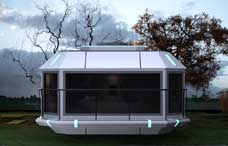
The"capsule house"is a new type of modular dwelling.If you’ve recently been researching housing options,vacation rentals,or light-asset investments,chances are you’ve already come across it.At first glance,you might think it resembles a space capsule,but you’ll likely also find yourself wondering:Is this type of structure actually suitable for my needs?
If you are considering it for personal residence,as a vacation rental business,or simply to add a standalone space to your backyard,you will undoubtedly want to know exactly what scenarios it fits into and whether it can truly meet your requirements.After all,a house isn't just about looking good;ultimately,practicality is what matters most.
In the following sections,we will take a practical approach to show you exactly where capsule houses fit best,what purposes they serve,and why they are attracting the attention of an ever-growing audience.
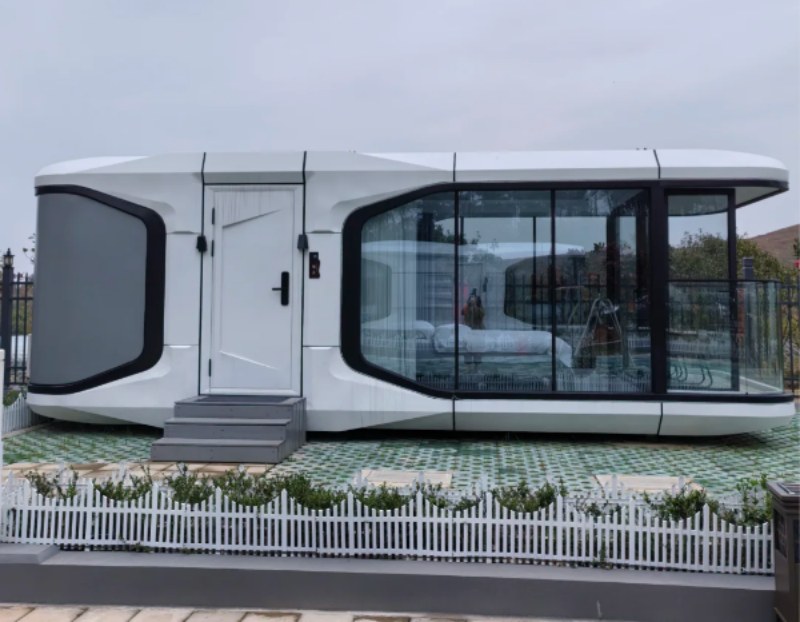
Nowadays,many travelers are no longer satisfied with standard hotel rooms.Compared to traditional accommodations,they prefer spaces that offer a distinct"experience"—featuring unique design aesthetics and social appeal.
Whether situated in the mountains,by a lake,or along the coast,a capsule house featuring panoramic glass windows can easily entice users to click through to the booking page.This is especially true at night;once the interior lights are switched on,the entire space takes on a truly atmospheric and enchanting quality.
According to trend data released by Airbnb,search volume for unique accommodation types has seen continuous growth over the past few years.An increasing number of young travelers are actively searching for keywords such as"tiny cabin,""capsule cabin,"or"modular stay."
Many campsite operators have also discovered that while these compact capsule units may be small in footprint,the guest experience they offer is often far more memorable.After checking in,guests are more inclined to take photos to share with others—and some even go so far as to actively create and post short-form video content about their stay.
Many modern capsule houses come equipped with private bathrooms,air conditioning,kitchenettes,and smart lighting systems.Some high-end models even feature additional amenities such as underfloor heating,motorized curtains,and smart voice control capabilities.
For Airbnb hosts,these structures offer another very tangible advantage:rapid construction speed.Compared to traditional log cabins,certain prefabricated capsule units can be manufactured and ready for installation within just 15 to 30 days.
In some popular scenic destinations,multiple capsule units are strategically dispersed across the landscape.Upon opening their doors,guests are greeted by breathtaking views—whether of snow-capped mountains,lush forests,or serene lakes.
This immersive,close-to-nature experience lends itself perfectly to social media virality.Many campsite projects have successfully generated significant online exposure relying almost entirely on photos shared organically by their guests.
In recent years,the popularity of"glamping"has been steadily on the rise.Many people yearn to get closer to nature but are unwilling to accept the inconveniences associated with traditional camping.
While standard tents are low-cost,they offer limited comfort.When faced with strong winds,rain,or cold temperatures,the overall living experience typically suffers significantly.
The"capsule house,"however,occupies a unique niche situated right between a hotel and a campsite.It successfully preserves the authentic outdoor atmosphere while providing far more stable and comfortable accommodation conditions.
In some high-end glamping sites,capsule houses are strategically nestled among the trees.Upon waking in the morning,guests can look directly out to behold the sunlight,mountain vistas,and morning mist.
Some campsites further enhance the experience by adding outdoor decks,sun canopies,and communal campfire areas.Sitting outdoors in the evening to chat allows the entire pace of the trip to slow down,fostering a sense of relaxation.
According to tourism industry statistics,an increasing number of young travelers are willing to pay a premium for"experiential accommodation."The nightly rates for some boutique glamping projects have even begun to rival those of high-end hotels.
For campsite investors,the capsule house also offers greater flexibility in terms of expansion.When the peak season arrives,additional accommodation units can be added quickly and efficiently.
Furthermore,these structures have a relatively minimal environmental impact on the land.This characteristic aligns perfectly with the current trends and development direction of eco-tourism.
Many tourism projects opt for capsule houses precisely because they make it easier to create a distinct visual aesthetic that harmoniously blends"nature and technology."
In Western countries—particularly in Europe and North America—an increasing number of families are embracing the concept of"backyard living."Simply put,this involves repurposing and making the most of one's backyard space.
Some families choose to install a capsule house in their backyard to serve as guest quarters for visiting friends and relatives.This arrangement allows both hosts and guests to maintain their privacy while preventing the main house from becoming overcrowded.
For families with children,this type of independent living space proves to be incredibly practical.This is especially true as children grow older,when many begin to desire their own quiet,personal sanctuary.
Compared to undertaking a major home renovation or extension,the construction process for a capsule house is typically much simpler.Many modular units can be fully assembled and installed on-site in just a few days.
Some homeowners also choose to convert these structures into living quarters for elderly parents.This allows parents to live close by while still maintaining their own independence and personal space.
In certain regions of the United States,the demand for small backyard dwellings is growing significantly.Many homeowners are now viewing modular capsule houses as a viable alternative to traditional Accessory Dwelling Units(ADUs).
This model aligns perfectly with the dynamics and structural needs of the modern family.People wish to stay connected,yet they also require an appropriate amount of personal space.
Many"capsule houses"come with pre-installed hookups for water and electricity.Consequently,subsequent installation and maintenance are significantly more convenient.
Should it no longer be needed for its original purpose in the future,it can be repurposed as a studio,a media room,or a storage unit;overall,it offers a relatively high degree of flexibility.
With the rise of remote work,many people have discovered that"working from home"is not quite as effortless as they had imagined.
The sound of the TV in the living room,the noises from the kitchen,or even the playful chatter of children can all disrupt one's workflow.
Consequently,some users have begun adding standalone office spaces to their backyards.It is against this backdrop of demand that"capsule offices"have gradually gained popularity.
Stepping into one's own private mini-studio each morning—coffee in hand—creates a distinct boundary between one's professional life and personal life.
Many designers,freelancers,and content creators are particularly fond of this type of workspace,as it offers a quiet environment without completely isolating them from their home surroundings.
Some capsule offices feature extensive glass paneling in their design.This allows occupants to enjoy views of the natural landscape outside while working,fostering a more comfortable and pleasant atmosphere.
According to market data on remote work,an increasing number of companies are embracing a"hybrid work"model.This suggests that the demand for home office spaces will continue to rise.
Compared to renting a traditional office space on a long-term basis,this alternative typically entails lower costs—a factor that makes it particularly appealing to those who work remotely over the long term.
Many individuals find that their work efficiency improves significantly once they have access to a dedicated workspace.The psychological act of"shifting into work mode"is,in fact,crucial.
In recent years,the philosophy of"small and simple"living has begun to garner significant attention.Many young people are no longer blindly chasing after large,sprawling residences.
Instead,they prioritize factors such as reduced life stress,lower maintenance costs,and greater freedom in their living arrangements.The"capsule house"fits this emerging trend perfectly.
Although the physical space is limited,a thoughtful design ensures that daily life does not feel cramped or confined.Many of these compact homes incorporate clever features such as hidden storage units and foldable furniture.
During the day,a foldable table can serve as a dedicated workspace;come evening,it can be quickly transformed back into a space for relaxation.
Some users choose to situate their capsule houses in suburban areas,by the seaside,or amidst the woods.Spending a weekend there offers a refreshing sense of temporary escape from the hustle and bustle of city life.
For individuals living alone or for couples,this type of space is more than sufficient to meet basic living requirements.More importantly,it serves to significantly reduce many of the long-term financial burdens associated with daily living.According to data from the tiny house industry,the daily maintenance costs for small-scale dwellings are typically significantly lower than those for traditional single-family homes.
Many people who move into a tiny house find that their desire to consume begins to diminish.Because space is limited,they naturally do not accumulate excessive material possessions.
While this lifestyle may not be suitable for everyone,it certainly prompts many to rethink the true meaning of"dwelling."
In the wake of natural disasters or during large-scale engineering projects,the rapid provision of living space has long been a practical challenge.
Traditional construction methods often entail lengthy building cycles,whereas capsule houses can be deployed much more quickly.
Some temporary shelter initiatives involve transporting modular housing units to the site in advance.Once the foundational connections are established,the units can be put into use almost immediately.
Compared to standard prefabricated cabins,modern capsule houses generally offer a higher level of comfort.Their performance regarding thermal insulation,soundproofing,and ventilation is also more consistent and reliable.
For construction sites,these structures can also serve as employee dormitories.Their internal layouts can be flexibly customized to meet specific operational needs.
When undertaking construction projects in remote regions,the ability to rapidly erect living quarters is crucial;otherwise,both logistics management and personnel scheduling can be severely compromised.
Some modular capsule units can even be manufactured to over 80%completion within the factory setting.This significantly reduces the amount of on-site construction time required.
Certain countries also utilize modular capsule housing for emergency medical initiatives,as these units allow for the rapid creation of self-contained,independent spaces.
One of the greatest advantages of this type of architecture is its reusability.Once a specific project concludes,the units can be transported to a new location and repurposed for continued use.
Today,many young consumers are becoming increasingly discerning when it comes to"spatial design."A small shop with a distinctive character often captures attention far more effectively than a standard storefront.
Consequently,some entrepreneurs have begun transforming capsule houses into mobile commercial spaces—such as coffee shops,dessert parlors,or pop-up showrooms.
Whether situated by the seaside,in a park,or at a music festival,these compact structures often effortlessly become the focal point of their surroundings.
This is particularly true for capsule units featuring a futuristic or high-tech aesthetic,which possess an inherent and powerful visual appeal.
Upon encountering such structures,the immediate reaction of many visitors is to take photographs.For brands,this effectively serves as a low-cost method of organic publicity.
Compared to traditional brick-and-mortar establishments,the financial risk associated with investing in these types of spaces is relatively low,offering greater flexibility—a distinct advantage for small teams just starting their entrepreneurial journey.
Some modular commercial spaces are even designed to be transported as a single,complete unit;once a specific event or campaign concludes,the entire structure can be moved directly to another city to resume operations.Some brands also utilize capsule houses to host new product launches or collaborative events.This approach makes it easier to cultivate an atmosphere of a"limited-time experience."
The concept of such"mobile commercial spaces"is gaining increasing popularity among young brands.
Not everyone who enjoys camping is willing to pitch a tent themselves.
Many families,in fact,prefer a"relaxed version of the camping experience"—one that allows them to get close to nature without having to deal with complex equipment.
Consequently,many RV parks have begun adding capsule cabins to their facilities,allowing visitors to stay directly on-site even if they do not own an RV.
This arrangement is particularly well-suited for families with children;it allows kids to experience the outdoor environment while parents need not worry about substandard accommodation conditions.
Some campsites also integrate capsule houses with camping activities,allowing guests to spend their days hiking or cycling and return to a comfortable space to rest in the evening.
Compared to traditional wooden cabins,capsule houses typically boast faster construction times,and it is much more convenient to expand accommodation capacity later on.
As the camping economy continues to grow,an increasing number of campsites are upgrading their accommodation experiences.During holiday periods,occupancy rates at some popular campsites can even exceed 80%.
Many campsite operators note that small modular homes generally entail lower maintenance burdens,making long-term operations much less of a hassle.
In the coming years,these types of accommodation units are likely to become increasingly commonplace.
In many major cities,housing costs remain persistently high.Students and young working professionals,in particular,face significant pressure regarding rental expenses.
As a result,small modular housing units have begun to enter the student accommodation market.
Some schools and training centers utilize capsule units as temporary living quarters.This approach not only saves on construction time but also allows for the rapid expansion of bed capacity.
Compared to traditional dormitories,modern capsule units typically offer superior privacy—a feature of great importance to young people.
Some projects also incorporate shared kitchens,laundry areas,and communal lounge spaces.This design preserves individual privacy while ensuring that a social atmosphere is not lacking.
For young people just starting their careers,small living spaces are actually easier to manage;cleaning and maintenance do not consume an excessive amount of time.
Furthermore,many young residents do not intend to settle down permanently;instead,they prioritize a flexible,low-burden lifestyle.
In certain cities with high rental costs,interest in"micro-apartments"and modular housing solutions is showing a marked increase.From a certain perspective,the capsule house actually aligns remarkably well with the lifestyle rhythms of young people in modern cities.
Nowadays,many people travel not merely to"check off"tourist spots;rather,they seek to truly slow down.
Consequently,a number of wellness retreat projects have begun incorporating capsule houses into settings such as forests,lakeside areas,or mountain regions.
These compact spaces are typically quiet,making them ideal for reading,meditation,or short-term relaxation.
Waking up in the early morning and stepping directly out into a natural environment allows one's mind and body to gradually unwind.
Some projects even integrate activities such as yoga,hot springs,or forest therapy sessions.The entire experience offers a far greater sense of immersion than that of a standard hotel.
Compared to large-scale resorts,small capsule houses are far more adept at fostering a sense of privacy—a key factor that drives many users to choose them.
In recent years,interest in"slow travel"and wellness tourism has continued to grow,with an increasing number of people willing to pay a premium for experiences focused on relaxation.
Some individuals even specifically dedicate their weekends to staying in a mountain-based capsule cabin;just two short days are enough to significantly alleviate feelings of stress.
In the context of a fast-paced modern lifestyle,these"quiet little spaces"have,ironically,become increasingly valuable.
With advancements in modern design and amenities,the capsule house is indeed suitable for long-term occupancy.However,it is better suited to the lifestyles of single individuals,couples,or small families,rather than serving as a traditional residential form for larger groups living together over extended periods.Its practical suitability depends primarily on the specific product configuration,local climatic conditions,and an individual's personal requirements regarding living space.
In terms of the living experience,most mainstream capsule houses available today come equipped with thermal insulation,moisture-proof structural elements,double-glazed windows,and basic utility systems.Some high-end versions even feature private bathrooms,kitchenettes,and smart home technology,bringing their functional capabilities close to those of a small standalone home and enabling them to meet basic long-term living needs.
Nevertheless,the limitations of the capsule house lie primarily in its spatial scale and the regulatory environment.For larger families,storage capacity and living space may prove insufficient;furthermore,regulations regarding the long-term use of modular housing vary significantly across different countries.Consequently,the capsule house is best suited for those seeking flexibility,.individuals seeking low maintenance costs and a simplified lifestyle,rather than serving as a complete replacement for traditional housing.
Are capsule houses suitable for use as Airbnbs?
Absolutely.In fact,they are currently one of the hottest accommodation trends on the market.Many travelers are drawn to these spaces for their novelty and distinctive design aesthetic,making them highly appealing within the short-term rental market.
How long does it take to install a capsule house?
Installing a small,standalone capsule unit typically takes 1–2 days,while a standard residential or Airbnb-style unit requires 3–5 days.For larger-scale deployments involving 5 to 20 units,the total installation timeline is approximately 1–2 weeks.
Are capsule houses cheaper than traditional homes?
Yes.In most cases,capsule houses are significantly more affordable than traditional homes.The specific cost savings—typically ranging from 30%to 60%—depend on factors such as the unit's configuration,size,and installation environment.
Capsule houses offer immense practical value in daily life,appearing in a wide variety of settings—from Airbnb rentals and backyard home offices to forest retreat projects.
For many young users,a capsule house represents more than just a dwelling;it embodies a brand-new lifestyle.
Looking ahead,as modular construction technologies continue to mature,capsule houses are likely to become an increasingly common sight in urban areas and tourism developments.
Perhaps in just a few years,our collective understanding of"small-space living"will be entirely different from what it is today.



Copyright © Hebei Weizhengheng Modular House Technology Co., Ltd. All Rights Reserved
Sitemap

 +8615081877521
 +8615081877521